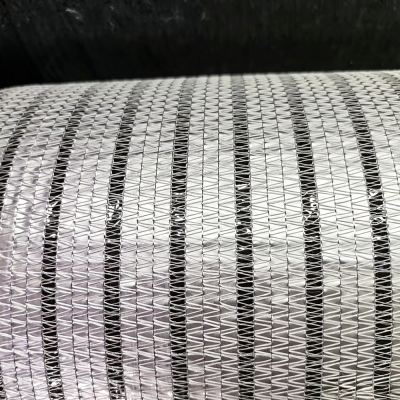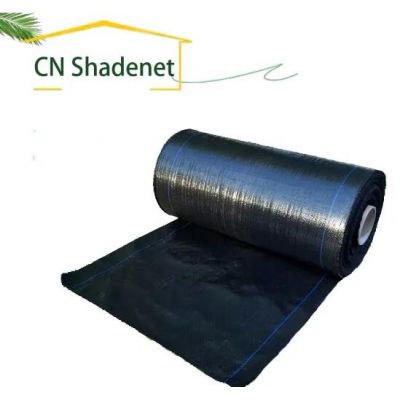
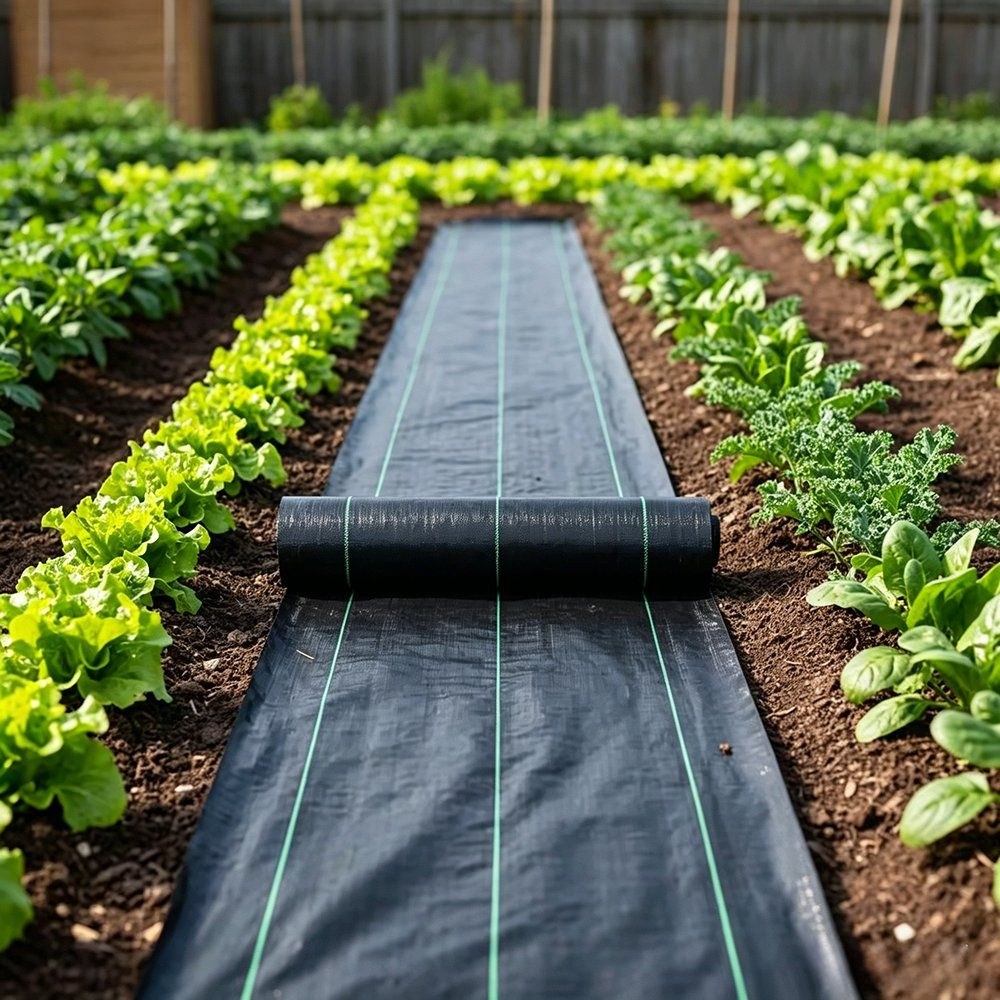
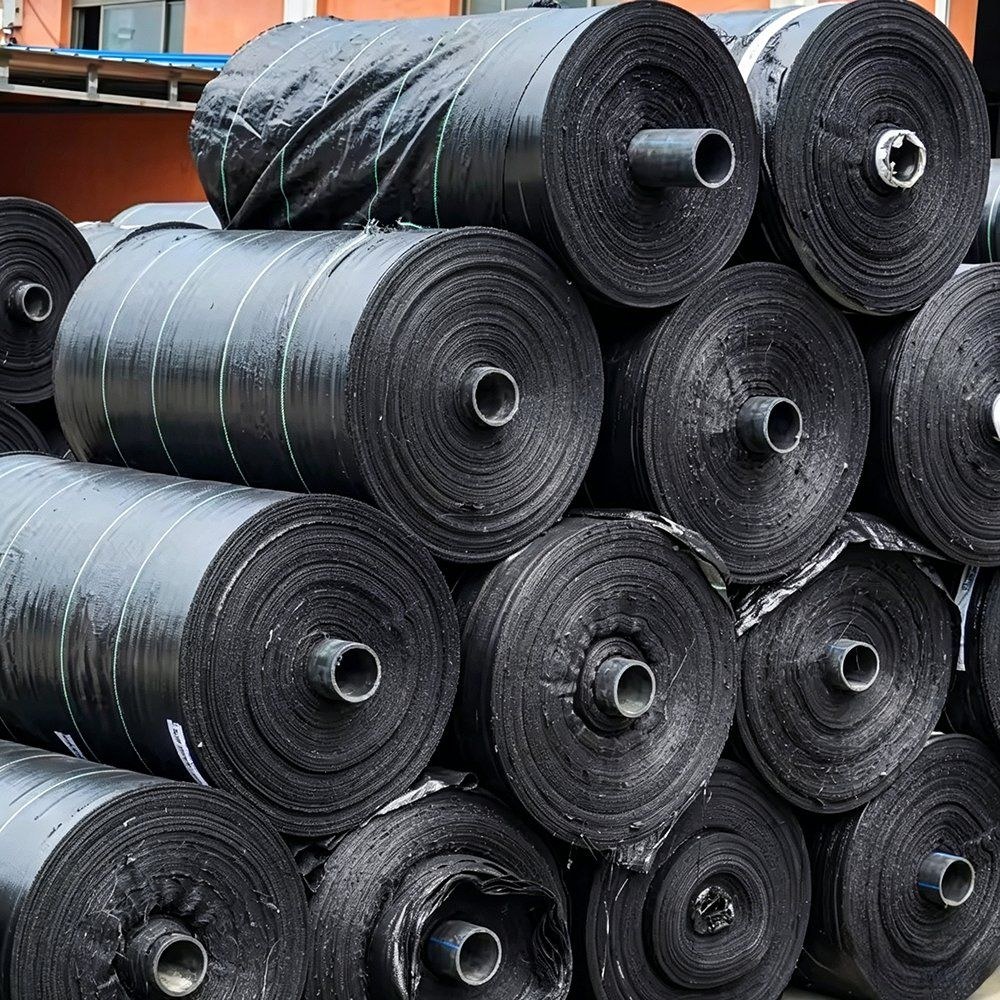

On a small bed, one drop of cloth covers the lot. On a farm block it rarely does, and the joins between drops are where the cover stops working: the overlap is too narrow, the edge lifts, and a line of grass comes up straight down the middle of the block where nobody is looking. This is a 200 gsm woven polypropylene grade, heavy enough to lie down flat and stay there, and the widths are chosen so a row, an aisle or a whole house bay is covered in as few drops as possible. It blocks the light, holds moisture in the soil and lets water through.
A cover on a single bed is one piece of cloth. A cover on a farm block is three or four pieces laid side by side, and the part that gives trouble is never the middle of a drop. It is the line where two drops meet, which is usually the one place on the block nobody walks past.
Weeds come up at a join for a simple reason: the overlap is not wide enough, or the edge was never held down, so light gets in along a strip a few centimetres wide and the first thing to grow is the grass that was already in the seed bank there. Once it is up, it pushes the two edges apart and the gap widens. The fix is decided before the order is placed, not after: the drop widths are worked out from the block or the bay so the number of joins is as low as it can be, the overlap is set at a width that will still be an overlap after the cloth has settled, and the outer edges are held down with staples or a batten so nothing can get underneath. On a wide house the same reasoning decides whether the floor is laid across the bays or along them.
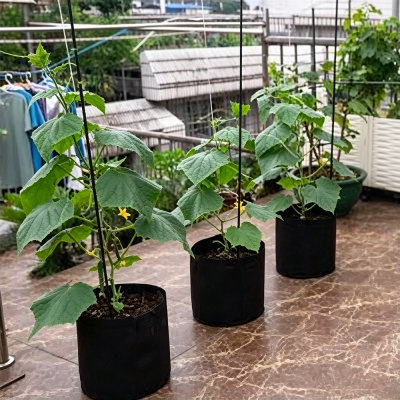
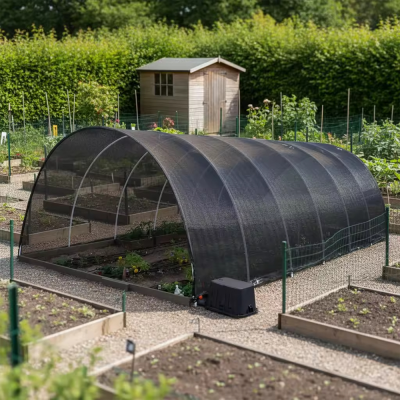
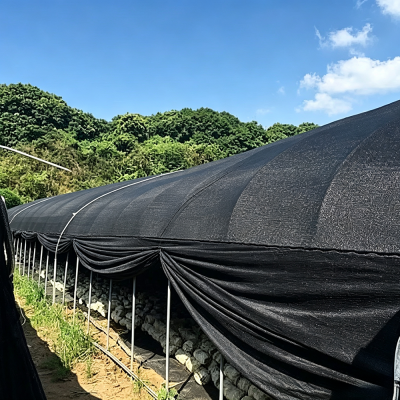
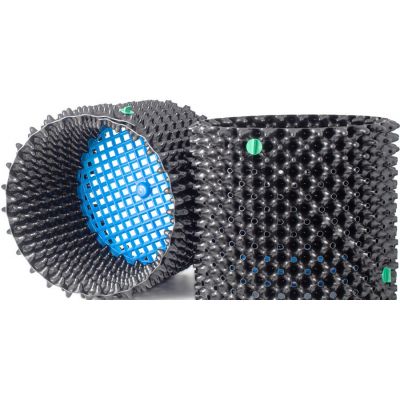
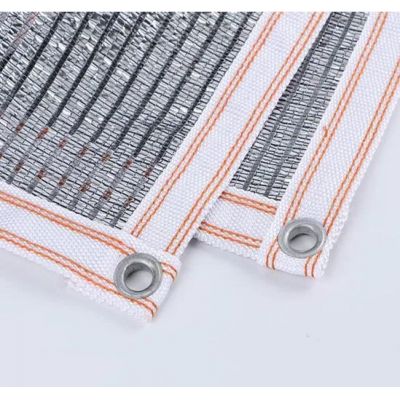
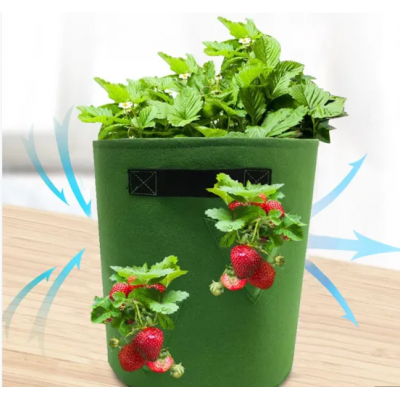
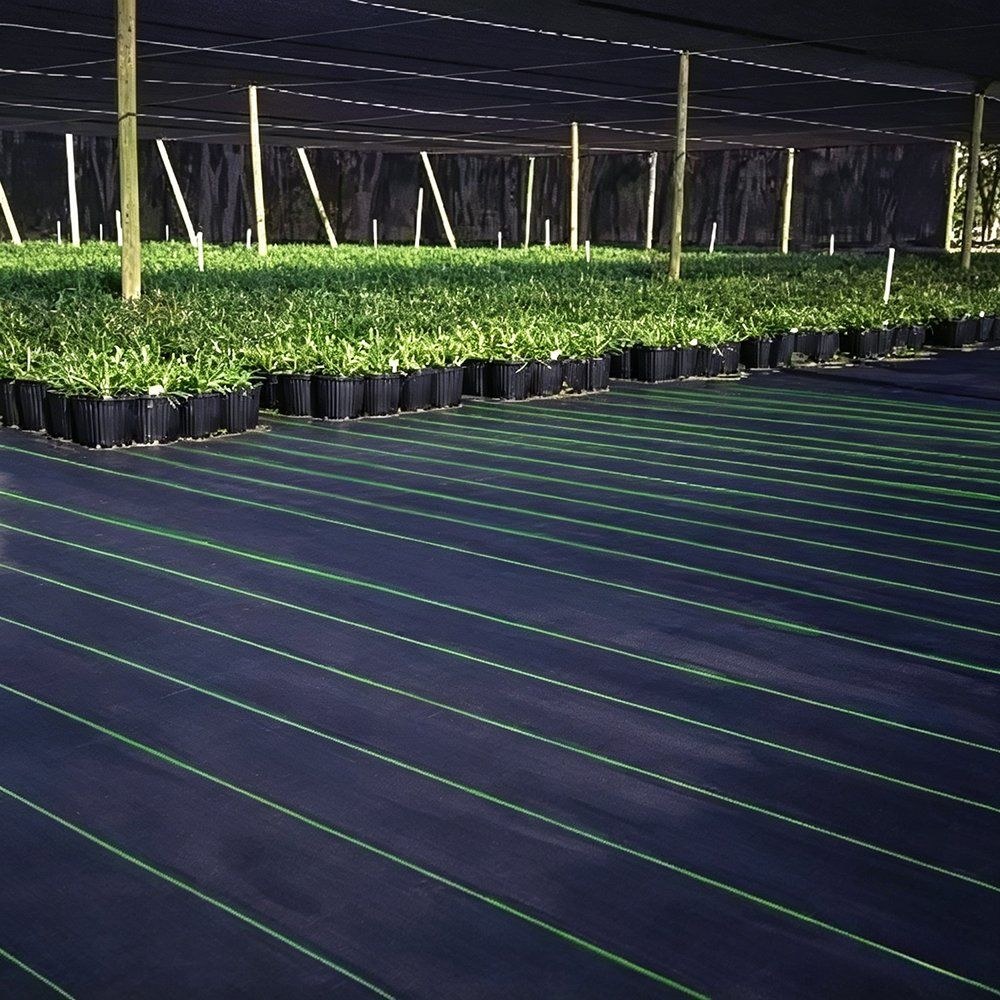
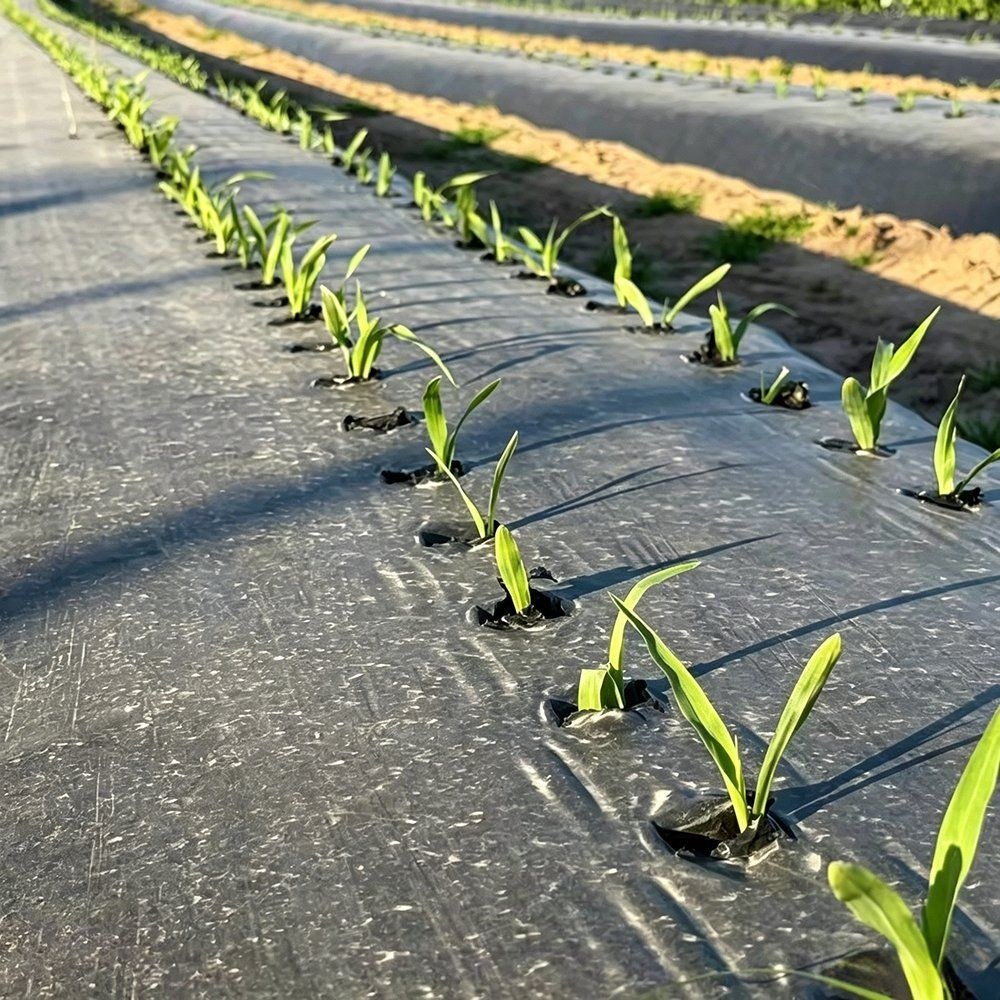
The cloth covers whole field blocks, the floor of wide multi span houses, and single crop rows where the strip between plants is being kept clear. Crops are planted through slits cut on site, so the cover is laid before the planting rather than being worked around it. Because the weave is permeable, irrigation and rain reach the soil underneath, and where low-growing fruit is being grown the cloth keeps it off wet ground. Growers raising stock on the same block often order a planting bag alongside it, and the shade net range covers the covers that go over the crop rather than on the ground.
| Model | WB-036 |
| Material | Woven polypropylene, UV resistant |
| Weight | 200 gsm |
| Width | Made to order to suit the row or the bay |
| Length | Made to order |
| Colour | Black |
| Function | Weed suppression, soil moisture retention, soil warming |
| MOQ | 5000 m2 |
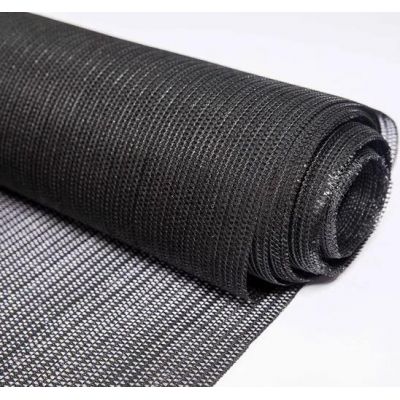
At 200 gsm the cloth is specified for ground that gets used rather than just covered: it lies flat without being chased by wind, it takes a barrow or a sprayer wheel without the weave distorting under the load, and it holds its line when the block is being worked. The heavier cloth also behaves better at the edge, which is where a cover usually fails first, because the edge is what gets scuffed by a wheel or lifted by wind and then starts to run. On a big block the edges and the joins are the two places worth spending attention on, and both are decided by the widths rather than by the weight. Where the requirement is covering the crop above ground rather than the soil, a knitted monofilament net is the better fit.
Width, weight and roll length are made to order, and the standard minimum order quantity is 5000 m2. OEM marking can be added to the roll where the goods are being sold on. Send us the plan of the block or the house, with the row spacing and the bay widths, and we will work out the drop widths that keep the joins down and confirm the roll sizes. Buyers tracking what is being laid on farm blocks can follow trade coverage such as HortiDaily and FreshPlaza for what growers are installing.
How much should two drops overlap?
Enough that it is still an overlap after the cloth has settled and been walked on, and the edges are then pinned or battened. Send us the bay or block width and we will set the drop widths so the joins are as few as possible.
Can weeds still come up through the cloth?
Not through it, but they will come up at an uncovered join or where the edge lifts. That is why the widths and the fixing matter as much as the weight on a large block.
How is the crop planted through the cover?
Slits are cut on site once the cloth is laid, and the plants go in through them. Tell us the row spacing and we will confirm the width and the drop you need.
Tell us the block or house plan, with the row spacing and bay widths, and the weight you have in mind, and we will confirm the drop widths, the roll sizes and the packing that suit your order.
Mark Wu, Co-founder & Technical Director, Sichuan Zhifang Net Industry. 15 years manufacturing agricultural nettings for growers in 32 countries.