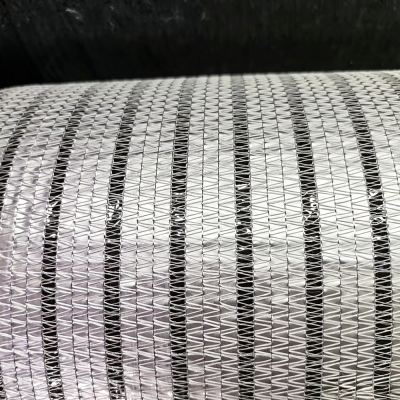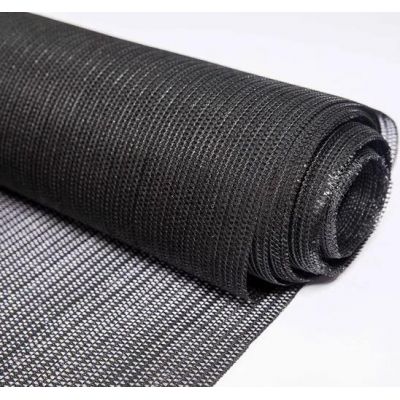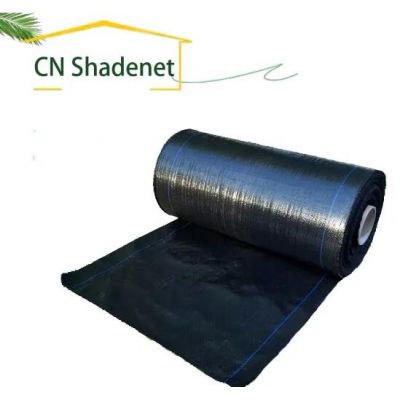


This is the anti insect net we supply made from virgin HDPE, and the reason the grade is worth specifying is that a net has two jobs that recycled resin does both badly: it has to hold its weave under tension, and it has to stay intact under UV for more than one season. Virgin resin extrudes into a more consistent strand, which gives a mesh that does not thin unpredictably at the crossings, and it takes the UV stabiliser evenly through the filament rather than sitting on the surface. That is what decides whether a cover is still worth putting up in year three.
Insect netting has two jobs, and recycled resin does both of them badly. It has to hold its weave under tension without thinning at the crossings, and it has to stay intact under UV for more than a single season. That is the case for specifying virgin HDPE rather than regrind.
Regrind has already been through an extrusion cycle, so its strand thickness varies along the length and the stabiliser is not evenly distributed. On a net that shows up in two ways: the weave thins unpredictably where strands cross, which is precisely where a cover takes its load, and the UV protection fails unevenly, so the cloth goes brittle in patches rather than overall. Virgin resin extrudes into a more consistent filament, the stabiliser is carried evenly through it, and the mesh keeps both its strength and its openness across the seasons it is meant to last.
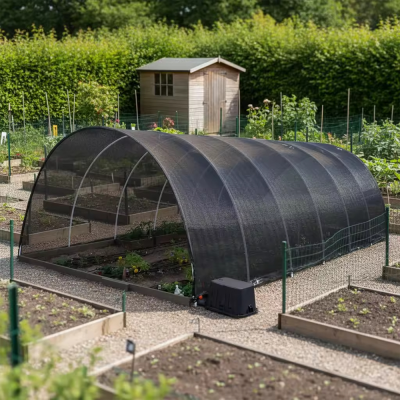
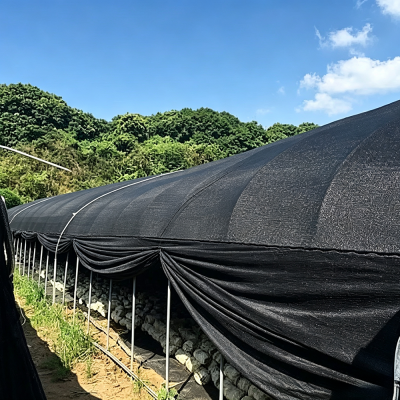
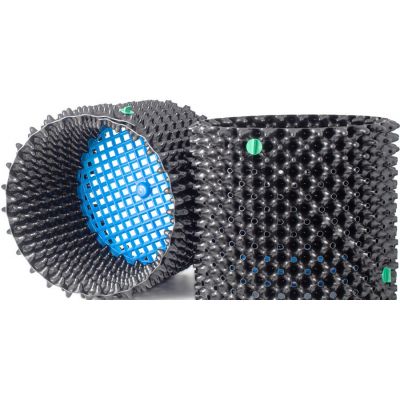
The netting goes over greenhouse vents and doorways, across low tunnels, over raised beds and along crop rows, and because it comes in 2 to 6 m widths a bay or a bed can be covered in one piece rather than seamed. Growers setting trays under the same netting often pair it with a planting bag, and the wider shade net range covers the shading grades where light rather than insect control is the problem.
| Material | 100% virgin HDPE, UV resistant |
| Mesh | Made to order across the 20 to 60 mesh range |
| Width | 2 to 6 m |
| Colour | White and transparent, other shades on request |
| Function | Keeps insects off greenhouse and field crops |
| Application | Greenhouse vent, low tunnel and crop row |
| Packing | Roll, customised on request |
| MOQ | 5000 m2 |
The two failures above are the ones that decide whether a net is worth putting back up. A weave that thins at the crossings tears under tension before it wears out, and a cloth whose stabiliser is uneven goes brittle in patches that then crack in the wind. Both come back to how evenly the strand was made, which is why the resin grade is specified on this product rather than treated as an internal detail. A knitted monofilament net covers the shading job where a shade rate is wanted instead.
Width, length, mesh count and colour are made to order, and the standard minimum order quantity is 5000 m2. The first detail to confirm is the insect you are dealing with and whether the net will be left up or taken down between seasons. Netting ships in rolls. Buyers tracking how insect netting performs can follow trade coverage such as HortiDaily and FreshPlaza for what is being installed.
Does the resin grade really matter on a net?
It decides how evenly the strand is made, which is what governs whether the weave thins at the crossings and whether the UV stabiliser is spread evenly through the filament.
Can it be left up through the season?
Yes, and the virgin resin is specified for exactly that. Tell us if it will come down between seasons and we will advise on the grade.
Can I order a different mesh count?
Yes. Counts across the 20 to 60 mesh range are made to order. Tell us the pest and we will advise.
Tell us the insect you are dealing with and whether the net will stay up between seasons, and we will confirm the mesh count, the width and the packing that suit your order.
Mark Wu, Co-founder & Technical Director, Sichuan Zhifang Net Industry. 15 years manufacturing agricultural nettings for growers in 32 countries.