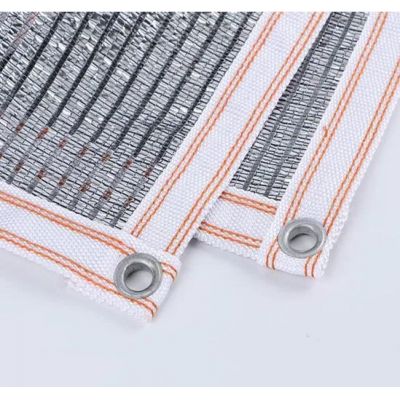


The two questions that come with this net are usually about money and about winter rather than about shade. The money question is answered by the reflective surface: because a share of the incoming radiation is turned back before it becomes heat, less ventilation and less cooling capacity is needed to hold the same temperature. Our specification sheet puts the energy saving at around 30 per cent against a house running the same setpoint without a screen. The winter question is answered by the same surface working in reverse, so the roof gives less heat away on a clear cold night and the crop sits further from freezing.
The enquiry usually comes in two parts: how much does a reflective screen save on cooling, and does the same net do anything useful in winter. Both come down to the same property of the cloth, which is that the surface turns radiation back rather than letting it pass through and become heat.
In summer the incoming short-wave radiation is the main load on a house, and a reflective net takes a share of it back out before it can raise the temperature under the screen. In winter the movement is the other way: the long-wave radiation leaving the roof on a clear night is held back by the same surface, so the house loses heat more slowly and the crop is exposed to less chilling.
One screen therefore works at both ends of the year, which is why the same specification is ordered for summer cooling and winter retention on the same house rather than as two separate products.
Cooling capacity and ventilation are the two largest running costs on a house in a hot climate, and both drop when the radiation load is taken off at the roof. Our own specification sheet puts the energy saving at around 30 per cent against a house running the same setpoint with no screen fitted, and that figure is measured over a season rather than over a single afternoon.
The saving is not the same on every house. It is largest where the roof is glazed and the sun is high, and smaller where the house is already heavily ventilated. Tell us the house type and the setpoint you run, and we will say what the screen is likely to return on it.
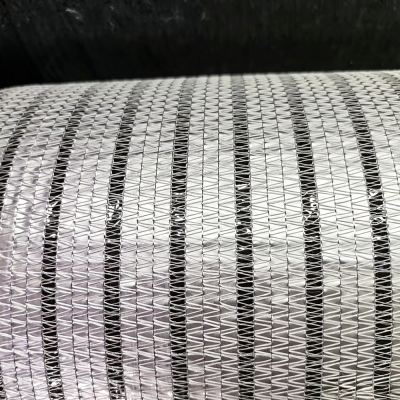
| Material | Aluminium foil strip with HDPE film |
| Construction | Woven foil and film strip net |
| Shade Rate | 95%, other rates to order |
| Energy Saving | Around 30% on cooling load |
| Colour | Silver, other options to order |
| Size | Cut to the width and length you specify |
| Model | LDS-001 |
| Packing | PE bag or woven bale, customised on request |
The winter value of the screen shows up as a slower drop in temperature rather than as a fixed number of degrees, because that depends on the house, the crop and the sky. What can be said is that a house under a reflective screen starts the night warmer and cools more slowly, which is what buys a crop the extra hours that matter in a late or early frost.
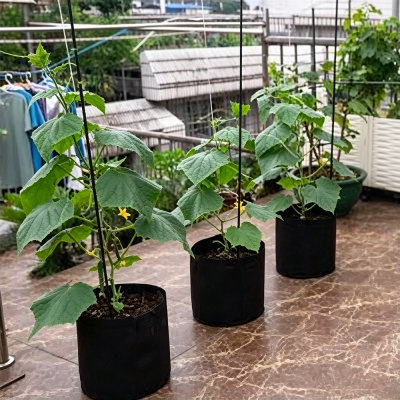
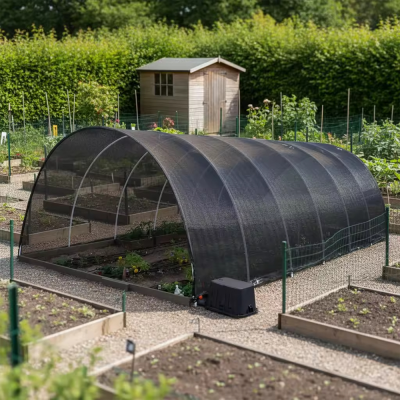
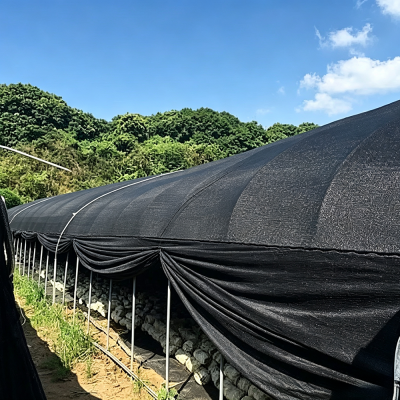
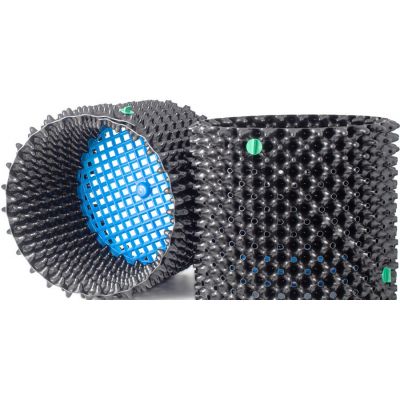
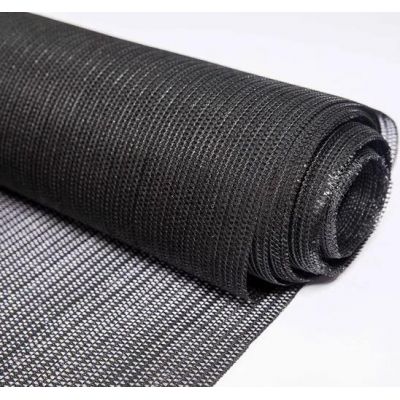
The cloth also takes hail on the roof rather than letting it reach the glazing directly, which is the same reason growers running it over an open crop pair it with a planting bag and the wider shade net range. The foil screen and the adjustable-rate version are usually ordered together.
The bond between the foil strip and the film beside it is what decides how long a screen holds its surface, and it shows up first along the fold lines after a season of being handled. Our nets go through the same five in-house checks as the rest of the range, ageing and tensile included, before a piece is packed.
We have been making agricultural netting since 2011, in a plant of close to 10,000 square metres with more than 50 machines. Solar control and protected cropping are covered in the published work, including the guidance at FAO and the reporting at Agriculture.com. Company background sits on our about page.
How much does it actually save on cooling?
Our specification sheet puts it at around 30 per cent against a house running the same setpoint without a screen. The figure is a season average, so tell us the house type and setpoint and we will say what it is likely to return on yours.
Does the same net protect against frost?
It slows the heat loss from the roof, so the house starts the night warmer and cools more slowly. That buys hours in a late or early frost, though a fixed figure always depends on house and crop.
Will it take hail?
The cloth takes the hail on the roof rather than letting it reach the glazing directly, which is one of the reasons it is run over open crops as well as under glass.
Can it be cut to my house?
Yes. Nets are cut to the width and length you send, so there is no need to plan the house around a stock roll.
Send the house type, the size you need and the shade rate you are working to, and we will confirm the make-up that suits the job.
Mark Wu, Co-founder & Technical Director, Sichuan Zhifang Net Industry. 15 years manufacturing agricultural nettings for growers in 32 countries.
Running this net on your house? Leave a review below and tell other growers what it saved you.