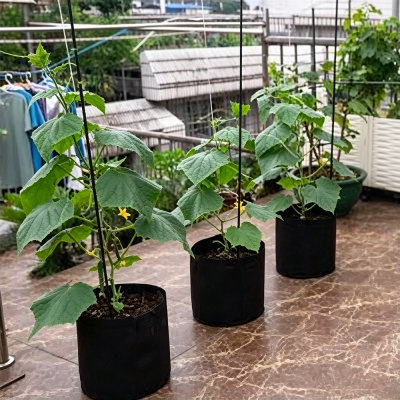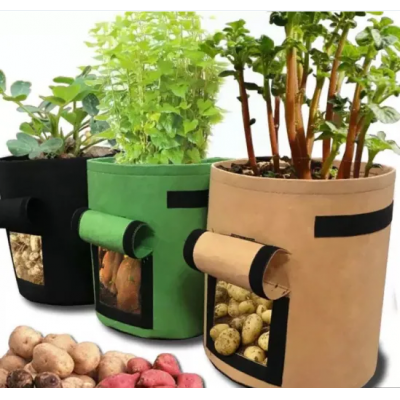


The size of a grow bag is usually picked by eye, and it is the one decision that is hard to undo once the crop is in. What drives it is the rooting depth of the plant and how long it stays in the bag. A shallow-rooted salad crop finishes in a few gallons; a tomato that stands for a whole season wants a good deal more, because the medium holds the water reserve and a small bag runs dry between waterings in a hot week. Root crops go the other way and need depth rather than width. The bag is heavy duty nonwoven felt, so it holds its shape when filled and moved, and folds flat when empty.
A grow bag is a small growing system, and the size of it decides how the season goes. Pick one that is too small and the medium dries out faster than anyone wants to water; pick one that is oversized and the roots sit in wet medium for longer than they should. The useful way to choose is by the crop rather than by the shelf.
Two things set the size: how deep the roots want to go and how long the plant stays in the bag. Salad crops and herbs are lifted inside a few weeks and finish well in the smaller sizes, where a large bag would simply be wasted medium. Fruiting vegetables that stand for a whole season are the other case, and there the volume of medium is what holds the water reserve through a hot spell, so they want a good deal more of it. Root crops are a third case again and are driven by depth rather than by width or total volume. The figures people actually buy cluster around the mid sizes, which is why keeping those in stock and cutting the rest to order is usually the sensible arrangement.
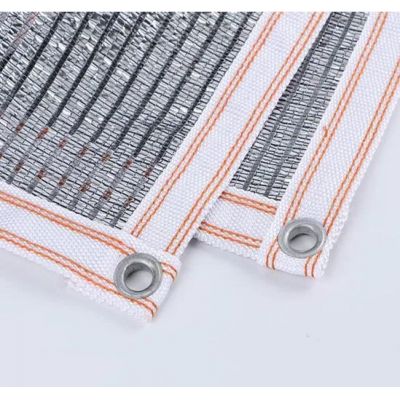
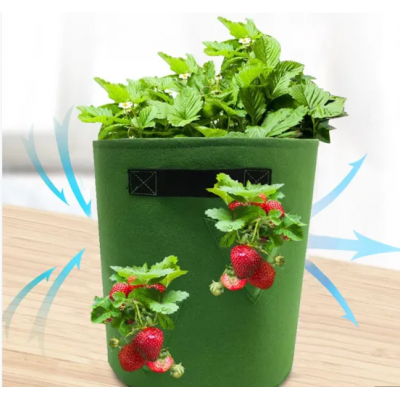
The bags are used for tomatoes, peppers, potatoes and salad crops on a patio or in a raised bed, for soft fruit, and in nursery rows where stock is being grown on before planting out. The fabric breathes and drains, so the medium does not sit saturated the way it can in a sealed pot, and the air that reaches the walls prunes the roots that come up against them. Because the base is soft rather than rigid, the bag sits on uneven ground without rocking, which matters on gravel or on a rough concrete yard. Growers working the same ground often order a planting bag range that suits the crop, and where the crop also needs shade, the shade net range covers that separately.
| Model | PB-019 |
| Material | Heavy duty non woven felt fabric |
| Size | 1 to 500 gallon, or made to your requirement |
| Colour | Black, green, or to your requirement |
| Handles | Two side handles |
| Design | Foldable, reinforced seams |
| Packing | Bag, pallet or carton |
| Sample | Free sample available |
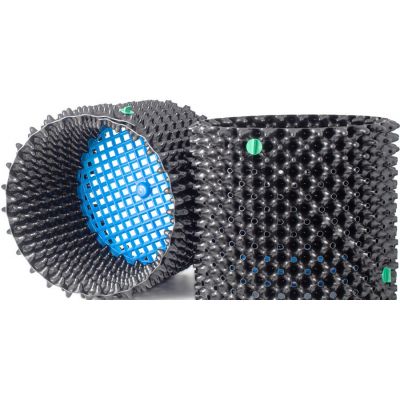
The weight of the fabric matters in three places rather than one. The base has to carry a full bag of wet medium, so it is the part that fails first on a light bag. The seam where the handles meet the wall is the second point, because that is where the whole load is concentrated every time the bag is lifted. The wall itself has to resist being scuffed against concrete and gravel as bags are moved around a nursery. A heavy duty felt speaks to all three, which is the difference between a bag that is reused for several seasons and one that is replaced annually. Where a round rigid container is wanted instead, a grow bag with air pruning seams is also available.
Sizes run from 1 gallon to 500 gallon, with anything outside that made to order. Colour, logo and handle configuration are specified with the order. Packing can be by bag, pallet or carton depending on how the goods are being distributed, and a free sample is available so the fabric weight can be judged in the hand before the order is placed. Tell us the crop, the size and the quantity and we will confirm the specification and the packing. Buyers tracking what is going into nursery and greenhouse production can follow trade coverage such as HortiDaily and FreshPlaza for what growers are installing.
How do I choose the size for a tomato?
By how long it stands and how much water reserve it needs through a hot spell, not by the plant label alone. Fruiting crops that stand for a season want a good deal more medium than salad crops that are lifted in weeks. Tell us the crop and we will advise.
Where do the bags fail first?
At the base, which carries the full weight of wet medium, and at the seam where the handles meet the wall. Both are worth checking on a quotation, because they are the two things that decide how many seasons a bag lasts.
Can I get a sample before ordering?
Yes, a free sample is available so the fabric weight and the stitching can be checked in the hand. Tell us the size you are considering and we will send it.
Tell us the crop, the size and the quantity you need, and how the goods will be distributed, and we will confirm the specification, the packing and the sample that suit your order.
Mark Wu, Co-founder & Technical Director, Sichuan Zhifang Net Industry. 15 years manufacturing agricultural nettings for growers in 32 countries.