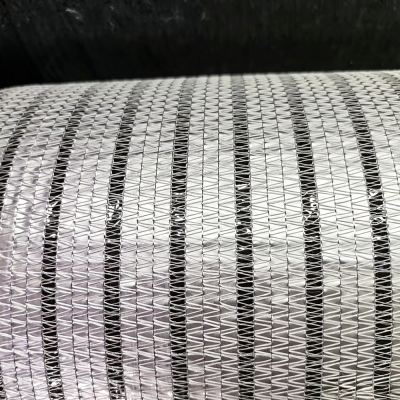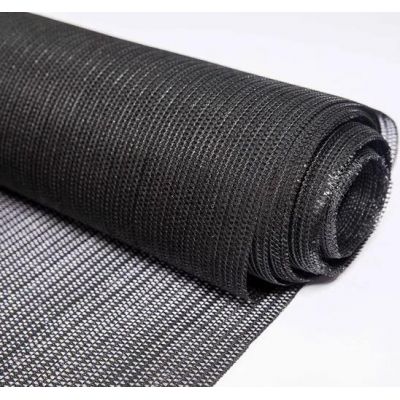


Warp knitting builds the mesh from yarns running the length of the roll, looped into each other rather than woven over and under. That is why this insect net holds its mesh count when it is stretched over a frame, and why a cut edge does not unravel the way a woven cloth can. The yarn is HDPE with UV stabiliser worked into it, and we quote a five year working life on that basis. It is supplied as a roll in widths from 2 to 6 m, in white or transparent, with the mesh count made to order.
Most insect netting sold for greenhouses is woven, and it is worth knowing what that means before you specify it. On a warp knit the yarns run the length of the roll and are looped through each other, so the mesh is held by the structure of the fabric rather than by the crossing points of a weave. That is the difference this net is built around, and it is the reason we put a five year working life on it.
On a woven cloth the warp and weft threads simply cross, and a single broken thread can let the yarns around it shift: the mesh count drifts, a small tear runs, and a cut panel starts to fray along the line it was trimmed. A warp knit is looped instead, so the yarns lock each other in place. The net keeps its mesh count when it is pulled over a frame, a trimmed edge stays square, and a localised tear is far less likely to travel. That structural stability is what sits behind the working life we quote, together with the UV stabiliser worked into the HDPE yarn rather than coated onto it afterwards.
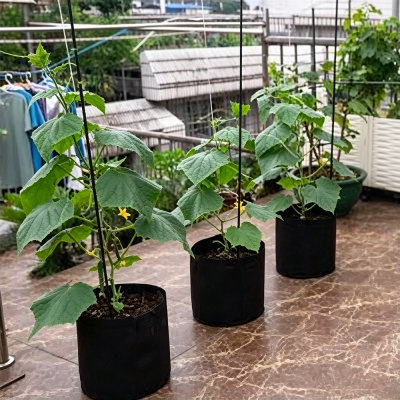
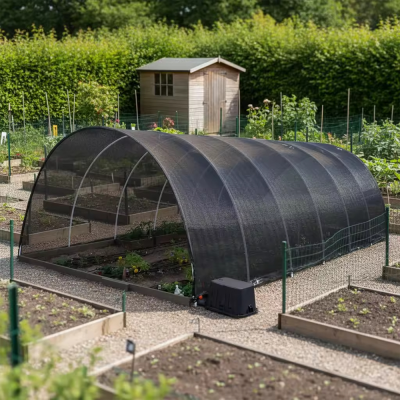
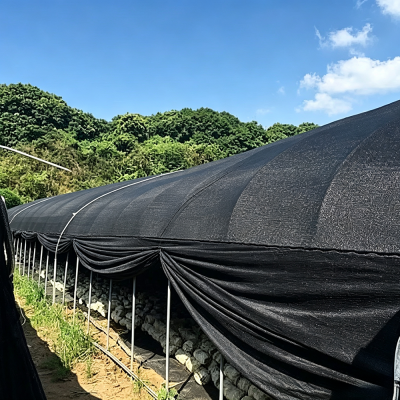
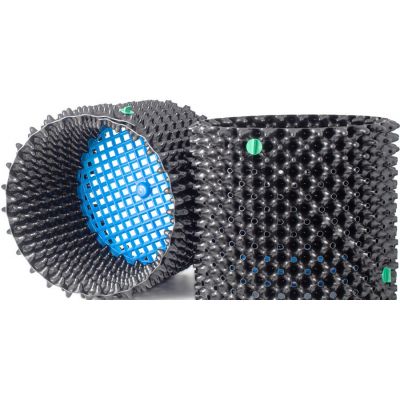
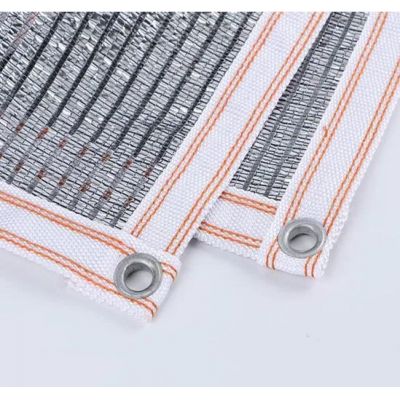
The roll is cut to cover roof vents, side vents and doorways on a greenhouse, and the same cloth goes over low tunnels and field rows where a crop needs holding at a mesh count rather than shading down. It is white or transparent as standard, which matters when the cover sits above growing plants instead of over a structure you are trying to keep cool, because neither colour takes much light out of the crop. Growers raising trays under the same netting often order a planting bag alongside it, and the wider shade net range covers the grades where light, not insects, is the problem.
| Material | Warp knit HDPE with UV stabilised yarn |
| Mesh | 50 x 25 and 40 x 25 as standard, other counts to order |
| Weight | 80 to 130 gsm |
| Width | 2 to 6 m |
| Colour | White or transparent as standard |
| Roll length | 4 x 100 m, 2 x 100 m, 4 x 50 m and 6 x 100 m |
| Working life | 5 years |
| MOQ | 5000 m2 |
The roll runs from 2 to 6 m wide, so most vent openings and tunnel spans are covered in one drop with no joint down the middle. Because the cloth is looped rather than woven, it can be trimmed to the exact opening without the edge fraying, which saves having to sew or tape a hem just to stop it running. It is held down with battens, wire lock channel or clips on the frame, and the mesh is open enough that air still moves through a vent that is closed against insects. Where a shade rate is wanted instead of a mesh count, a knitted monofilament net is the usual choice.
Mesh count, width, roll length and colour are all made to order, and the standard minimum order quantity is 5000 m2. Each roll is packed in one strong polybag with a label, and the roll sizes we run most often are 4 x 100 m, 2 x 100 m, 4 x 50 m and 6 x 100 m. Buyers tracking what growers are installing this season can follow trade coverage such as HortiDaily and FreshPlaza for what is going into protected cropping.
How is a warp knit different from a woven insect net?
The yarns are looped through each other instead of crossing, so the mesh is locked by the structure of the fabric. It holds its mesh count under tension, and a trimmed edge does not fray the way a woven cloth can.
What does the five year working life cover?
It is the period we expect the net to stay serviceable under normal greenhouse use, and it follows from the looped structure and the UV stabiliser in the HDPE yarn. Tell us the exposure and the frame and we will advise on the mesh count for it.
Which mesh counts can you supply?
50 x 25 and 40 x 25 are the stock constructions and the range runs from 20 to 60 mesh. Tell us which insect you are keeping out and we will confirm the count.
Tell us the vent or tunnel dimensions, the mesh count you have in mind and the roll length you buy in, and we will confirm the roll sizes, widths and packing that suit your order.
Mark Wu, Co-founder & Technical Director, Sichuan Zhifang Net Industry. 15 years manufacturing agricultural nettings for growers in 32 countries.