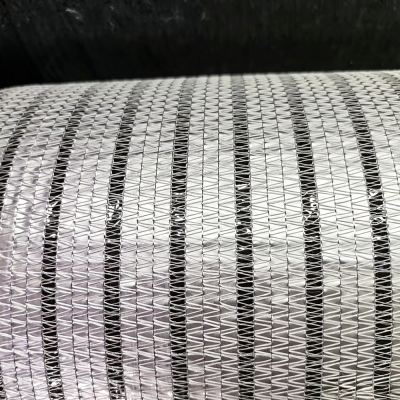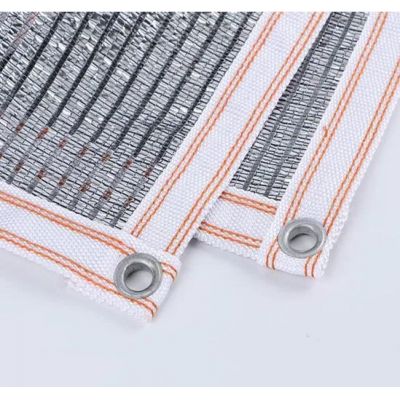


A reflective screen is bought for two jobs, and most quotes only cover one of them. During the day the aluminium surface returns solar radiation before it turns into heat under the roof. After dark the same closed fabric slows the heat that would otherwise escape upward. The foil is laminated to polyethylene wires and knitted into an open-hole screen, so air still moves through it when the screen is drawn. This model runs at a 95 per cent shade rate with a 30 per cent energy saving rate. Widths, lengths and shade rates are made against the bay size you send.
Buyers frequently send us a shade rate and a bay size and stop there. That order form leaves half the screen unspecified. A reflective screen earns its cost in two separate windows, the afternoon peak and the night that follows it, and a screen chosen only for the first will often be the wrong one once the sun goes down.
Shade rate describes how much light is kept out at midday. Energy saving rate describes how much of the heat already inside the house is held back after sunset. They rise together across a product range, but not at the same slope, and the second number is the one that decides whether a heating bill falls.
That is why we quote both per model instead of listing a single percentage. A grower who knows the crop and the climate can then see the trade in front of them. A grower who only has a shade figure is choosing blind. In practice the two figures are set together with the bay width, because a screen that does not fit the house cannot be judged on either number.
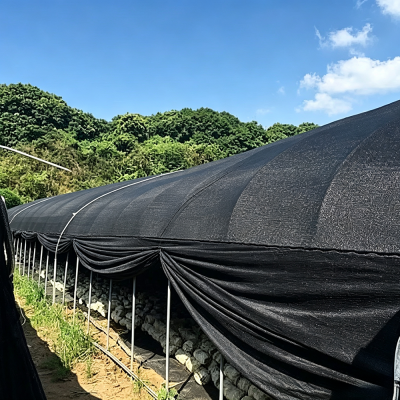
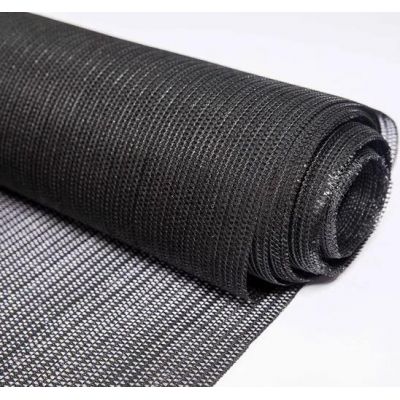
In daylight the laminated aluminium surface reflects incoming solar radiation rather than absorbing it, so less of it is converted into heat beneath the roof. A plain black net behaves differently: it takes the radiation in and re-radiates it, which is why the air under black netting can read warmer than the air outside even when both screens carry the same shade rate.
After dark the mechanism reverses. Heat built up in the house during the day wants to leave through the roof, and a closed reflective screen slows that loss. On this model the shade rate is 95 per cent and the energy saving rate is 30 per cent. Where a crop needs more light, the same construction is knitted at a lower shade rate and the retention figure moves with it.
| Material | Aluminium foil laminated to polyethylene wires |
| Structure | Open-hole knitted screen |
| Shade rate | 95%, other rates made to order |
| Energy saving rate | 30% |
| Standard size | 4 x 3 m, other sizes to order |
| Guarantee | 500kly |
| Shrinkage | 1.5% |
| Flame retardant | Available to order on the same construction |
| Model | ASN-002 |
| Packing | PE bag, customised packing on request |
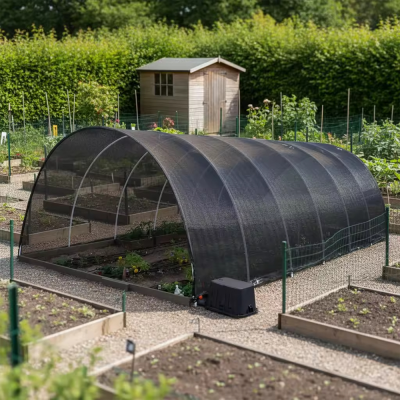
The clearest case is a greenhouse with roof vents, where a reflective screen cools the house without closing off the ventilation path. The same fabric goes over propagation benches where young plants scorch easily, and over flower crops that need the light without the heat that arrives with it.
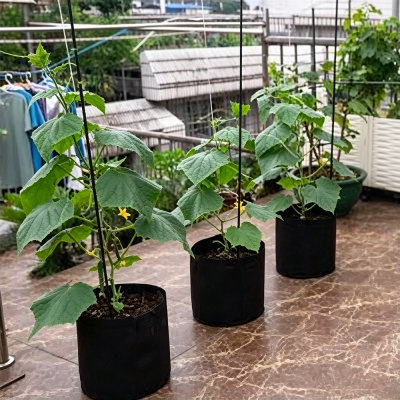
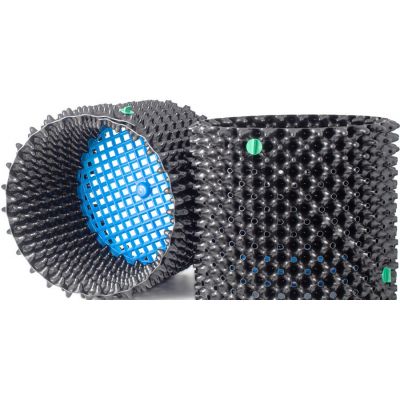
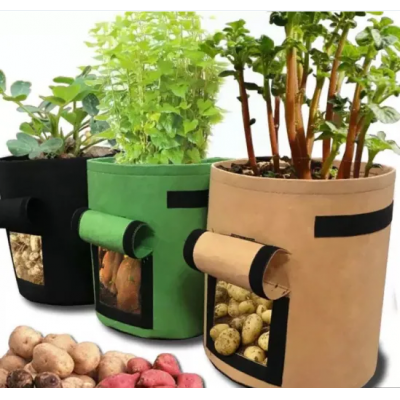
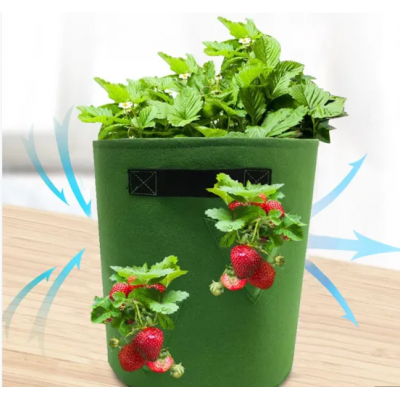
A reflective screen is often run beside a plain knitted shade net on the same house, foil for the peak weeks and plain net for the shoulders of the season. Growers running container crops under either screen usually pair it with a planting bag. The wider shade net range covers knitted, flat wire and reflective types.
Foil laminate is where the cost of a screen sits, and it is also the first place a low quote trims. Thin laminate and regrind carrier yarn both photograph well in a sample shot. Our screens go through the same five in-house checks as the rest of the range, ageing and tensile included, before a roll is packed.
We have been making agricultural netting since 2011, in a plant of close to 10,000 square metres with more than 50 machines. Specifying protected cultivation is covered in the open literature, including the guidance published by the FAO protected cultivation guidance and the commercial reporting at commercial horticulture coverage. Company background sits on our about page.
How do I choose between 95% and a lower shade rate?
Start from the crop, not the thermometer. Crops that scorch under strong light usually justify the higher rate; crops that need light to size and colour will lose yield if the house is darkened too far. Send us the crop and the summer temperature range and we will suggest the rate.
Will a closed screen raise humidity under it?
It can, which is why the fabric is knitted with an open-hole structure rather than made solid. Air still moves through the screen while it is drawn. Where humidity is critical, leave the screen partly open through the middle of the day.
What does the 500kly guarantee refer to?
It is the ultraviolet energy the fabric is rated to take before it starts to degrade. Virgin imported and domestic raw material, UV and anti-ageing additives worked into the yarn, then a shaping treatment.
Can the screen be made to my bay spacing?
Yes. 4 x 3 m is the standard size and other widths and lengths are made to order. There is no need to plan the house around a stock roll.
Send the roof area, the crop and your summer temperature range, and we will confirm the shade rate and width that suit the house.
Mark Wu, Co-founder & Technical Director, Sichuan Zhifang Net Industry. 15 years manufacturing agricultural nettings for growers in 32 countries.
Running a reflective screen on your house? Leave a review below and tell other growers what it changed for your crop.