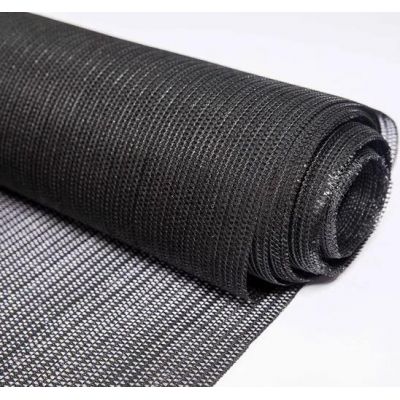


It is worth looking at what a crop looks like without protection. Aphids colonise the underside of the leaf, the leaf curls and the sooty mould follows, and a crop that has been through that loses its value long before it is picked, whatever is spent on sprays afterwards. A mesh screen over the row or the house takes that out of the equation: the insects never reach the leaf, nothing is applied, and the produce goes to market clean. This one is HDPE in a fine mesh, made to order in widths up to 5 m with a five year working life.
The case for a mesh screen over a crop is easier to see in the damage than in the specification. When aphids reach a leaf they colonise the underside, the leaf curls, the honeydew brings mould behind it, and by the time anyone treats the problem the leaf has already lost the condition it is sold on. The screen in the photograph is the same crop on the same day, with and without it.
A mesh screen is not bought for the insects it keeps out of the field, it is bought for the ones it keeps off the part of the plant being sold. Leaf vegetables and young greens are graded on appearance, and aphid damage is not something that can be washed off or trimmed away once it is in. Screen the row and the insects never reach the leaf, so nothing needs to be applied and nothing has to be sorted out again at packing. The mesh works by size: the count is fine enough to hold the insects at the surface while the crop underneath stays open to light and air, which is why a mesh screen is usually specified over the crop itself rather than around the whole structure.
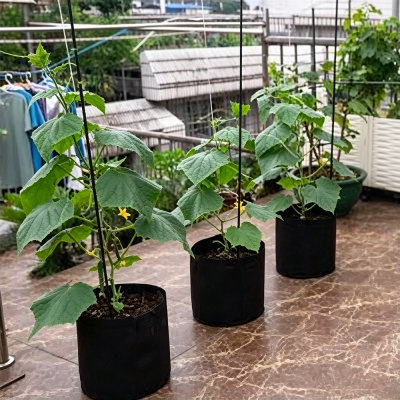
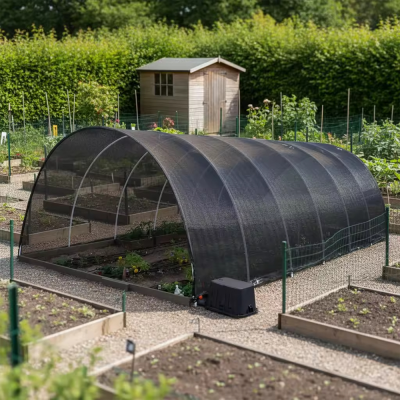
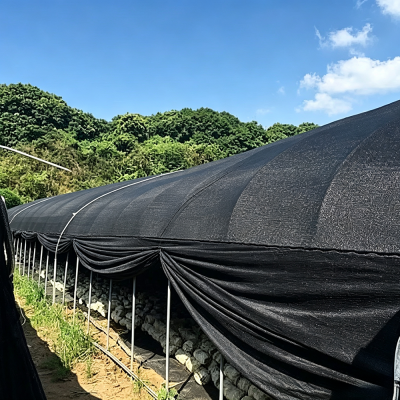
The same cloth goes over open field rows on hoops, over the vents and openings of a farm greenhouse, and over benches and propagation areas where young plants are most easily lost. It is white or transparent as standard, so it costs the crop very little light at the point where the plants are still growing into the light. Growers raising stock under the same screen often order a planting bag beside it, and the wider shade net range covers the grades where the crop needs shade rather than insect exclusion.
| Material | HDPE with UV stabilised yarn |
| Mesh | 50 x 25 and 40 x 25 |
| Weight | 80 to 130 gsm |
| Width | Up to 5 m |
| Roll length | 30 m, 50 m and 100 m |
| Colour | White or transparent |
| Working life | 5 years |
| MOQ | 5000 m2 |
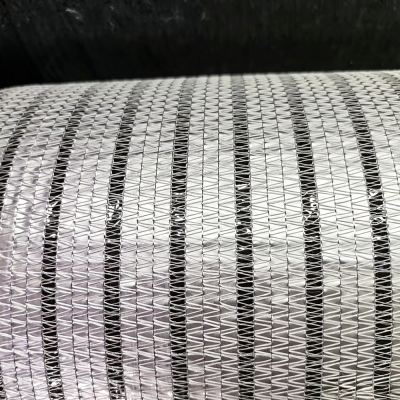
The mesh decides what is stopped and what is not, and the two counts we run as standard are 50 x 25 and 40 x 25, with the range running from 20 to 60 mesh for orders that need a different balance. Colour is a light decision rather than an insect one, and white or transparent is the usual specification where the screen sits over growing plants because it takes least light out of the crop. On the frame, the screen wants to be tight: run into a profile, trapped under a batten or held on wire lock channel, so wind cannot work under an edge and start it chafing. Where the requirement is a shade rate rather than insect exclusion, a knitted monofilament net is the better fit.
Mesh count, width, roll length and colour are all made to order, and the standard minimum order quantity is 5000 m2. Rolls ship in one strong polybag with a label, in 30 m, 50 m and 100 m lengths as the usual options. On an enquiry it helps to know the crop, the pest and the span being covered, because those three decide the count and the drop. Buyers tracking what is going into field vegetables and protected cropping can follow trade coverage such as HortiDaily and FreshPlaza for what growers are putting up.
Which mesh do I need for aphids?
Aphids are small enough that the finer counts are the ones that hold them, and 50 x 25 is what we supply most for this. 40 x 25 is available where a more open mesh suits the crop. Tell us the pest and the crop and we will confirm the count.
Will the screen shade the crop as well as protect it?
A white or transparent screen costs the crop very little light, which is why it is the usual choice over growing plants. If you want a shade rate as well, the wider shade net range is the better fit and we can quote both.
Can it be used on open field rows as well as in a greenhouse?
Yes. It is sold by the roll and cut to the span, so hooped rows, greenhouse vents and propagation benches all use the same cloth. Tell us the span and we will confirm the width and the drop.
Tell us the crop, the pest you are dealing with and the span you need to cover, together with the mesh count you have in mind, and we will confirm the width, the roll sizes and the packing that suit your order.
Mark Wu, Co-founder & Technical Director, Sichuan Zhifang Net Industry. 15 years manufacturing agricultural nettings for growers in 32 countries.