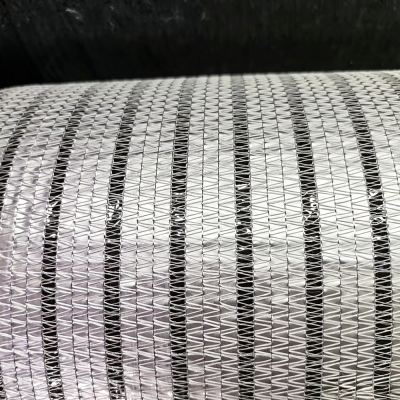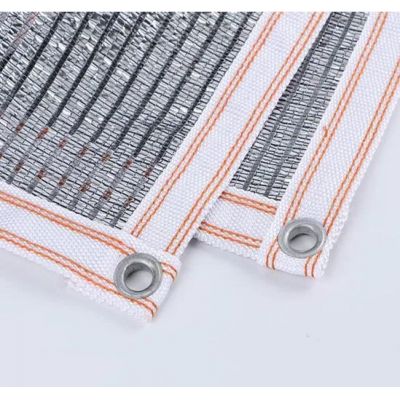


This is the reflective shade cloth we supply as aluminet, and the difference from a plain shade net is what it does to heat rather than to light: an aluminised surface reflects radiated heat back off the cover instead of absorbing it and re-radiating it downward, which is why the same shading percentage feels several degrees cooler under this cloth than under a black or green one. Shading runs from 50 to 99 percent and the size is made to order, so the same cloth covers a greenhouse roof, a garden bed and a car tarp.
Most shade cloth works on light: it blocks a share of it and lets the rest through. Aluminet works on heat instead. An aluminised surface reflects radiated heat off the cover rather than absorbing it and passing it down, which is why the same shading percentage reads noticeably cooler underneath. Shading runs from 50 to 99 percent and the size is made to order.
The physics is simple enough to check by hand on a hot day: a black shade net absorbs the radiation it intercepts, warms up, and re-radiates some of that downward, so the space under it is still working against a warm surface. The aluminised face sends a large part of that radiation back the way it came, so what reaches the crop or the seating below is mostly the fraction that got through the weave rather than the fraction the cloth gave off. On a greenhouse that shows up in the afternoon temperature; on a patio or a car tarp it shows up as a surface that stays usable.
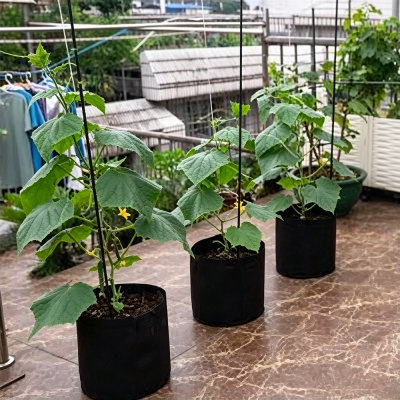
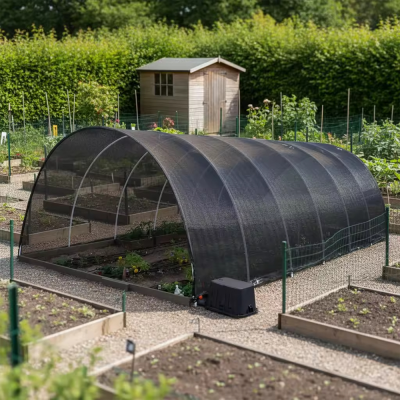
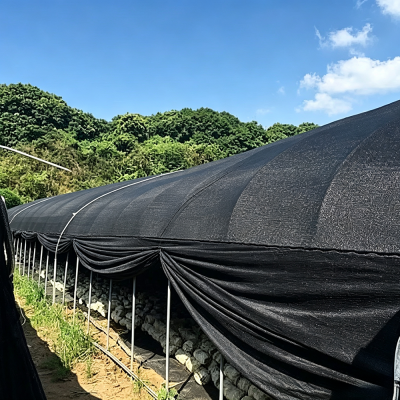
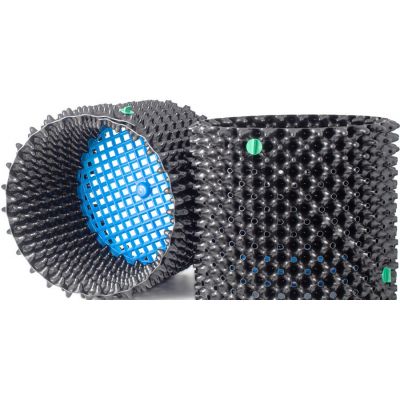
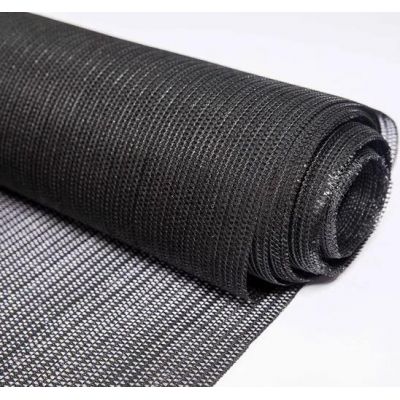
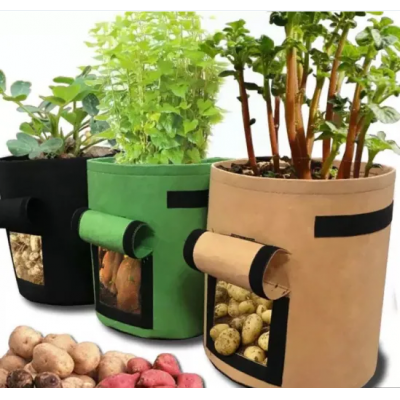
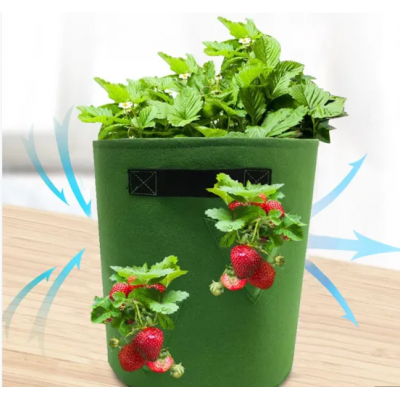
The cloth goes over a greenhouse roof, across a garden bed, over a car tarp and on a shed or a storage area, and because the size is customised, an opening can be covered in one piece rather than patched from stock panels. Households setting trays under the same cloth often pair it with a planting bag, and the wider shade net range covers the plain knitted grades where reflectivity is not needed.
| Model | Alu990001 |
| Material | HDPE with an aluminised reflective face |
| Shading | 50 to 99 percent, made to order |
| Size | Customised to your dimensions |
| Edges | Bound edge with metal grommets |
| Function | Reflecting radiant heat while shading |
| Applications | Greenhouse, garden, car tarp and shed |
| Packing | PP woven bag, customised on request |
Shading percentage is chosen the same way as on a plain net, but the consequence is different: because the cloth is also reflecting, a given percentage here does more for temperature than the same number on a black net, so a grower who normally runs a denser grade can often step down one and still hold the temperature. The aluminised face is directional, so the reflective side is turned outward toward the sky when the cover is fitted. A knitted monofilament net covers the standard shading job where a plain knit is enough.
Size, shading percentage and edge finish are all made to order, so the first detail to confirm is the area you are covering and whether the cloth will be left up or taken down between seasons. Cloth ships in PP woven bags. Buyers tracking how reflective shade cloth performs can follow trade coverage such as HortiDaily and FreshPlaza for what is being installed.
How is this different from a normal shade net?
The face is aluminised, so it reflects radiant heat instead of absorbing and re-radiating it, and the space below runs cooler at the same shading percentage.
Which side faces out?
The reflective side is turned outward toward the sky, so the heat is sent back rather than passed down.
Can I order a specific size and shading percentage?
Yes. Size is customised and shading runs from 50 to 99 percent. Tell us the area and how it will be used.
Tell us the area you are covering, whether it will be left up or taken down between seasons, and the shading percentage you have in mind, and we will confirm the cloth and the packing that suit your order.
Mark Wu, Co-founder & Technical Director, Sichuan Zhifang Net Industry. 15 years manufacturing agricultural nettings for growers in 32 countries.