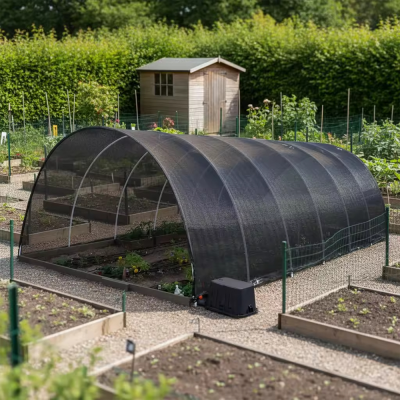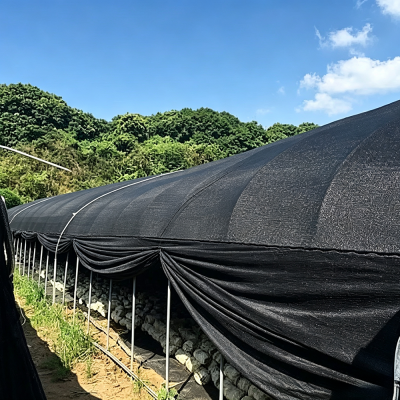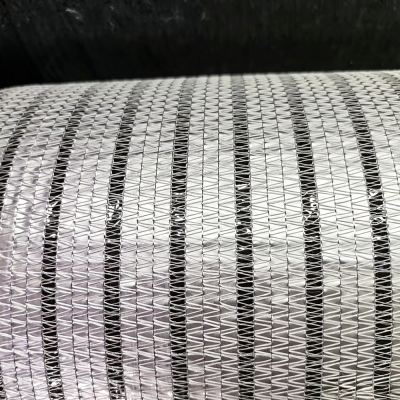


This is the 50 mesh insect netting we supply, which is the fine end of the range and is bought for one reason: the small insects. Whitefly, thrips and aphids pass a 20 or a 32 mesh cloth without difficulty, so where those are the problem the count goes up, and 50 mesh is where most growers land. The trade is ventilation, and it is worth being honest about it: a cloth this fine holds more air back, so vents have to be sized for it. Widths run 2 to 6 m.
Mesh count is not a quality grade, it is a choice about which insects are stopped, and 50 mesh is the fine end of that choice. Whitefly, thrips and aphids pass a 20 or a 32 mesh cloth without difficulty, so where those are the problem the count goes up. The cost is airflow, and it is worth planning for rather than discovering.
At 50 mesh the openings are small enough that the insects which cause the most persistent losses in a greenhouse or a net house are held out rather than slowed down, which is why the count is standard on structures where whitefly or thrips have already been a problem. That is a different decision from choosing a shade rate: a fine insect cloth is not doing much about light, it is doing something about what is flying in. The same property makes it useful on a porch or a balcony, where the object is to keep small biting insects out of a seating area without walling the space in.
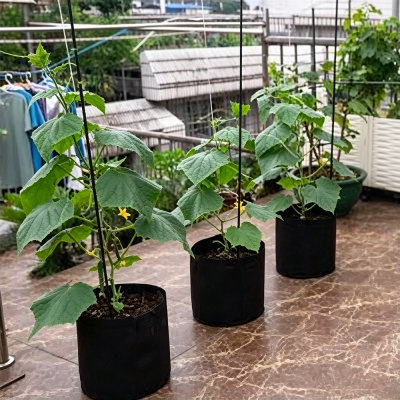
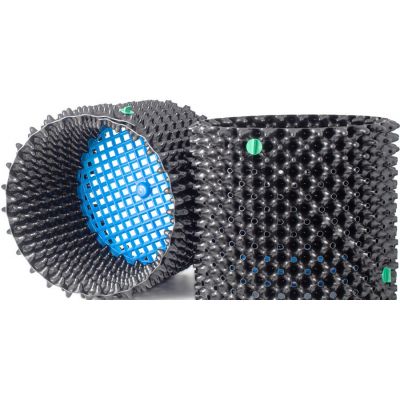
The netting goes over greenhouse vents and doorways, along farm building openings, across a net house and over a porch or balcony railing, and because it comes in 2 to 6 m widths a wall or a bay can usually be covered in one piece rather than seamed. Households setting trays under the same netting often pair it with a planting bag, and the wider shade net range covers the shading grades where light rather than insect control is the problem.
| Model | FCW01 |
| Material | Woven HDPE |
| Mesh | 50 mesh (range 20 to 60 mesh) |
| Width | 2 to 6 m |
| Colour | White and transparent as standard, other shades on request |
| Function | Holds out small insects including whitefly and thrips |
| Application | Farm vent, greenhouse, net house and porch enclosure |
| Packing | Roll, customised on request |
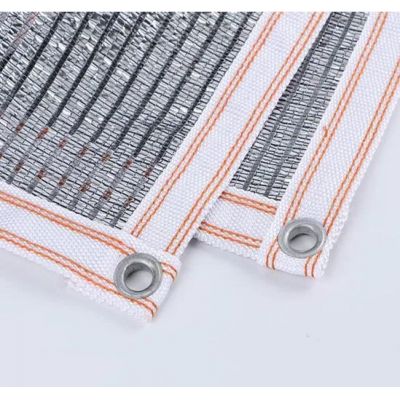
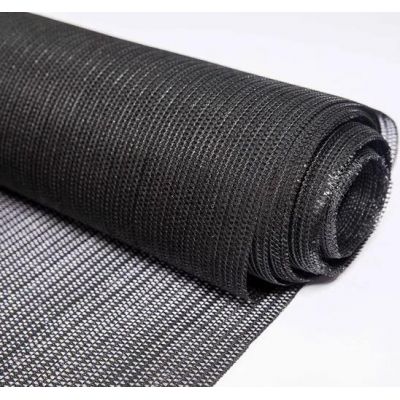
A cloth this fine holds more air back than a coarse one, and on a sealed structure that shows up as a hotter, damper house by mid afternoon. The fix is not to step back down in mesh, it is to size the open area for the mesh: either more vent area or a wider gap between the insect cloth and the working space. That is why mesh count is worth settling at the design stage with the vent dimensions rather than after the structure is clad. A knitted monofilament net covers the shading job where a shade rate rather than insect control is wanted.
Mesh count, width, length and colour are made to order, and the standard minimum order quantity is 5000 m2. The first detail to confirm is the insect you are dealing with and the open area to be covered. Netting ships in rolls. Buyers tracking how insect netting performs can follow trade coverage such as HortiDaily and FreshPlaza for what is being installed.
Do I need 50 mesh or will 32 do?
32 mesh stops the larger insects; 50 is for whitefly, thrips and aphids. Tell us the pest and we will advise.
Will a 50 mesh cloth make the house too hot?
It holds more air back than a coarse mesh, so vent area has to be sized for it. Settling mesh and vent dimensions together avoids the problem.
Can the same netting be used on a porch?
Yes. The fine mesh is used to keep small biting insects out of a seating area without walling the space in.
Tell us the insect you are dealing with and the open area you are covering, and we will confirm the mesh count, the width and the packing that suit your order.
Mark Wu, Co-founder & Technical Director, Sichuan Zhifang Net Industry. 15 years manufacturing agricultural nettings for growers in 32 countries.