

Shade netting is one of those inputs where the material decides how long the job lasts. This net is warp knitted from HDPE monofilament, so the mesh keeps its openings under tension instead of pulling out of shape, and the yarn is stabilised against ultraviolet so the shade rate you buy is still the shade rate in year three. Shade rates run from 40 per cent to 99 per cent. Colour, width and weight are made to your order. What matters here is that the mesh is knitted rather than woven, and the yarn is virgin HDPE rather than regrind.
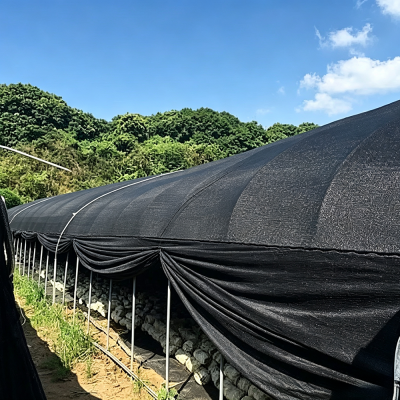
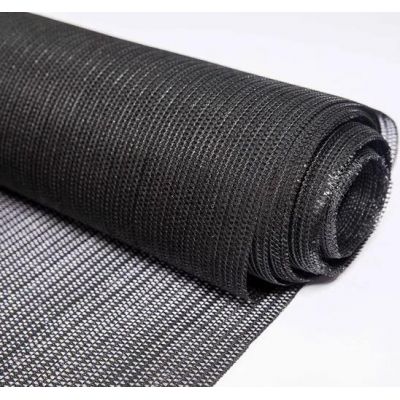
Two growers buy the same shade rate and get two different results, because the number on the label says nothing about how the mesh is made. A knitted net holds its openings when it is stretched over a frame. A woven one pulls apart at the first real tension. This net is warp knitted from HDPE monofilament, which is the reason it can be pulled tight over a greenhouse and stay put through a season.
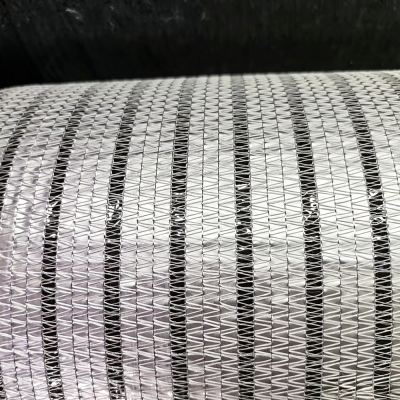
Monofilament means each strand is a single solid round filament rather than a slit tape. Knitted into a mesh, those strands form loops that share load across the fabric instead of running in two straight directions. In practice that is the difference between a tear that stops and a tear that keeps going.
The material is virgin HDPE 5000S with UV and antioxidant additives worked into the yarn, not coated on afterwards. Our knitted range carries a 500kly guarantee, which is the industry measure of how much ultraviolet energy the fabric absorbs before it degrades. Shrinkage is held to about 2 per cent. The same additives give the net useful resistance to acidic and alkaline contact, which matters where it is washed down or used near fertiliser.
Shade rate is a crop decision, not a price decision. A higher percentage is not automatically better. Tomatoes and peppers are usually run between 30 and 50 per cent, leafy greens between 50 and 60, and shade-tolerant ornamentals and orchids higher still. Our range covers 40 per cent to 99 per cent, so the specification is set by what you are growing.
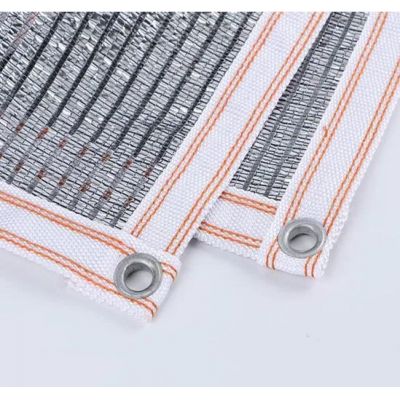
Colour behaves differently as well. Black absorbs and radiates heat, while lighter and reflective colours push more of the load back off the crop. Standard options are black, grey and blue, and any other colour can be produced to order. Weight is quoted in grams per square metre and is set against the wind and snow load at your site rather than copied from a catalogue.
Widths and lengths are cut to your order instead of being fixed by a stock list. That is worth checking before you compare prices: a net supplied in the width you actually need wastes less material on overlaps.
| Material | HDPE 5000S monofilament, UV and antioxidant stabilized |
| Structure | Warp knitted round monofilament mesh |
| Shade rate | 40% to 99%, selected by crop |
| Weight | GSM quoted to order |
| Colour | Black, grey and blue as standard; other colours to order |
| Guarantee | 500kly |
| Shrinkage | About 2% |
| Model | ZF-MO-007 |
| Packing | Export package |
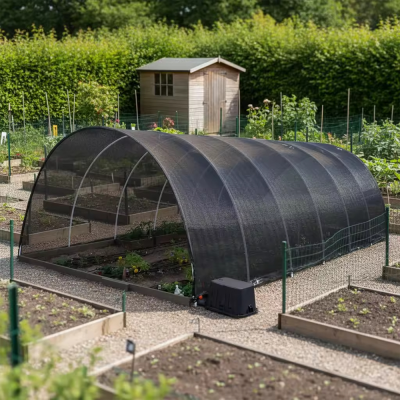
The obvious job is greenhouse shading, and that is where most of this fabric goes. The same mesh is used over outdoor frames, over nursery benches, and around aquaculture tanks where algae control matters as much as heat. It also turns up on livestock shelters and on open-air work areas where the aim is simply to take the edge off direct sun.
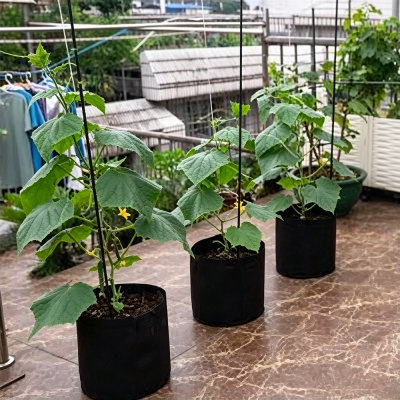
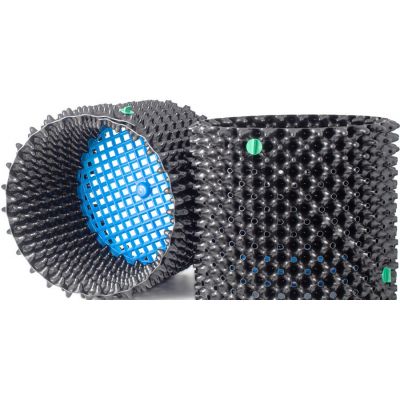
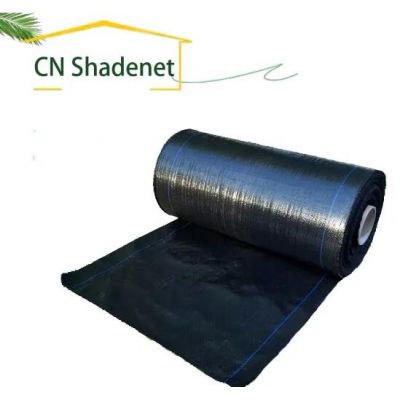
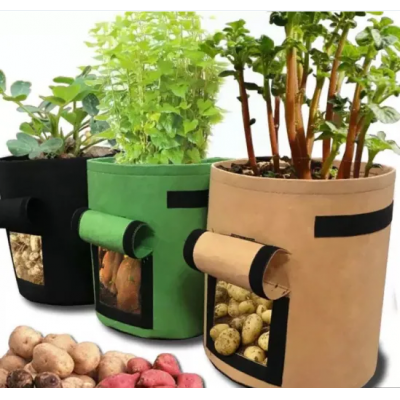
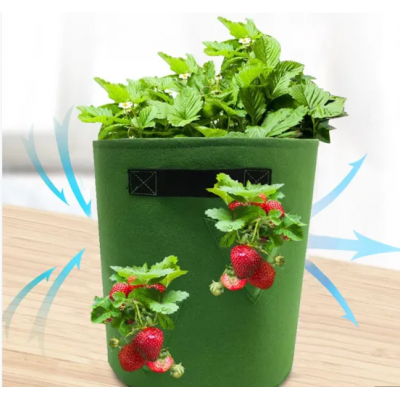
Growers running containers under shade often pair the net with a fabric grow bag or an air pruning pot, because a shaded root zone behaves differently from one in full sun and the container has to suit it. Our full shade net range covers the knitted, flat wire and reflective types.
We are a manufacturer rather than a trading company, working out of a plant of nearly 10,000 square metres with more than 50 sets of machinery and a capacity of around 20 million square metres a year. Every batch is tested in our own laboratory for insulation, ageing, weight, shade rate and tensile strength before it is packed, which is how a shade rate claim is actually held to.
It is worth knowing what you are not getting when a quote comes in low. Regrind yarn and a woven construction will both pass a visual check and both fail in the field, which is the finding behind the industry guidance on protected cultivation practice. We publish greenhouse sector reporting on the same principle: judge the material, not the price tag. More on the company is on our about page.
If your site carries high wind or snow, tell us and the weight and fixing method will be specified against it. That is a conversation worth having before the order rather than after the first storm.
Do you manufacture the net yourselves or buy it in?
We manufacture it. Sichuan Zhifang Net Industry runs production, development and sales in the same plant, so the shade rate on the label is set on our own knitting line rather than passed through from a third party.
What does the 500kly guarantee actually cover?
It is the ultraviolet energy the fabric is rated to withstand before degradation. We use virgin imported and domestic raw material with UV and anti-ageing additives worked into the yarn, plus a shaping treatment, which is why the mesh also holds its shape without shrinking.
Can the width, colour and weight be made to my order?
Yes, all three. Send the width you need, the colour you want and the shade rate, and the fabric is knitted to that specification. There is no reason to force your bay spacing to fit a stock roll.
Will a higher shade rate lower the temperature more?
Not always, and not in the way most people expect. Past a point you are shading the crop out of the light it needs for yield. Judge it per crop and per region, and ask us if you are between two ratings.
Send us the crop list and the area you need to cover, and we will come back with the shade rate, weight and width that fit it.
Mark Wu, Co-founder & Technical Director, Sichuan Zhifang Net Industry. 15 years manufacturing agricultural nettings for growers in 32 countries.
Have you used this netting? Leave a review below to share your crop results and experience with other growers.