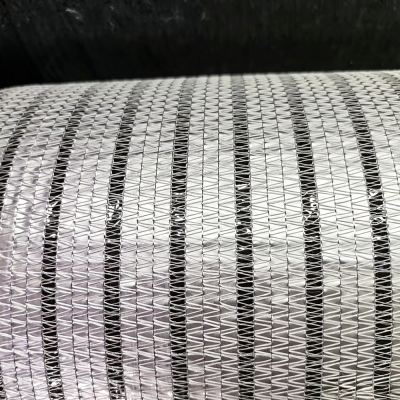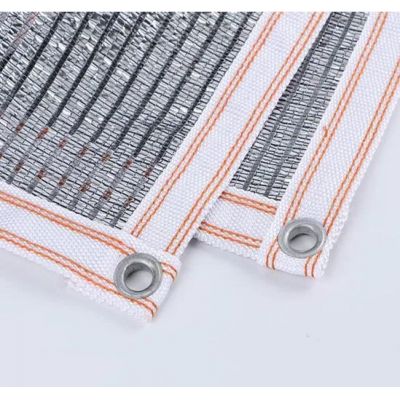


A reflective screen does two jobs that a plain black net cannot do at the same time. In daylight the aluminium surface sends solar radiation back before it turns into heat inside the house. After dark the same closed fabric slows the heat that would otherwise leave through the roof. The foil here is laminated to polyethylene wires and knitted into an open-hole structure, so ventilation still works while the screen is drawn. Shade rate is 95 per cent and the energy saving rate is 30 per cent. Width, length and shade rate are made to your order.
Most buyers compare aluminium screens on shade percentage alone, and that is the number that tells you least about the result. A screen can block 95 per cent of the light and still leave the house hot at noon if the surface absorbs instead of reflecting. What separates one foil screen from another is what happens to the radiation before it becomes heat.
Aluminium has a high reflectivity, so a foil laminate returns a large share of incoming solar radiation back through the roof instead of letting it warm the fabric and then the air below it. A black knitted net does the opposite: it absorbs and re-radiates, which is why the air under it can run warmer than the outside air even at the same shade rate.
The second effect only shows up after dark. Because the structure can be closed rather than open, the same screen slows the escape of heat that has built up in the house during the day. That is where the energy saving figure comes from, and it is the reason a reflective screen is normally specified as a thermal screen rather than simply as shade.
These are two separate specifications and they move together but not in step. Higher shade rates reflect more and deliver a larger energy saving, though the gain flattens at the top of the range. We publish both numbers per model so a grower can see the trade rather than guess it.
On this screen the shade rate is 95 per cent and the energy saving rate is 30 per cent. If a house runs a crop that needs more light, the same construction is made at lower shade rates instead; the foil laminate and the open-hole knit stay the same. Tell us the crop and the climate and the rating is set from that, not from a stock list.
| Material | Aluminium foil laminated to polyethylene wires |
| Structure | Open-hole knitted screen |
| Shade rate | 95%, other rates made to order |
| Energy saving rate | 30% |
| Standard width | 4.3 m and 5.3 m, other widths to order |
| Guarantee | 500kly |
| Shrinkage | 1.5% |
| Flame retardant | Available to order on the same construction |
| Model | SS-021 |
| Packing | One roll per pack |
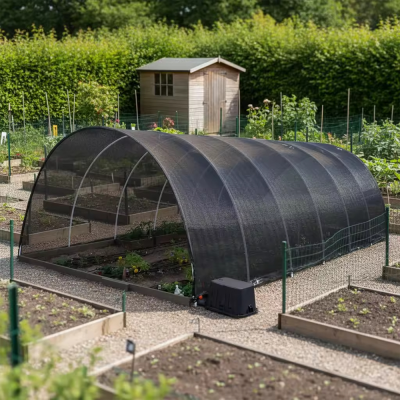
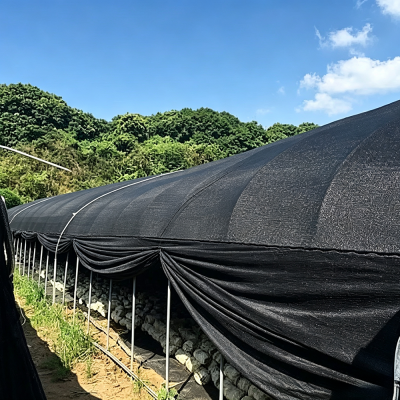
The clearest case is a greenhouse with roof vents, where a reflective screen cools without blocking the ventilation path. The same fabric goes over propagation areas where young plants scorch easily, and over flower crops that need light without the heat load that comes with it. Outside the greenhouse it is used over shade houses and on open storage where surface temperature matters.
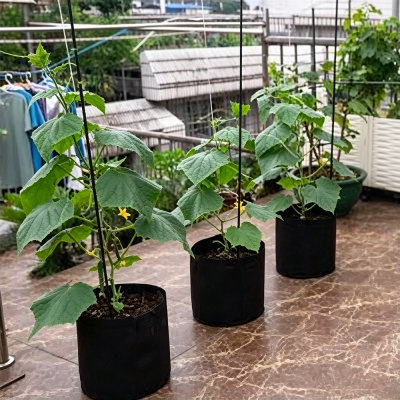
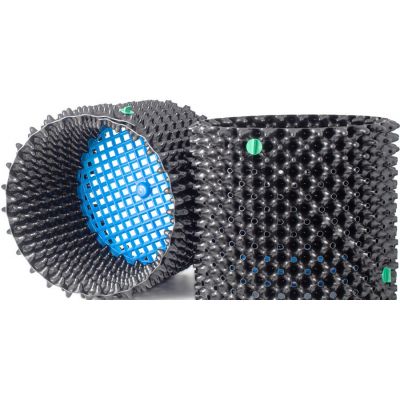
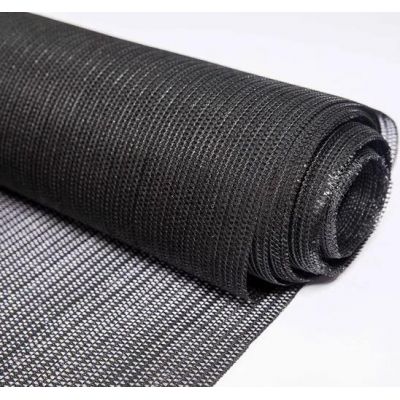
A reflective screen is often run alongside a plain knitted shade net on the same house: the foil layer for the peak of the season, the plain net for the shoulders. Growers running containers under either screen usually pair it with a root pruning container. The full shade net range covers knitted, flat wire and reflective types.
Foil laminate is where the cost sits in a screen, and it is also the first thing a low quote trims. Thin laminate and regrind carrier yarn both look right in a sample photograph. Our screens run through the same five in-house tests as the rest of the range, ageing and tensile included, before a roll is packed.
We have been making agricultural netting since 2011 and supply growers and nurseries in more than 32 countries. Specifications for this type of screen are discussed in the open horticultural literature, including the material and ventilation guidance published by the international horticultural production standards and the commercial coverage at fresh produce sector news. Background on the company is on our about page.
Is a reflective screen worth the extra cost over a black net?
It depends on the climate and the crop. Where summer temperatures are high enough to stress the crop, the reflected radiation is the whole point and a black net cannot substitute for it. In a mild climate the difference is smaller and a plain net may be enough.
Does a closed screen increase humidity?
It can, so the fabric is knitted with an open-hole structure rather than made solid. Air still moves through the screen when it is drawn, which keeps the humidity question manageable. Where humidity is critical, keep the screen partly open during the day.
What does the 500kly guarantee mean?
It is the ultraviolet energy the fabric is rated to withstand before degradation. We use virgin imported and domestic raw material with UV and anti-ageing additives worked into the yarn, plus a shaping treatment.
Can I order a width that fits my bay spacing?
Yes. 4.3 m and 5.3 m are the standard widths, and other widths and lengths are made to order. There is no reason to plan the house around a stock roll.
Send us the roof area, the crop and your summer temperature range, and we will confirm the shade rate and width that suit the house.
Mark Wu, Co-founder & Technical Director, Sichuan Zhifang Net Industry. 15 years manufacturing agricultural nettings for growers in 32 countries.
Running a reflective screen on your house? Leave a review below and tell other growers what it changed for your crop.