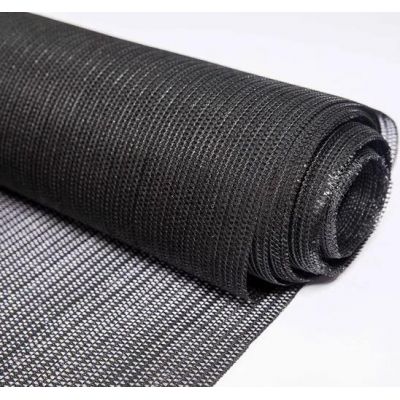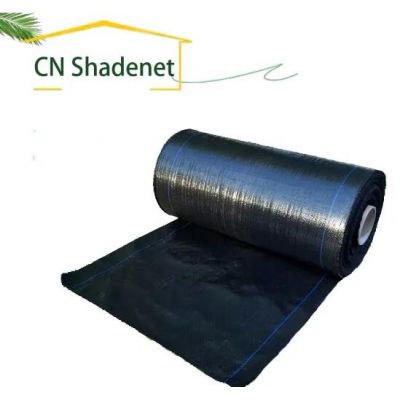


There is a stretch of the season when spraying is the wrong answer. Fruit trees in flower cannot be sprayed without risking the pollinators doing the work, and young fruit is exactly when the insects that mark it are about. Netting is how growers get through that window: the tree or the row is covered, the pests are held off physically, and nothing goes on the crop. This net is a 50 x 25 mesh in virgin HDPE with UV stabiliser in the yarn, made to order in widths up to 5 m with a five year working life.
Most insect control on an orchard is a spray programme, and for most of the season that is fine. The problem is the few weeks when it is not: bloom, and the first weeks of young fruit. That is the window this net is sold into, and it is why growers drape a tree or cover a row instead of reaching for the sprayer.
At bloom, anything applied to the flowers takes the pollinators with it, and without pollinators the crop sets badly. A few weeks later the fruit is small, tender and easy to mark, and it is at that stage that the pests which damage the saleable crop do their work. Netting closes both problems at once: it is put over the tree or the row before the flowers open, it stays through the risky weeks, and it comes off clean. Nothing is applied, so the pollinators keep working underneath, and the fruit that sets is unblemished at the point of sale. The 50 x 25 mesh is the count used for this, holding out aphids and the flying insects that target flowers and young fruit, with a 40 x 25 construction available where a grower wants it.
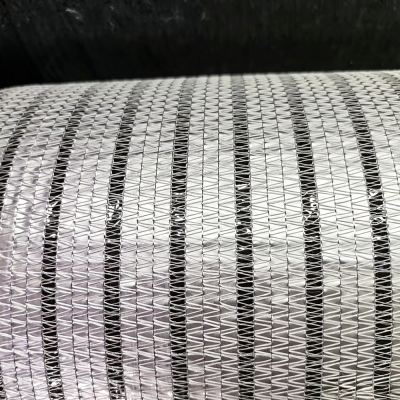
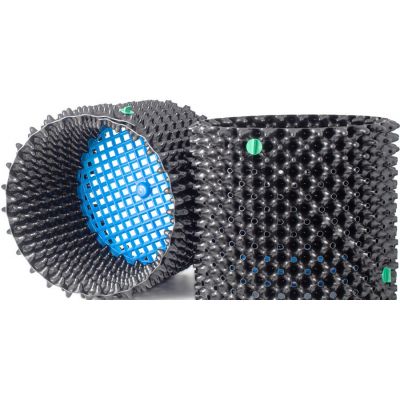
The same net goes over a single tree, a fruit cage, a flower bed or a garden row, and in each case it is the colour that decides how much light the crop gives up for the protection. This one is white or transparent as standard, so it holds the insects out without shading the plant down. Growers running nursery stock under the same netting often order a planting bag beside it, and the wider shade net range covers the grades where the crop needs shade rather than insect exclusion.
| Material | Virgin HDPE with UV stabilised yarn |
| Mesh | 50 x 25, with 40 x 25 also available |
| Weight | 80 to 130 gsm |
| Width | Up to 5 m |
| Roll length | 30 m, 50 m and 100 m, or made to request |
| Colour | White or transparent |
| Working life | 5 years |
| MOQ | 5000 m2 |
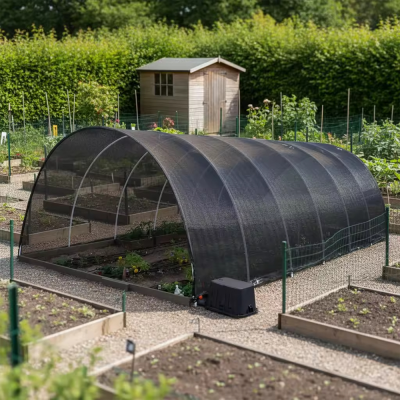
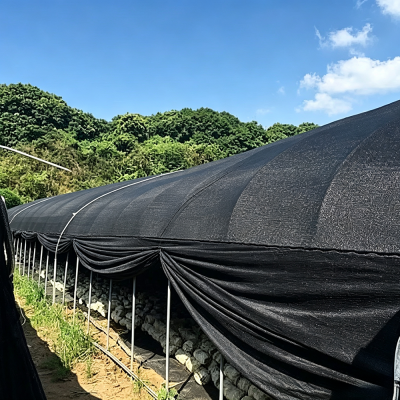
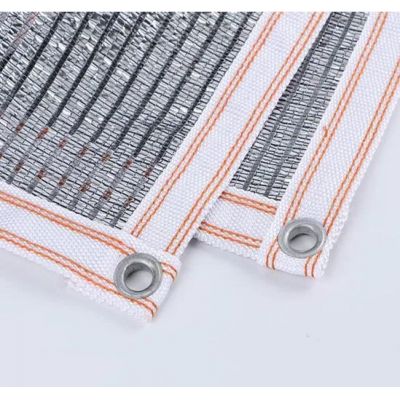
How the net is held depends on what is underneath it. Over a fruit cage or a tunnel it goes onto the frame and is trapped along the edges so wind cannot work under it; over a single tree it is usually carried on a light frame staked around the canopy rather than laid straight on the leaves; over a garden row it is held on hoops. In every case the cloth wants to be tight enough that it does not chafe, and the roll runs up to 5 m wide so a tree row or a wide bed is covered in one drop. Where the requirement is a shade rate rather than insect exclusion, a knitted monofilament net is the better fit.
Mesh count, width, roll length and colour are all made to order, and the standard minimum order quantity is 5000 m2. Rolls ship in one strong polybag with a label, in 30 m, 50 m and 100 m lengths as the usual options. On an enquiry the useful details are the crop, the bloom date and how the net will be carried, because those decide the mesh and the drop. Buyers tracking what is being installed in orchards and protected cropping can follow trade coverage such as HortiDaily and FreshPlaza for what growers are putting up.
Will the net keep pollinators off as well as pests?
A net over a flowering tree does exclude some pollinators, so the usual practice is to put it on as the flowers open and to time it around the pollination window. Tell us the crop and the bloom date and we will advise on the mesh and the timing.
Do I need 50 x 25 or 40 x 25?
50 x 25 is the finer of the two and is the count used for aphids and the flying insects that attack flowers and young fruit. 40 x 25 is available where a slightly more open mesh is wanted. Tell us the pest and we will confirm.
Can it be used on a single tree rather than a whole orchard?
Yes. It is sold by the roll and cut to the frame, so a fruit cage, a row of trees or one specimen tree all use the same cloth. Tell us the span and we will confirm the width and the drop.
Tell us the crop, the bloom date and the span you need to cover, together with the mesh count you have in mind, and we will confirm the width, the roll sizes and the packing that suit your order.
Mark Wu, Co-founder & Technical Director, Sichuan Zhifang Net Industry. 15 years manufacturing agricultural nettings for growers in 32 countries.