

The first question on this fabric is usually a range, not a single figure: can it be made at 50 per cent, and can it also be made at 90. Both are the same construction. The shading rate comes from how much foil strip is woven against how much clear film, so the mix of the two is what is adjusted to hit the number, not the material itself. That is why the range on this net runs from 50 to 99 per cent rather than sitting at one figure. Buyers running several houses often order two or three rates from the same spec so the same fixing and tensioning works across all of them.
The enquiry usually mentions a range rather than a number: can this be made at 50 per cent, and can it also be made at 90. The answer is yes to both, and the reason is that the shading rate on a foil net is a mix rather than a material. What changes between 50 and 90 is how much foil strip is woven against how much clear film.
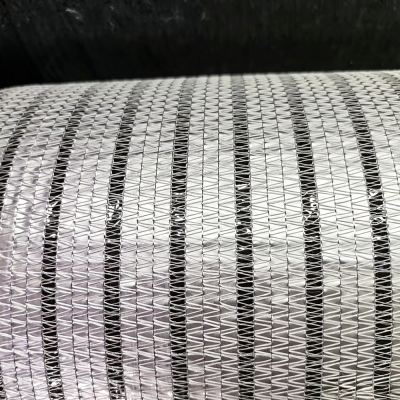
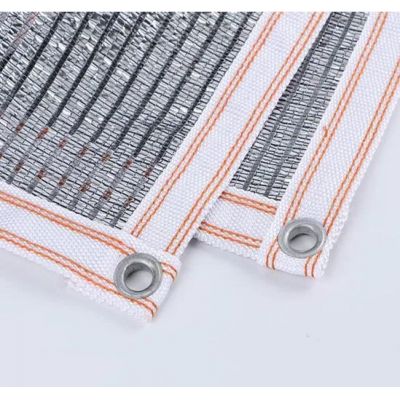
A reflective shade net is built from two kinds of strand: aluminium foil strips that reflect, and transparent film strips that let light through. The shading figure is simply the share of the surface the foil covers. Opening up the foil and closing up the clear film raises the rate; doing the reverse lowers it. The base material is the same at both ends of the range.
That matters for buyers running several houses on one site. Two houses at different rates can use the same eyelet spacing, the same tensioning and the same fixing, because the fabric is the same cloth with a different mix. One set of hardware then covers both, which is not possible where the two rates come from different constructions.
The reflective face works on the incoming radiation rather than on the air temperature. Foil strips bounce a large share of the radiation back before it becomes heat under the net, which takes the peak load off whatever ventilation the house runs. The clear film strips are what keep the fabric from becoming a solid sheet, so air still moves and rain still drains.
Because the foil reflects rather than absorbs, the net runs cooler underneath than a dark net at the same shading figure. On a house that struggles in the peak weeks, that difference at crop height is the reason the order comes back to a foil construction rather than a black one.
| Material | Aluminium foil strips with HDPE clear film |
| Construction | Woven foil and film strip mesh |
| Shading rate | Adjustable from 50% to 99%, made to order |
| Colour | Silver, other options to order |
| Size | Cut to the bay or framework you specify |
| Applications | Greenhouse, agriculture, outdoor shade, nursery |
| Model | ALS-001 |
| Packing | PE bag or woven bale, customised on request |
Start from the crop and the season. A nursery protecting young stock from scorch usually sits higher on the range; a house that only needs the worst of the midday sun taken off takes a lower figure. Where a site runs the screen all year, the rate is often set for the hottest month and left there.
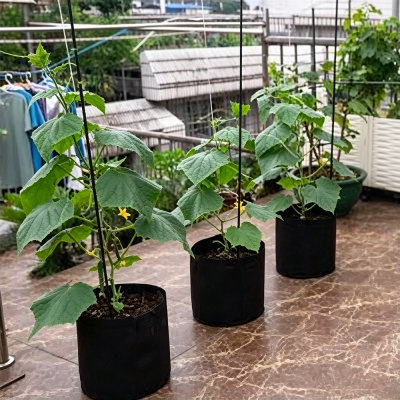
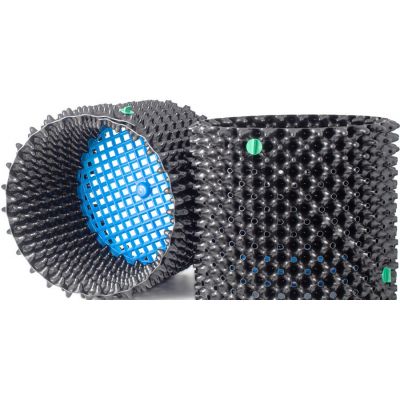
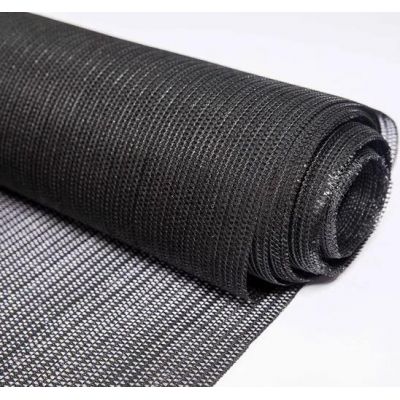
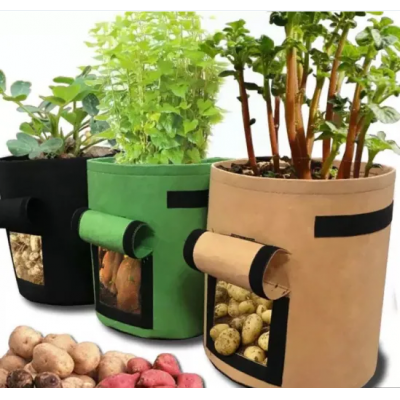
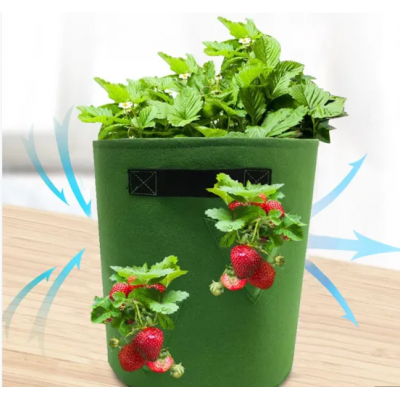
Whether the house already has a screen matters too. Where a reflective net is fitted on top of an existing black one, the two together push the effective rate above what either gives alone, and the pair is usually planned as one job. Growers running container crops underneath pair the screen with a planting bag, and the wider shade net range covers knitted and tape types as well. The 95 per cent version and the energy-saving screen are usually stocked alongside it for a full season.
The failure point on a foil net is the bond between the foil strip and the film it sits against, and it shows up first along the fold lines after a season of being rolled and unrolled. Our nets go through the same five in-house checks as the rest of the range, ageing and tensile included, before a roll is packed.
We have been making agricultural netting since 2011, in a plant of close to 10,000 square metres with more than 50 machines. Protected cultivation is covered in the trade press, including the coverage at greenhouse industry news and the guidance published by the FAO protected cultivation guidance. Company background sits on our about page.
Can you supply more than one rate from the same order?
Yes. The rates all come from the same construction, so a mixed order keeps the same fixing and tensioning across the houses. Tell us the split and we will confirm it.
Is a higher rate always better for cooling?
No. Past a point the crop loses the light it needs to size and colour, and the yield falls even though the house is cooler. The right figure sits where the crop still performs.
Does the foil face wear off?
The foil is a strip woven into the net rather than a coating, so there is no layer to flake away. The working life turns mainly on how the net is stored between seasons and how it is tensioned.
Can it be cut to my bay?
Yes. Widths and lengths are cut to the bay or framework you send, and there is no need to plan the site around a stock roll.
Send the bay size, the crop and the rate you have in mind, and we will confirm the specification that suits the job.
Mark Wu, Co-founder & Technical Director, Sichuan Zhifang Net Industry. 15 years manufacturing agricultural nettings for growers in 32 countries.
Running this screen on your houses? Leave a review below and tell other growers which rates you ordered.