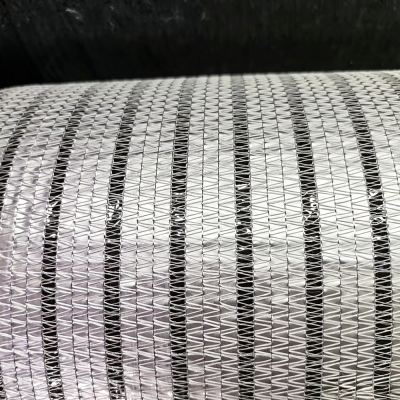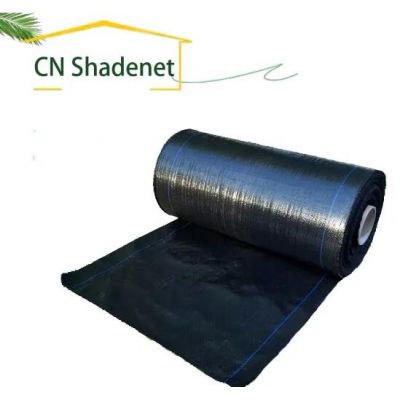
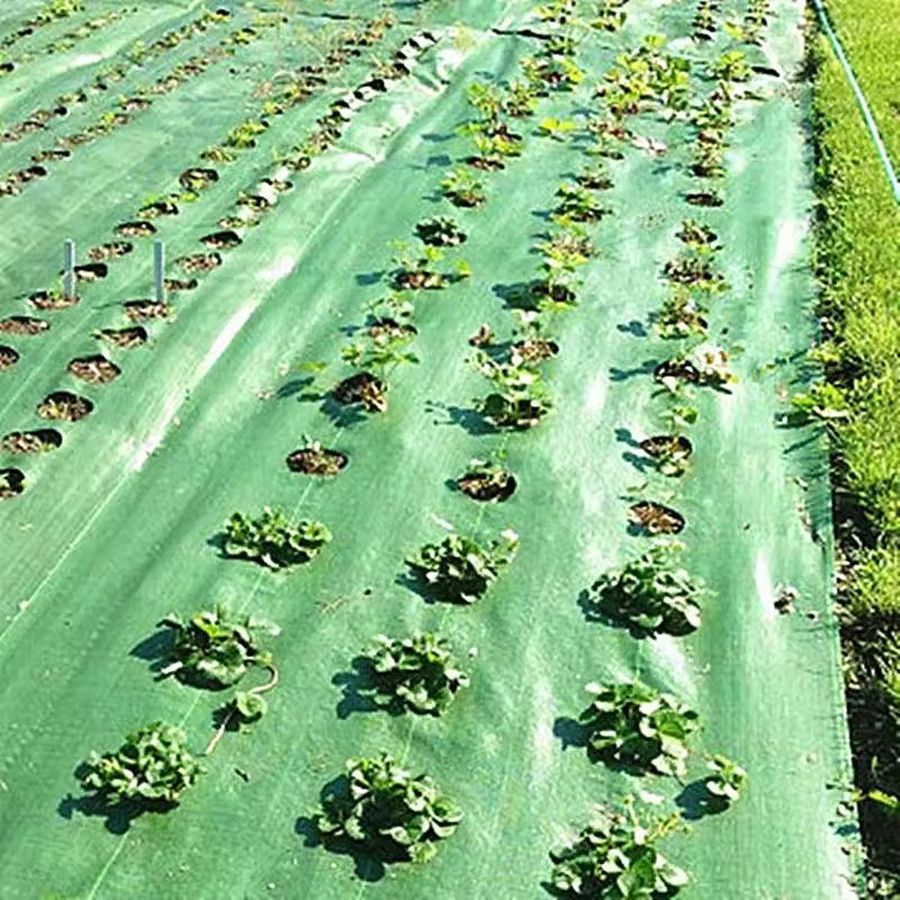
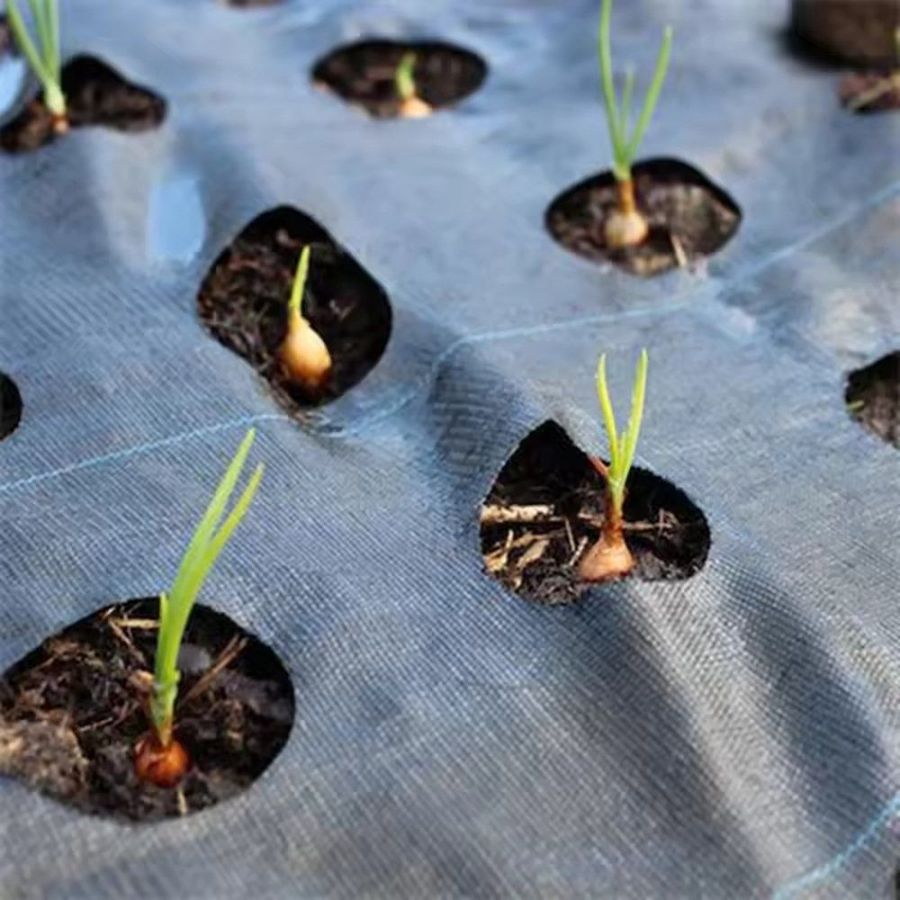
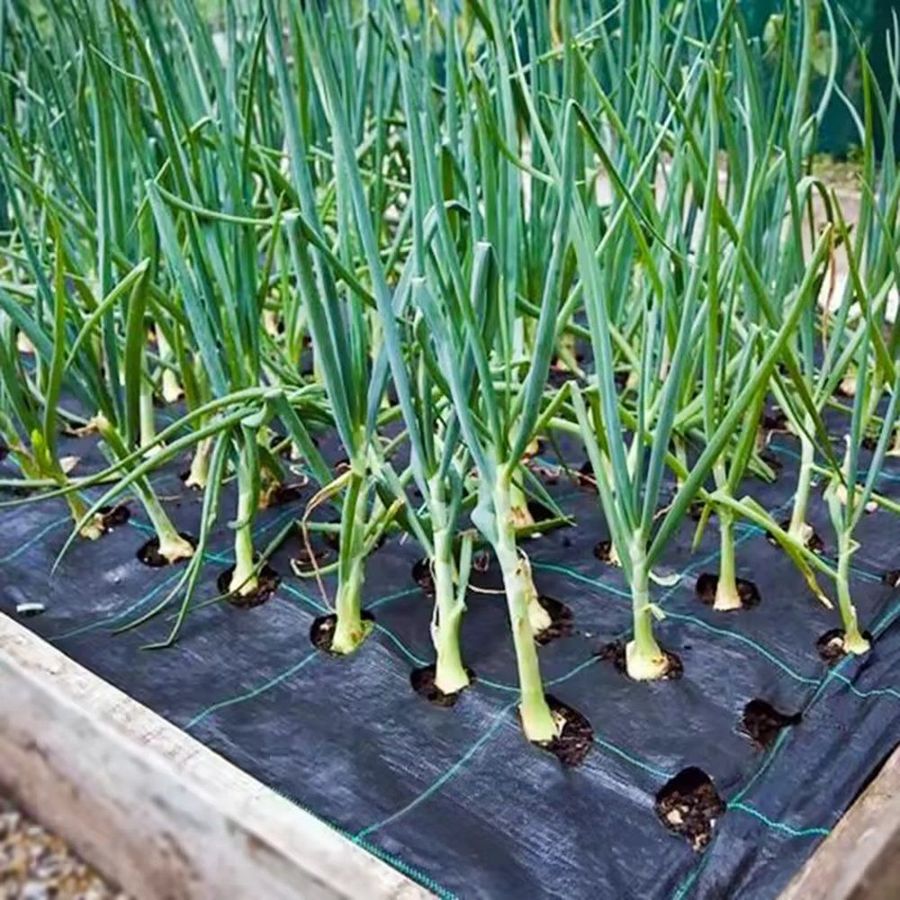
With a solid ground cover, every plant means a hole cut on site: a slit, a cross, or a circle cut with whatever is to hand. The planting goes in, the hole is a little bigger than it needed to be, and the ring of bare soil around the stem is where the weeds come back. A perforated mat takes that decision away from the site. The holes are cut at the factory to a fixed spacing, so the planting lines up with them, the hole is the right size for the stem, and there is no open soil between the plants. The cloth is woven polypropylene, UV resistant, and perforated so water drains and air still moves through it.
The weak point of any ground cover is the hole the plant comes through. Cut on site, it is almost always a little bigger than it needed to be, and that ring of exposed soil around the stem is exactly where the weeds come back first. A mat with the holes already in it removes that judgement from the day of planting.
Cutting holes in a roll on site is slow, and it is done by whoever is planting rather than by anyone who has thought about the spacing. The result is a hole that is the wrong size, a plant that sits off the line, and an open ring of soil that has to be weeded by hand for the rest of the season. A perforated mat arrives with the holes at a fixed spacing, so the row is planted to the mat rather than the mat being cut to the row. The hole is sized for the stem, so the fabric closes around the plant instead of leaving a gap, and the whole row stays covered. On a bed that is being replanted several times a season that is a saving that repeats every time.
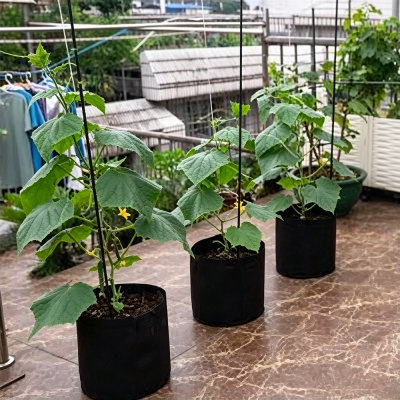
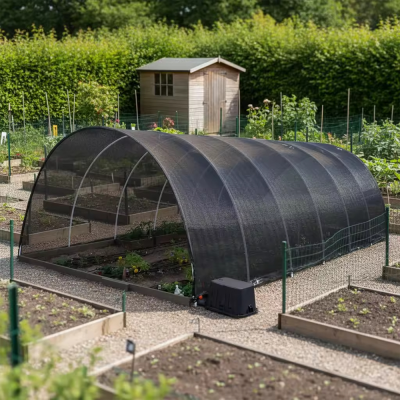
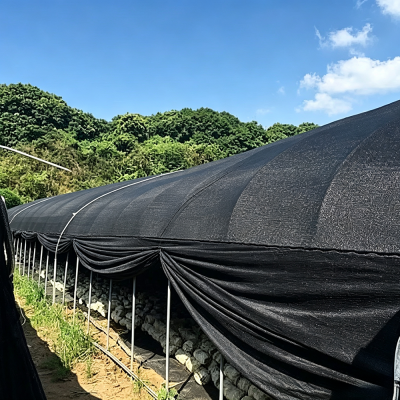
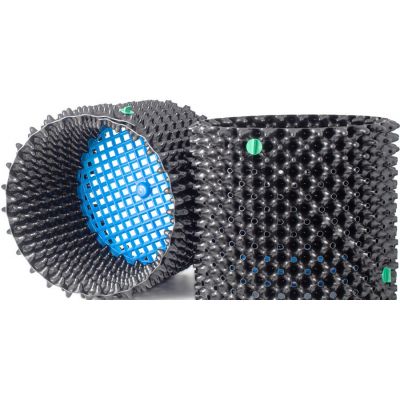
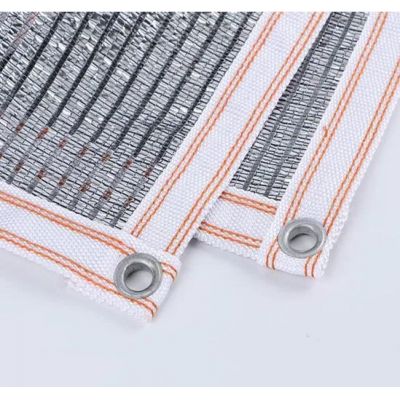
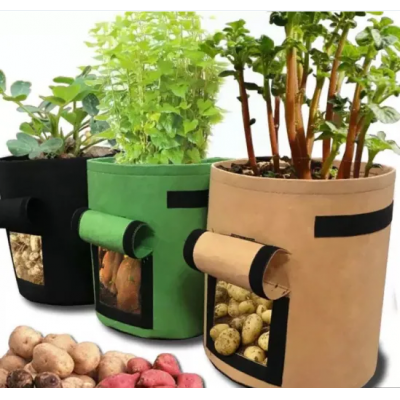
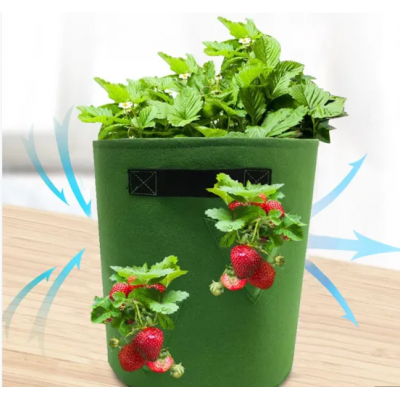
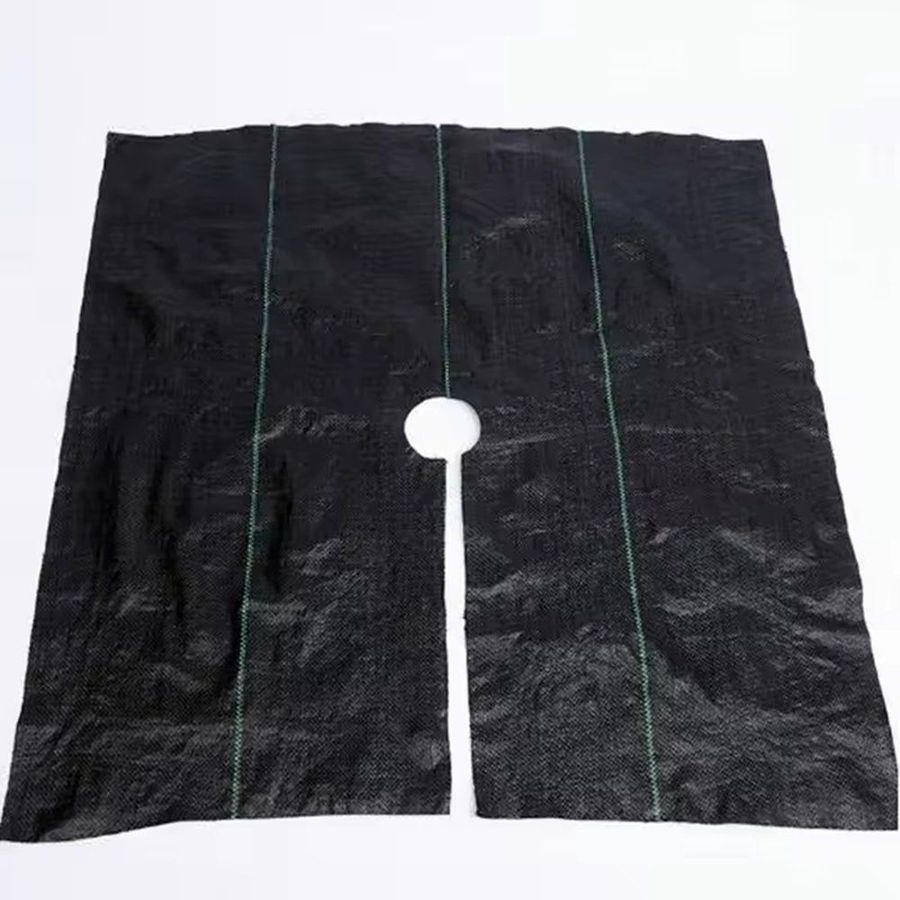
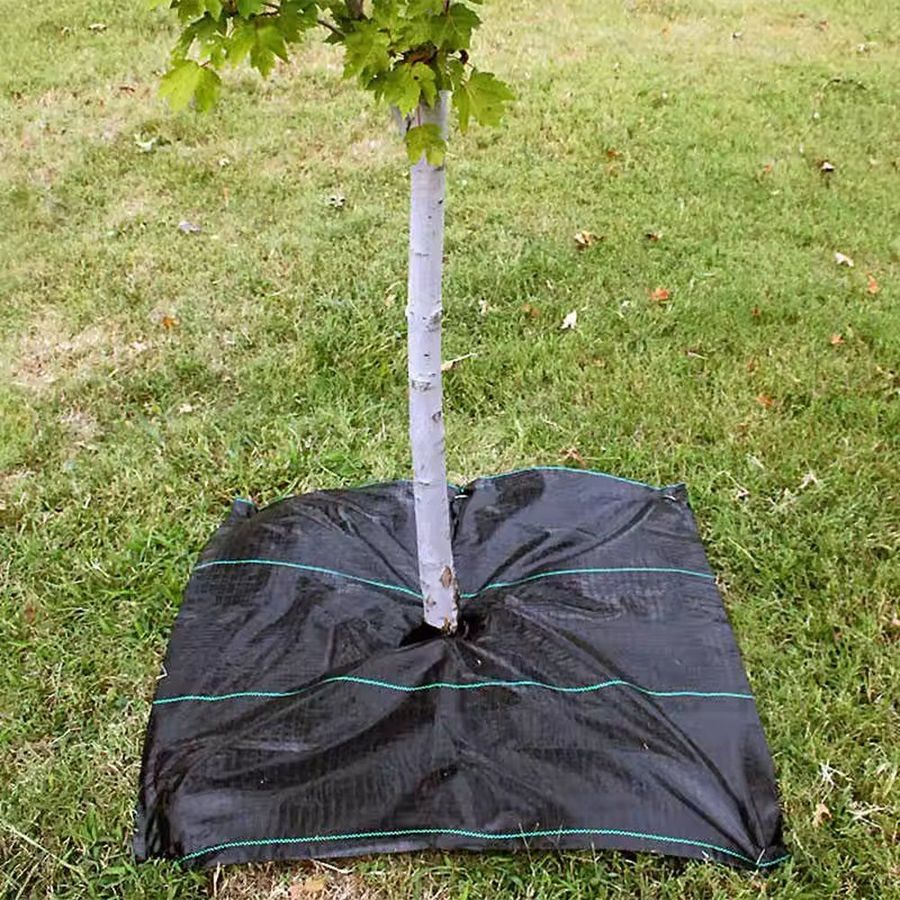
The mat is used on flower beds where a clean surface is wanted between plants, on vegetable plots planted in rows, and in nurseries where pots or liners stand in lines. Because it is perforated as well as woven, water drains through the openings and through the cloth, so a bed under overhead irrigation is not left sitting wet. Around trees and shrubs a panel with a centre hole and a slit is used, which lets it be wrapped around a trunk that is already in the ground. Growers raising stock on the same ground often order a planting bag alongside it, and the shade net range covers the covers that go over the crop rather than into the ground.
| Model | WB-006 |
| Material | Woven polypropylene (HDPE), UV resistant |
| Form | Perforated, holes at a fixed spacing |
| Hole spacing | Made to your planting layout |
| Width | Made to order to suit the bed |
| Length | Cut to your requirement |
| Colour | Black and green |
| MOQ | 5000 m2 |
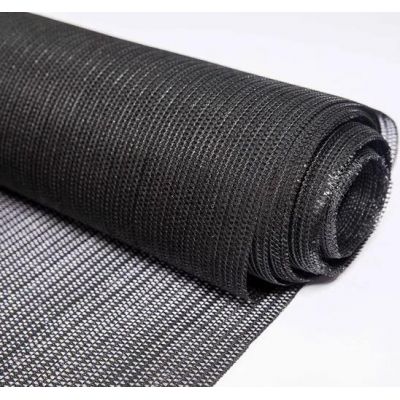
The spacing is the specification to get right, because it fixes the planting for the life of the mat. It is set from the row spacing and the in-row distance on the plan, and it is worth measuring off the beds rather than taking it from a catalogue: a mat cut to the wrong pitch cannot be used on those beds at all. Two things follow from getting it right. The labour of cutting holes disappears from the planting day, and the fabric stays intact between plants, which is where a cover normally starts to fail. Where a bed is being planted to a different layout each season, the plain unperforated cloth is the more practical choice, and a knitted monofilament net covers the shading job where light rather than weed control is the issue.
Hole spacing, hole size, width, length and colour are all made to order, and the standard minimum order quantity is 5000 m2. The most useful thing you can send is the row spacing and the in-row distance from the planting plan, because the hole pattern is cut from those two numbers. Tell us the crop and how many seasons the mat is expected to stay down and we will confirm the grade. Buyers tracking what is going onto garden and greenhouse beds can follow trade coverage such as HortiDaily and FreshPlaza for what growers are laying.
Can the hole spacing be made to my planting layout?
Yes, the pattern is cut to the row spacing and in-row distance on your plan. Send both numbers and we will confirm the hole size and the pitch.
Should I take a perforated mat or a plain roll?
If the bed is planted to the same layout each season, the perforated mat saves the cutting and keeps the fabric closed around the plants. If the layout changes, a plain roll is more flexible. Tell us how the ground is cropped.
Can a perforated mat be used around an existing tree?
Yes, panels are supplied with a centre hole and a slit so they can be wrapped around a trunk already in the ground. Tell us the stem diameter and the clear area you want around it.
Tell us the row spacing and in-row distance from the planting plan, the crop and the area, and we will confirm the hole pattern, the mat sizes and the packing that suit your order.
Mark Wu, Co-founder & Technical Director, Sichuan Zhifang Net Industry. 15 years manufacturing agricultural nettings for growers in 32 countries.