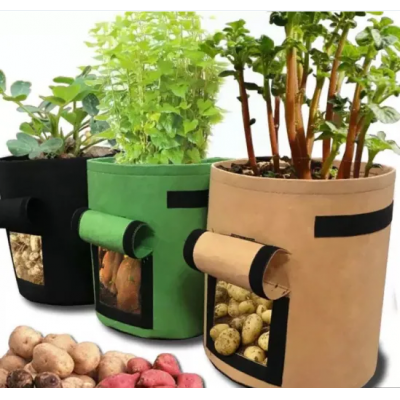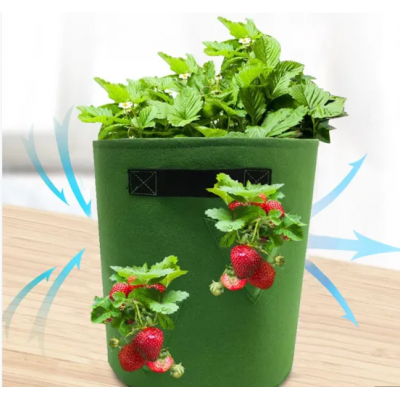
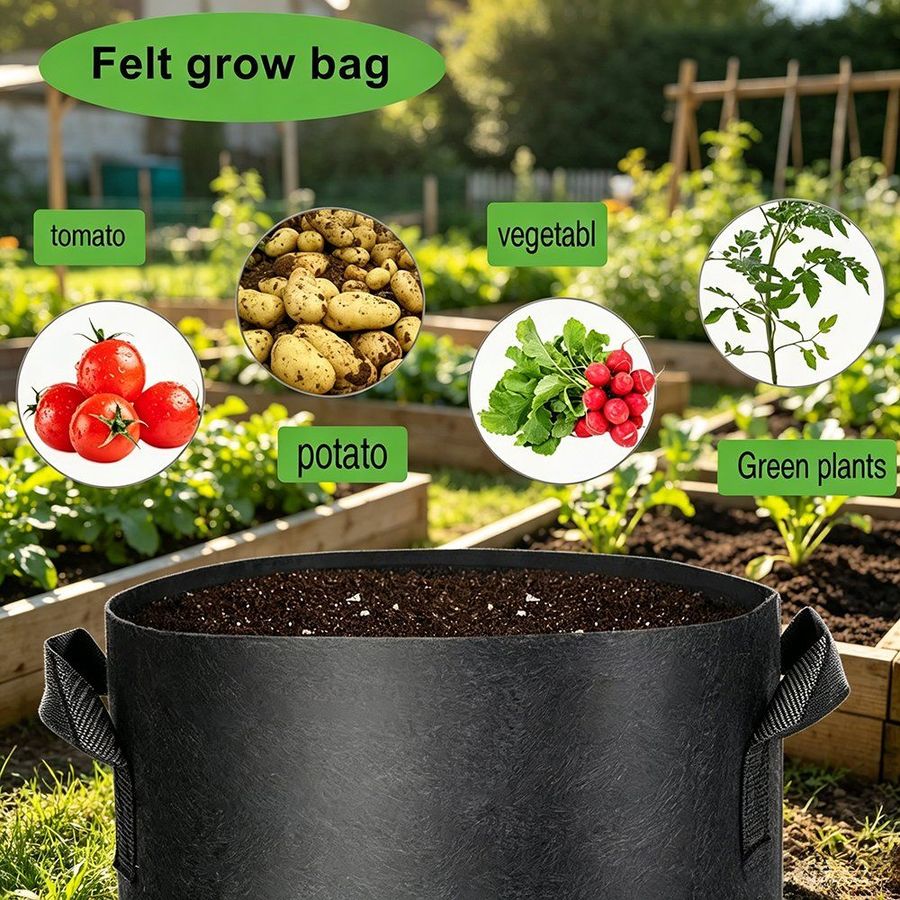
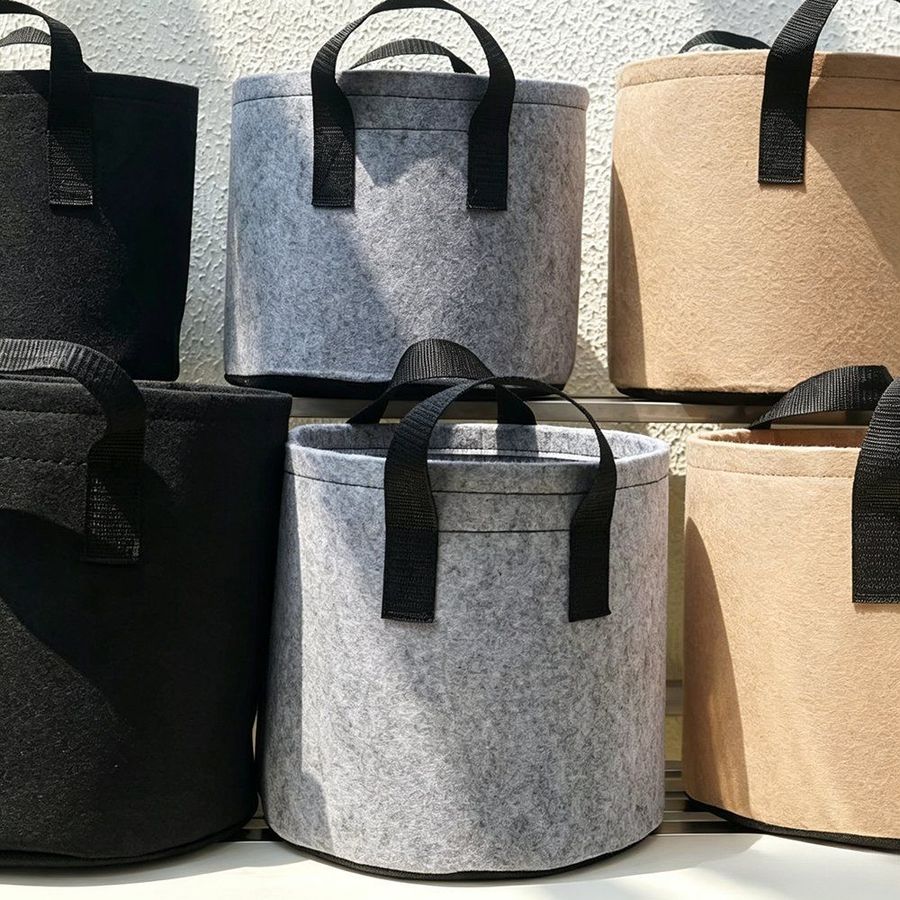
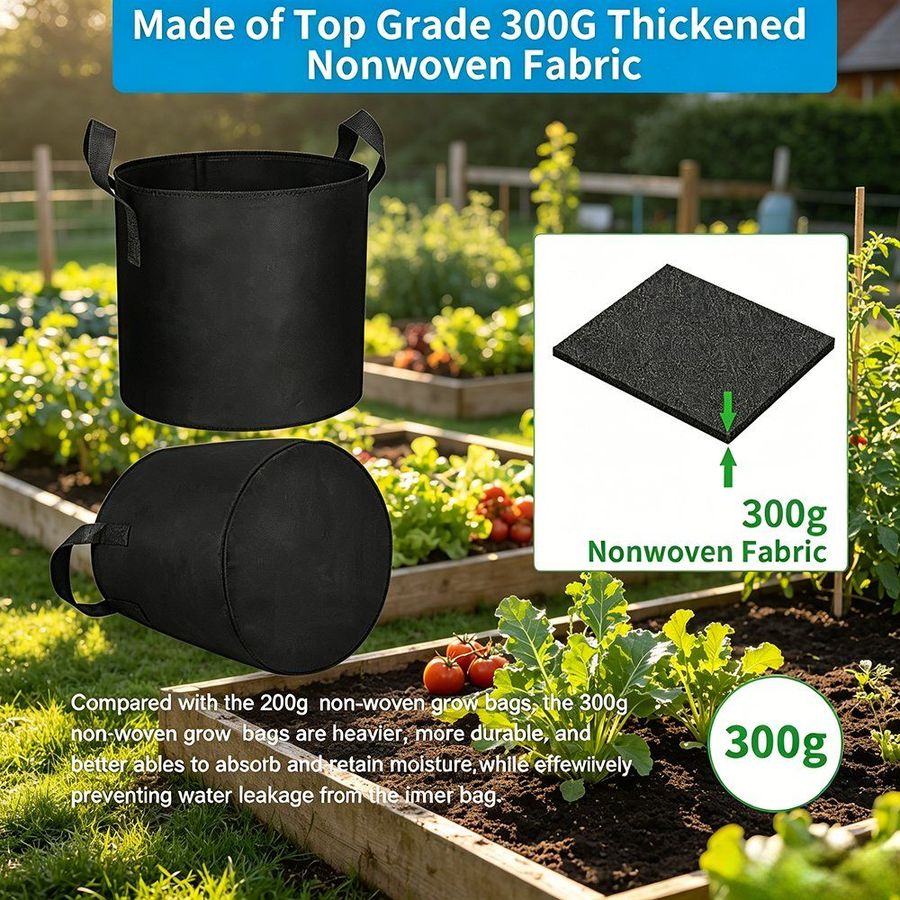
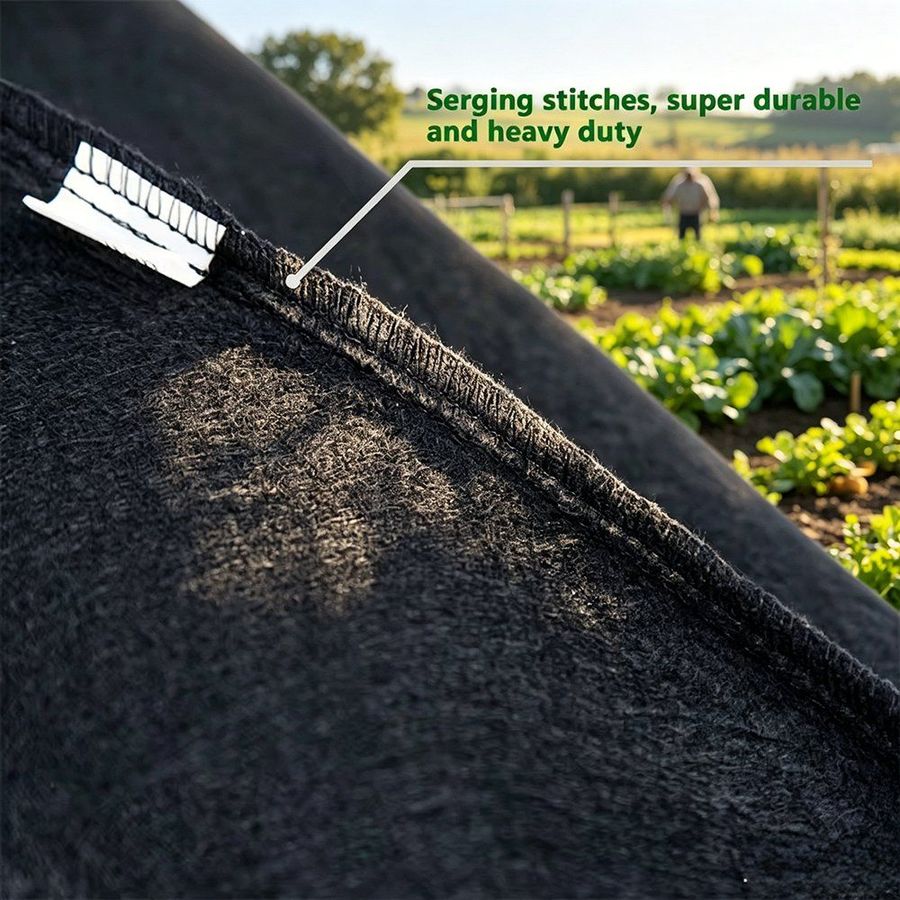
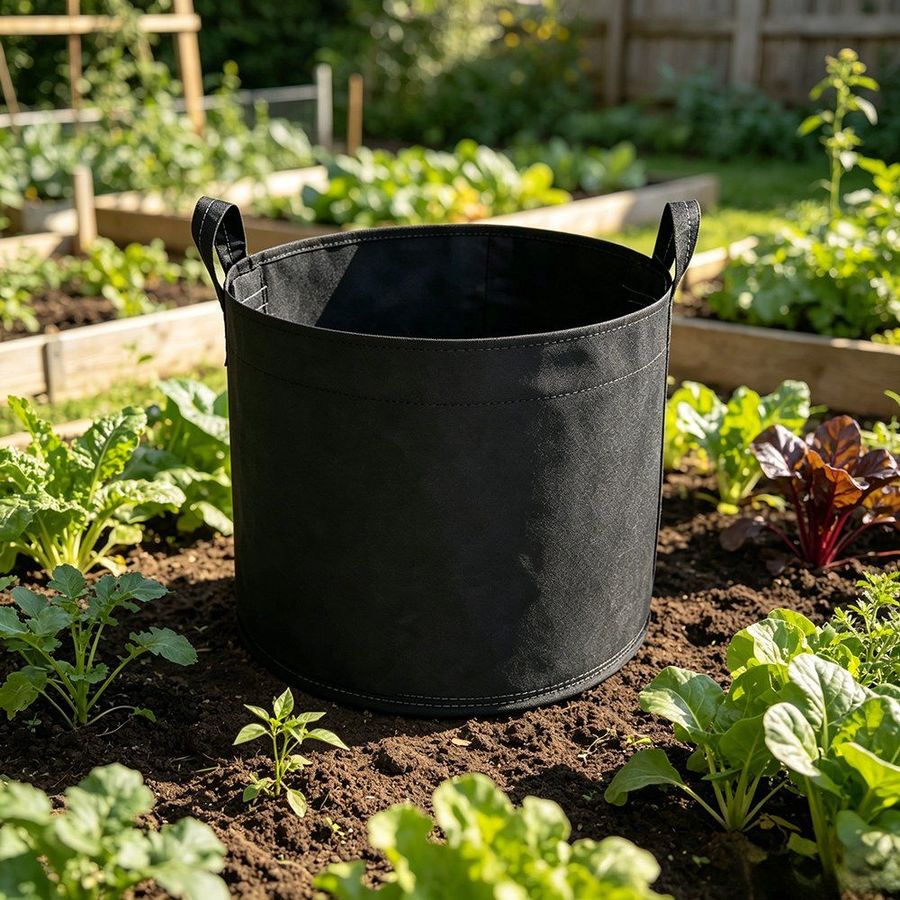
A grow bag is at its heaviest when it has just been watered, and that is the moment it is most likely to be picked up. Wet medium weighs several times what dry medium does, and every bit of that load goes into the seams holding the base and into the handle joints. A bag that was sewn with a plain stitch holds until it does not, and the failure is sudden rather than gradual. The fabric here is a 300 g nonwoven, heavier than the 200 g grade most bags are made from, and the edges are serged rather than plain stitched, which is what carries the load without the seam opening up.
Most grow bag failures are not fabric failures. The bag splits at a seam, or the handle pulls out of the wall, and both happen at the moment the bag is heaviest. Working out why comes down to what wet soil weighs and where that weight goes.
A bag that has just been watered carries several times the load of the same bag dry, and all of it is transferred to the stitches. A plain seam concentrates that load on a single line of thread, so the fabric can tear along the stitch holes rather than the thread breaking. Serging the edge is different: the seam wraps the edge in a chain of thread, which spreads the load across the fabric width and stops the edge fraying at the same time. That is why the failure point on a well made bag is almost never the wall but the handle joint, where the whole load concentrates at one small area. Both are worth asking about on a quotation, because neither shows up in the fabric weight.
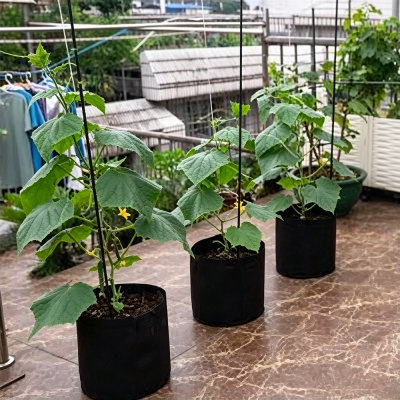
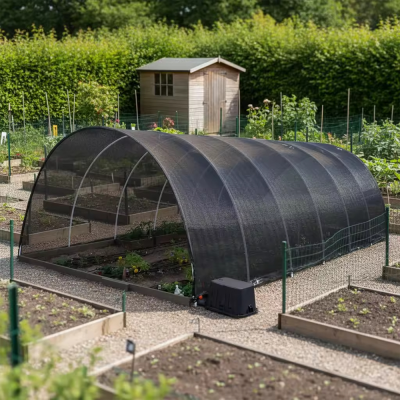
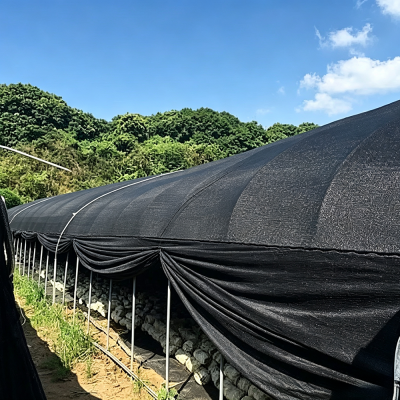
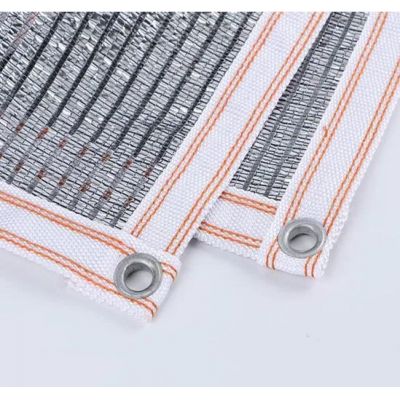
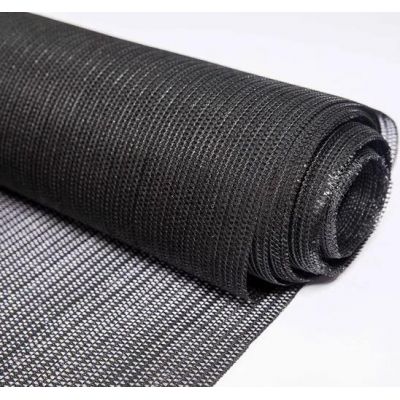
The bags are used for greenhouse vegetables standing on the floor or on benches, in mushroom rooms where blocks are handled wet and heavy, and in outdoor container beds. The porous wall gives steady oxygen exchange at the root zone and drains excess water away, which matters in a house that is being watered hard. In a mushroom room the load is the issue rather than the drainage, because the blocks go in wet and stay wet for weeks. Growers buying for the same houses often take a planting bag from the same range, and where the house also needs shade or humidity control, the shade net range covers that separately.
| Model | PB-033 |
| Material | Non woven polypropylene, 300 g fabric weight |
| Size | 1 to 500 gallon, or made to your requirement |
| Colour | Black, or to your requirement |
| Seams | Serged and reinforced for wet soil loads |
| Working life | Three growing cycles |
| Packing | Bag, pallet or carton; folds flat, dozens per carton |
| Sample | Free sample available |
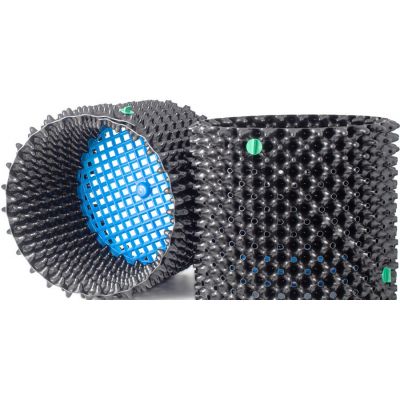
The two go together. Heavier fabric takes the load better but is also stiffer, so the seam has to be able to hold a material that will not give; a 300 g bag stitched the way a 200 g bag is stitched simply moves the failure from the fabric to the stitch line. That is why the edge treatment is worth specifying alongside the weight. The extra weight also holds the shape of a full bag better, which matters when the bags are being stood in rows and filled from above rather than planted one at a time. Where a round rigid container is wanted instead, a grow bag with air pruning seams is also available.
Sizes run from 1 to 500 gallon, with anything outside that made to order. Colour, logo and handle configuration are set with the order, and a free sample is available so the fabric weight and the seam can be checked in the hand before a bulk run. The bags fold flat, so a carton holds dozens, which is the part that changes the freight on a wholesale order. Tell us the crop, the size, how heavy the bags run when full and the quantity, and we will confirm the specification. Buyers tracking what is going into greenhouse and mushroom production can follow trade coverage such as HortiDaily and FreshPlaza for what growers are installing.
Where does a grow bag fail first?
At the handle joint or along a seam, both of which carry the full load when the bag is wet. The fabric itself is rarely what gives way. Tell us how heavy the bags are when filled and we will confirm the specification.
What is the difference between 300 g and 200 g fabric?
The heavier fabric takes the load of wet medium better and holds the shape of a full bag, and it needs the edge to be serged rather than plain stitched for the same reason. A free sample is available to compare.
Will the bag hold up in a mushroom room?
The load is the issue there rather than the drainage, because blocks go in wet and stay wet. The 300 g fabric and serged seams are what carry that. Tell us the block size and how it is handled.
Tell us the crop, the size, how heavy the bags run when full and the quantity, and we will confirm the specification, the sample and the packing that suit your order.
Mark Wu, Co-founder & Technical Director, Sichuan Zhifang Net Industry. 15 years manufacturing agricultural nettings for growers in 32 countries.