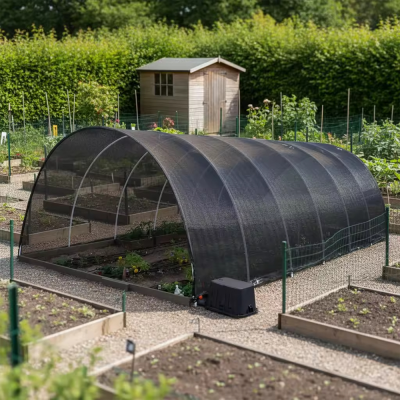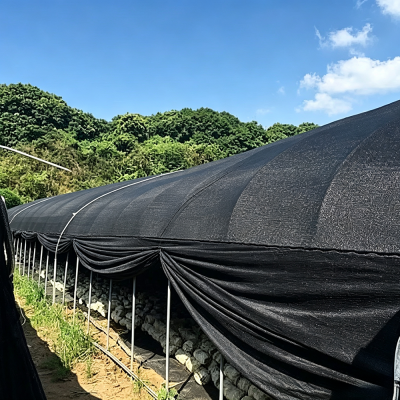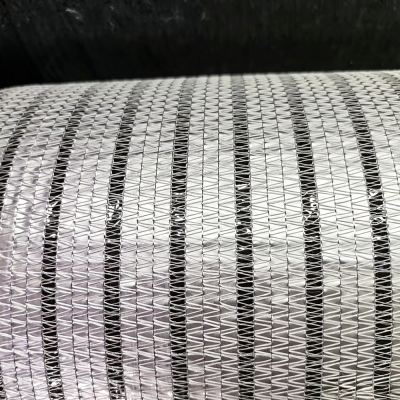


This is the 32 mesh insect net we supply, which sits between the two ends of the range and is the count most buyers settle on when they are not chasing one specific pest: coarse enough that a greenhouse still ventilates properly, fine enough to stop more than a 20 mesh will. It is the count commonly used on net houses, where the whole structure is clad in insect netting and the airflow through it has to carry the cooling for the crop underneath. The cloth is woven HDPE in widths from 2 to 6 m.
Most buyers do not need the finest mesh on the market, they need the one that stops their pest without cooking the crop. 32 mesh is where a lot of them land: coarse enough that a structure still ventilates, fine enough to keep out more than a 20 mesh will, and it is the count most net houses are clad in.
The range runs from about 20 mesh at the coarse end to 60 at the fine end, and the trade is always the same: finer mesh stops smaller insects but holds more air back, so a house clad in it runs hotter unless the ventilation is sized for it. 32 mesh is the middle of that range and the reason it is the common choice is that it holds two things at once: it closes the structure against the insects that actually cause losses in a greenhouse or a net house, and it still passes enough air that the crop underneath is not working against its own roof.
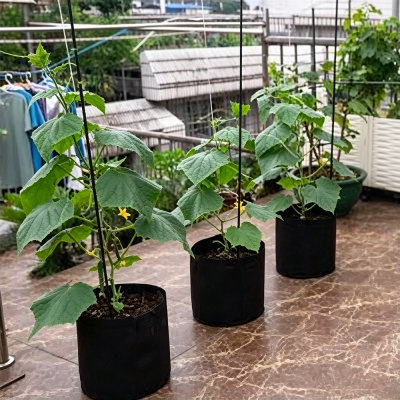
The netting is used to clad a net house, to cover greenhouse vents and doorways and to close a garden frame against insects, and because it comes in 2 to 6 m widths a wall or a roof bay can often be covered in one piece. Households setting trays under the same netting often pair it with a planting bag, and the wider shade net range covers the shading grades where light rather than insect control is the problem.
| Model | FCW-32 |
| Material | Woven HDPE |
| Mesh | 32 mesh (range 20 to 60 mesh) |
| Width | 2 to 6 m |
| Colour | White and transparent as standard, other shades on request |
| Function | Keeps insects off greenhouse and net house crops |
| Application | Net house cladding, greenhouse vent and garden frame |
| Packing | Roll, customised on request |
On a net house the netting is the building rather than an accessory, so airflow through it is what keeps the crop inside workable, and the mesh count is settled together with the roof pitch and the open area rather than on its own. Width matters for the same reason at the construction stage: at 2 to 6 m a wall or a bay can be covered in one piece instead of seamed, and a seam on a clad structure is both a weak point and a place for air to escape. A knitted monofilament net covers the shading job where a shade rate rather than insect control is wanted.
Mesh count, width, length and colour are made to order, and the standard minimum order quantity is 5000 m2, which suits a structure being clad rather than a single bed. The first detail to confirm is the pest and the area to be covered. Netting ships in rolls. Buyers tracking how insect netting performs can follow trade coverage such as HortiDaily and FreshPlaza for what is being installed.
Why choose 32 mesh rather than 50 or 60?
It stops more than a coarse 20 mesh while holding less air back than a fine 50 or 60, which is the balance most greenhouses and net houses need.
Can a whole net house be clad with it?
Yes, that is the usual application. Widths from 2 to 6 m let a wall or roof bay be covered in one piece rather than seamed.
What is the minimum order?
The standard minimum order quantity is 5000 m2, with mesh count, width and colour made to order.
Tell us the pest you are dealing with and the structure or area you are covering, and we will confirm the mesh count, the width and the packing that suit your order.
Mark Wu, Co-founder & Technical Director, Sichuan Zhifang Net Industry. 15 years manufacturing agricultural nettings for growers in 32 countries.