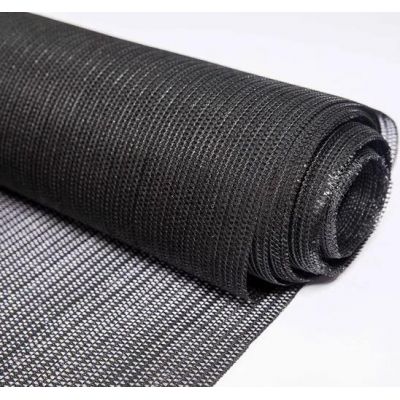


Before any order is placed there are three measurements worth taking off the machine: the net width the chamber takes, the outside diameter the roll holder accepts, and the core the spindle needs. Get any one of them wrong and the roll will not fit, however good the mesh is. Width is called out in millimetres by some balers and in inches by others, so it pays to confirm which convention the machine uses. A PE knitted mesh in the right dimensions runs at the tension the baler sets, holds the bale through storage, and comes off in one piece. Widths run 360 mm to 1.7 m and roll lengths 2000 m to 3000 m.
A roll that does not fit is not a small problem. The baler stops, the wrap has to be re-ordered, and the season does not wait. Almost every fitting complaint traces back to one of three dimensions rather than to the mesh itself, and all three can be measured in a few minutes before the order is placed.
The first is net width, which is set by the chamber and must cover the bale face in one pass. Round balers commonly take 1.22 m or 1.23 m, wider chambers take 1.62 m or 1.7 m, and smaller machines run narrower rolls down to 360 mm or 500 mm. The second is the outside diameter of a full roll, because the holder on the baler has a limit and an oversized roll will not sit in it. The third is the core, normally a cardboard tube, which has to match the spindle diameter. Measure those three and the rest of the specification follows. Farms running the bale net wrap range alongside the shade net and planting bag ranges take the same three measurements, because the machine sets the limit in every case.
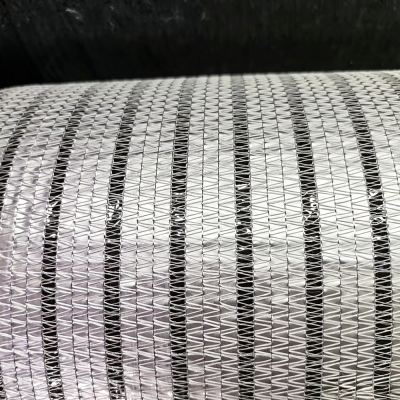
A branded roll that is 10 mm too wide is worse than an unbranded roll that fits. The mesh itself is largely a commodity: what varies between suppliers is the knitting quality, the consistency of the yarn and whether the roll dimensions are held to the tolerance promised. A PE knitted mesh that is dimensionally correct runs without slippage at the tension the baler applies, and because the knit does not unravel at a cut edge the wrap lifts away cleanly at feed out. Checking the three dimensions is a more reliable filter than comparing labels.
| Material | PE, knitted mesh |
| Net Width | 360 mm, 500 mm, 750 mm, 1 m, 1.22 m, 1.23 m, 1.62 m, 1.7 m or by requirement |
| Roll Length | 2000 m, 2134 m, 2500 m, 3000 m or by requirement |
| Core | Cardboard tube, sized to the baler spindle |
| Bale Types | Round bales for hay, silage, straw and haylage |
| Packing | Rolls on tubes, palletised for export |
Some machines apply the net and the film on the same pass, and some wrap in a separate step. Either way the net roll is chosen first because it contacts the bale, and the film follows over it. Widths below 1 m are typically used on small square balers and compact round balers, while 750 mm and 500 mm rolls suit mid-size machines and wrapping stations. Where silage is the main crop, the net is used at higher tension and the bale is often double wrapped, which raises the load on the mesh and makes yarn consistency the deciding factor. Delivery runs about 15 days after deposit with T/T and L/C accepted.
Rolls ship on cardboard tubes and palletise for export, giving 190 to 210 rolls in a 20 ft container and 490 to 510 in a 40 HQ. Minimum order is 2000 kg, which is worth converting to bales before ordering: the roll length and the number of turns per bale together decide how far a pallet goes. Trade coverage of how growers handle bales through the season, such as HortiDaily and FreshPlaza, is worth following if you are specifying for more than one machine.
How do I know which width to order?
Measure the chamber opening. The net has to cover the bale face in one pass, so the roll width follows the chamber rather than the crop. Tell us the baler model and we will confirm the width and the roll length.
Does the core size matter?
Yes. The roll sits on the baler spindle, so the core has to match it. A standard cardboard tube is used unless the machine calls for something different, and that is worth confirming before the order.
Can the same roll be used on a baler and a separate wrapper?
The net is chosen for the baler, and the film for the wrapper. Where both run in one pass the net roll is sized first because it contacts the bale directly. Tell us how the bales are wrapped and we will confirm the combination.
Tell us the baler and wrapper models, the chamber width and the crops you handle, and we will confirm the roll width, the core, the roll length and the packing that suit your order.
Mark Wu, Co-founder & Technical Director, Sichuan Zhifang Net Industry. 15 years manufacturing agricultural nettings for growers in 32 countries.