

Tension is the number that decides whether a net holds a bale or lets go of it, and it is the figure that gets quoted least often. On a silage bale it matters more than on hay, because the bale is heavier when it is wrapped and the net is holding that weight while the film goes on. The two weights here run 35 to 43 N at 8.33 gsm and 43 to 55 N at 10 gsm, and the gap between them is what a buyer is actually choosing between: the lighter net for bales that go straight into film, and the heavier for anything stacked, handled several times or left as the outer layer.
Net wrap datasheets quote width, length and gram weight, and leave the tension figure for the small print. That is the wrong way round: width has to match the baler and weight is a proxy for cost, but tension is the property the bale actually depends on.
A silage bale is heavier than a hay bale of the same size, and it is netted wet, so the net is holding more weight from the moment it is wrapped. It then has film applied over it, which is another layer being pulled across the same surface, and the bale is usually picked up and stacked rather than left where it was dropped. Each of those steps loads the mesh, and a net running close to its limit on the first step has nothing left for the second. The tension figures here are 35 to 43 N at 8.33 gsm and 43 to 55 N at 10 gsm, and the higher band is the one that gives a margin on a wet bale.
The buyers are hay and silage farms doing their own baling, contractors netting for several farms where the baler never stops for long, and operations filling a pit where bales are stacked rather than sold forward. A contractor is the buyer most sensitive to the tension figure, because a net that fails on one bale out of a hundred still means stopping the day to deal with it. Widths cover the common baler models, so the same supplier serves North America, Japan and Europe. More on how netting fits into a bale handling setup is covered under bale net wrap, alongside the shade net and planting bag ranges that go to the same farms.
| Material | 100% new HDPE, warp knitted |
| Net weight | 8.33 g/m2 or 10 g/m2 |
| Tension | 35 to 43 N at 8.33 g, 43 to 55 N at 10 g |
| Net width | 1 m, 1.22 m, 1.23 m, 1.62 m, 1.7 m, or to your requirement |
| Roll length | 2000 m, 2134 m, 2500 m, 3000 m, or to your requirement |
| Colour | White |
| Packing | Rolls on cardboard tubes, 16 or 12 rolls per pallet |
| MOQ | 2 tons |
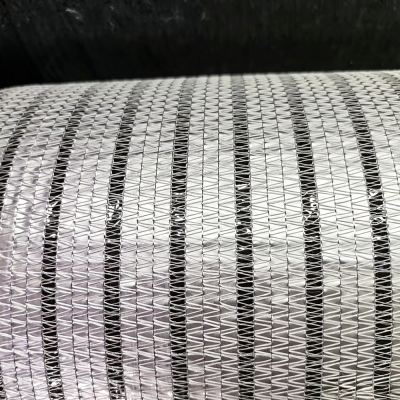
The 8.33 gsm net takes 35 to 43 N and the 10 gsm net takes 43 to 55 N, so the heavier roll is roughly a quarter stronger for a modest increase in weight per square metre. Where that matters is on wet silage, on bales that are stacked more than two high, and on bales that are handled more than once between the field and the pit. Where it does not is on a bale that is netted and filmed in one pass and never moved again, and there the lighter net does the job for less. The mesh is warp knitted, so it holds its geometry under that tension instead of distorting diagonally.
Widths run from 1 m to 1.7 m and roll lengths from 2000 m to 3000 m, with the narrower Japanese sizes and the 3600 m European rolls made to order. Rolls are packed on cardboard tubes, 16 or 12 to a pallet, and a 20 ft container takes around 190 to 210 rolls against 490 to 510 in a 40 ft high cube; capacity is 400 tons a month and delivery is about 15 days from deposit, on T/T or L/C. Tell us the crop, whether the bales are wet or dry, how they are stacked and the annual volume, and we will confirm the weight. Buyers tracking what is going into silage and hay operations can follow trade coverage such as HortiDaily and FreshPlaza for what growers are installing.
Why does tension matter more on silage than hay?
A silage bale is heavier and is netted wet, so the net is carrying more from the start and then has film pulled over it and the bale lifted afterwards. Tell us how the bales are stacked.
Is 10 gsm worth the extra over 8.33?
It takes 43 to 55 N against 35 to 43 N, which is the margin that matters on wet bales, high stacks and bales handled more than once. Tell us the crop and the handling.
What does warp knitted mean for tension?
The loops interlock along the mesh, so it holds its geometry under load rather than stretching into a diamond and leaving a gap at the shoulder of the bale.
Tell us the crop, whether the bales are wet or dry, how they are stacked and the annual volume, and we will confirm the specification, the sample and the packing that suit your order.
Mark Wu, Co-founder & Technical Director, Sichuan Zhifang Net Industry. 15 years manufacturing agricultural nettings for growers in 32 countries.