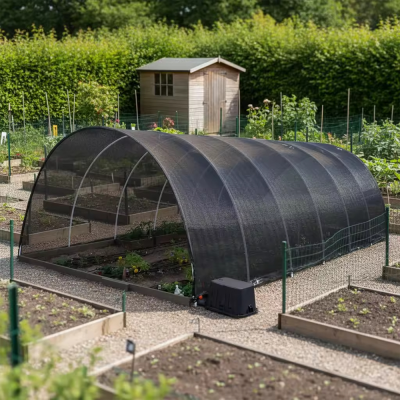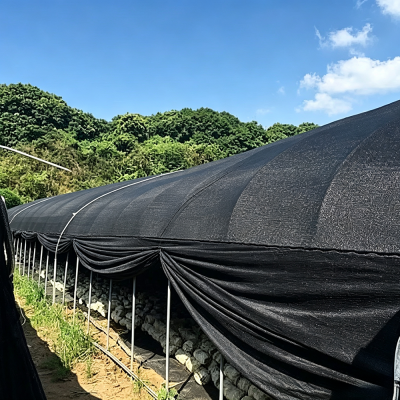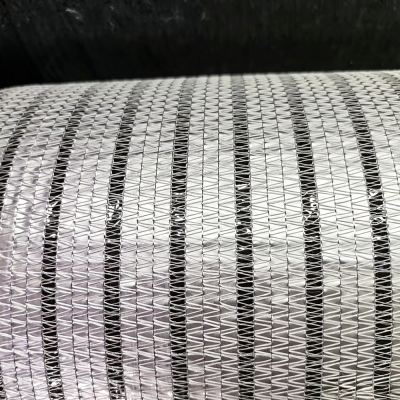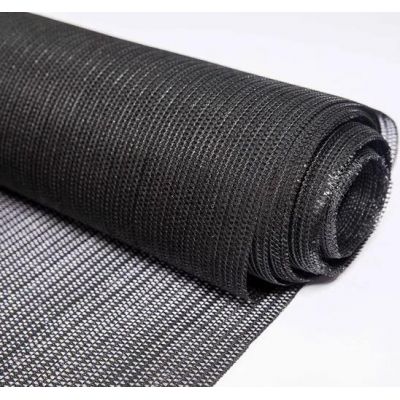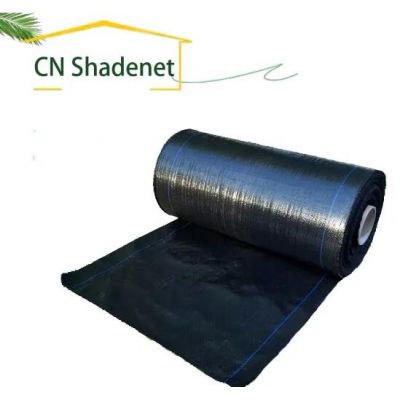


This is the tight knit shade net we run for farm supply, where the same roll has to cover a wide range of crops. The tape is knitted dense, so the cloth can be produced anywhere from 50 percent to 95 percent shade, which means one product suits a lettuce bed that wants light shade and a tomato house that needs the heat load cut hard. The yarn carries a UV stabiliser, so the weave holds its rating across long sun hours instead of going brittle, and the open mesh still lets hot air and rain move through rather than trapping them over the crop. Growers run it over greenhouse frames, across vegetable rows and along outdoor beds.
Shade rate is the number that decides whether a crop stays productive under the summer sun, and a tight knit lets one net cover a wide range of it. This shade net is knitted dense from HDPE tape so it can be produced anywhere from 50 percent to 95 percent shade, with a UV stabiliser in the yarn to hold the weave across long sun hours.
A dense knit gives a more even light across the bed, so one part of the crop is not shaded harder than another. That matters most where the sun tracks across a row during the day and a thin or uneven net leaves the crop under stripes of light and shadow. The tight weave also blocks more direct sun at the same share of shade, which is what a tomato house needs when the heat load is the problem.
The UV stabiliser slows the breakdown that turns plain netting brittle and grey, so the same roll runs across more of the crop cycle instead of being replaced every season.
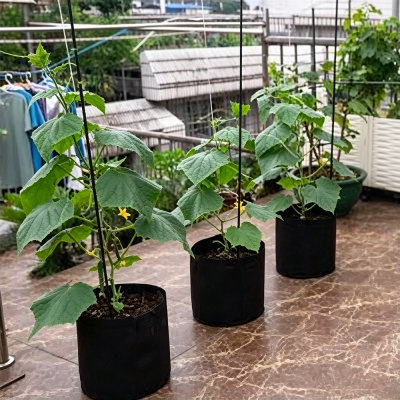
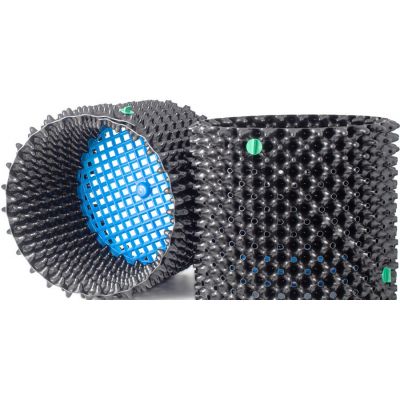
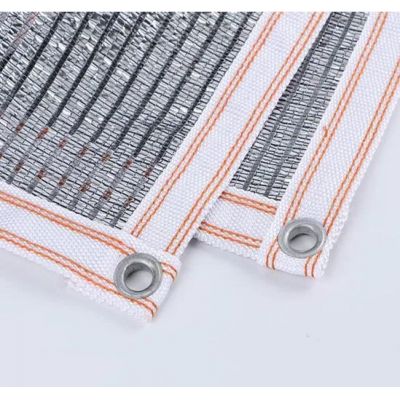
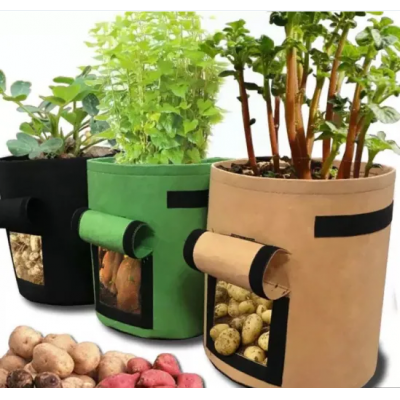
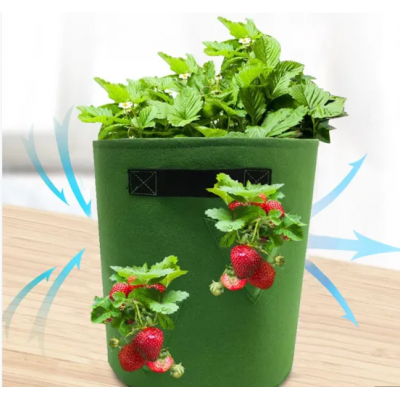
The net goes over greenhouse frames, across vegetable rows and over beds of tomato, lettuce and pepper where direct sun would otherwise heat-stress the crop. Because the shade percentage is made to order across the full range, the same product covers a lettuce bed that wants light shade and a tomato house that needs it heavy. Growers running pots under the same cover often pair it with a planting bag, and the wider shade net range covers the reflective and coloured types where the job calls for something other than a plain knitted cloth.
| Material | HDPE tight knit mesh |
| Shade Rate | 50% to 95%, made to order |
| Energy Saving Rate | 30% |
| Application | Agricultural, sun protection, greenhouse |
| Edge | Reinforced stitched hem with grommets |
| Size | Customised on request |
| Model | SC-004 |
| Packing | Export package, customised on request |
Shade percentage is the first number to settle because it decides how much light the crop keeps. A light cloth suits lettuce and leafy crops that want a little protection without going dark; a heavy cloth suits a tomato house or an exposed site where the heat load is the problem. Because the same net is produced across the full 50 to 95 range, a grower can run light shade on one bed and heavy shade a few rows over without changing supplier. A knitted monofilament net covers the same idea where a finer weave is wanted, while this mesh covers the standard farm and vegetable job.
Width, length and shade percentage are all made to order, so the first detail to confirm is the span of the house or the size of the bed you are covering, plus the shade rate the crop needs. Rolls ship in export packing and are cut to suit the frame. Growers tracking how shade cloth performs across a season can follow trade coverage such as HortiDaily and FreshPlaza for what is being installed on commercial sites.
What shade percentage should I order?
It depends on the crop and the site. Light shade suits lettuce and leafy crops; a heavier cloth suits a tomato house or a hot, exposed site. Tell us the crop and we will advise on the rate.
Is one net really made across that whole range?
Yes. The same tight knit is produced anywhere from 50 percent to 95 percent shade, so one product covers several jobs on the same farm.
Will the net last more than one season?
A stabilised yarn holds its weave and shade rating across several seasons of sun, unlike a plain cloth that goes brittle. The exact life depends on the site and the UV load.
Tell us the crop, the span and the shade percentage you are working to, and we will confirm the width and the packing that suit your order.
Mark Wu, Co-founder & Technical Director, Sichuan Zhifang Net Industry. 15 years manufacturing agricultural nettings for growers in 32 countries.