
By Mark Wu, Co-founder & Technical Director, Sichuan Zhifang Net Industry Co., Ltd.
We make both, which makes this an awkward article to write. A customer asked me last month which one he should order for a tree nursery and I could not give him a one-line answer, because the correct answer depends on what happens to the plant after it leaves his gate.
So here is the long version.
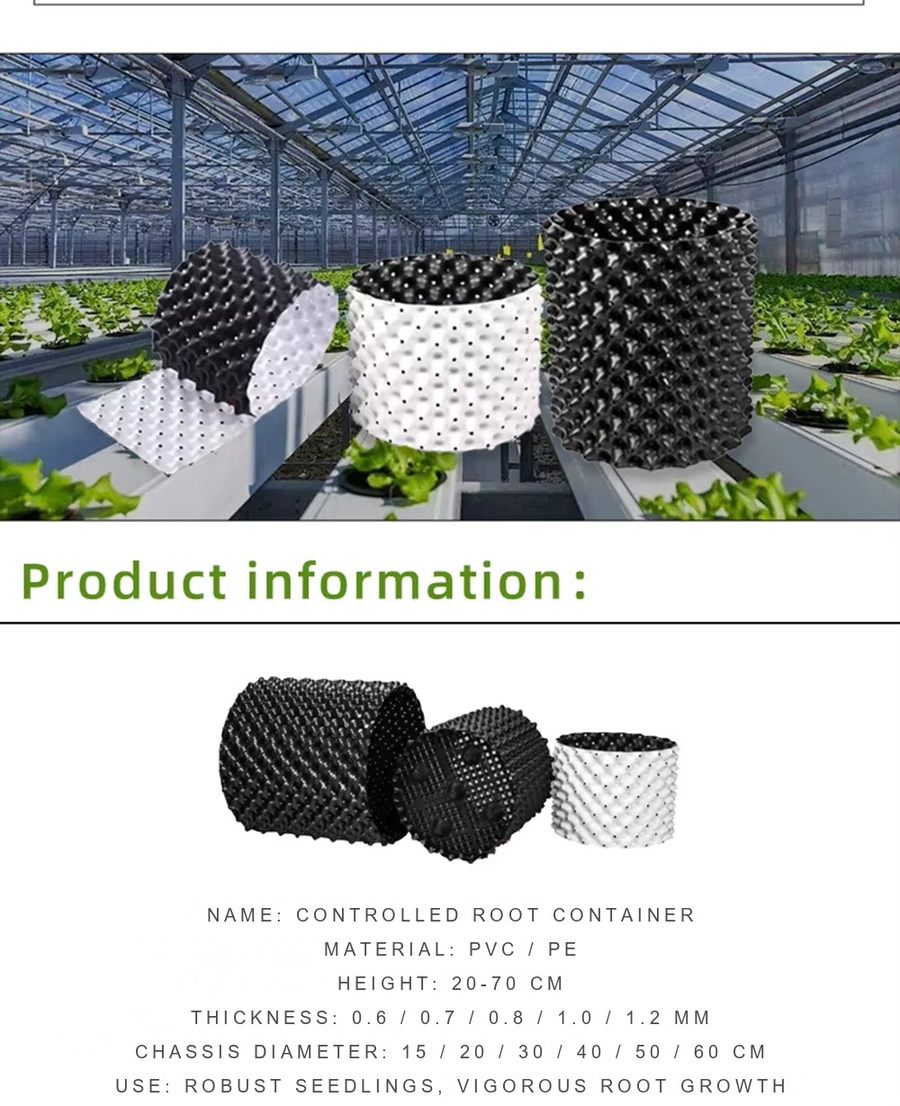
A hard air pot works through geometry. The wall is a moulded grid of cones pointing inward, and each cone ends in an opening. A root grows into the cone, finds air at the tip, stops, and the plant pushes new roots from the same point.
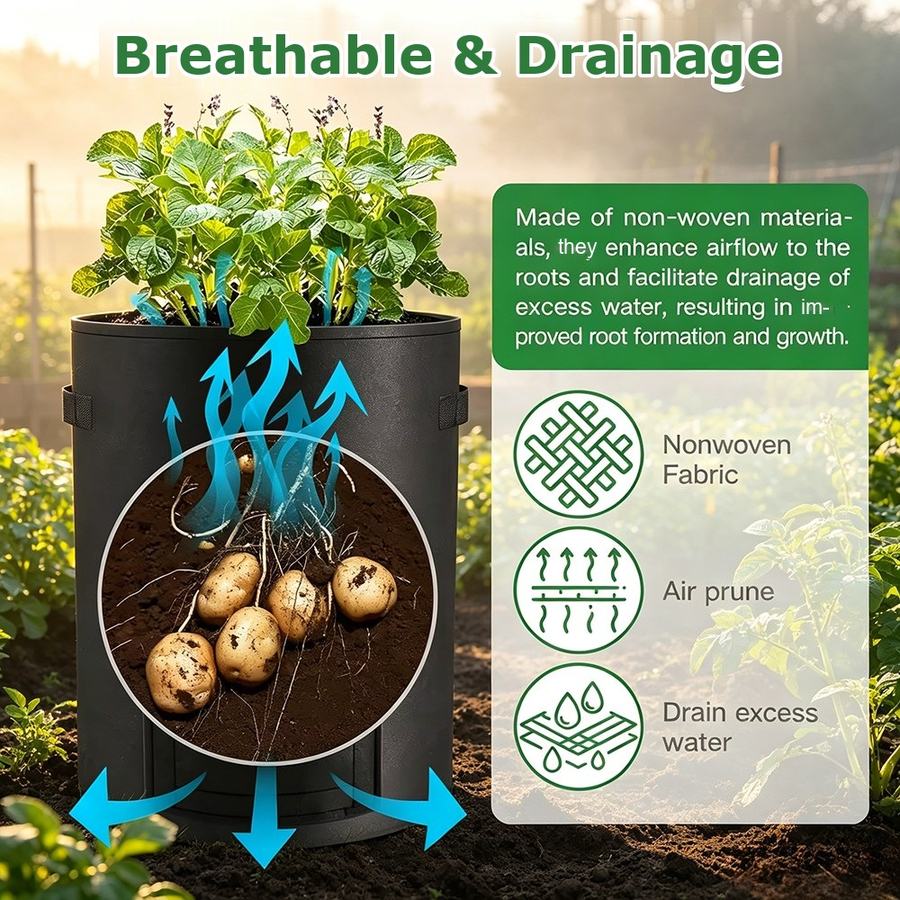
A fabric bag works through surface. The whole wall breathes, so a root that touches it anywhere meets dry air and stops there.
Same mechanism, different resolution. The hard pot prunes at a few thousand fixed points. The fabric bag prunes wherever a root happens to arrive. Both beat a smooth plastic pot, where a root hits the wall, turns, and keeps turning.
One crop cycle, high volume, and the plant goes in the ground or out the door at the end of it. That is the bag's territory.
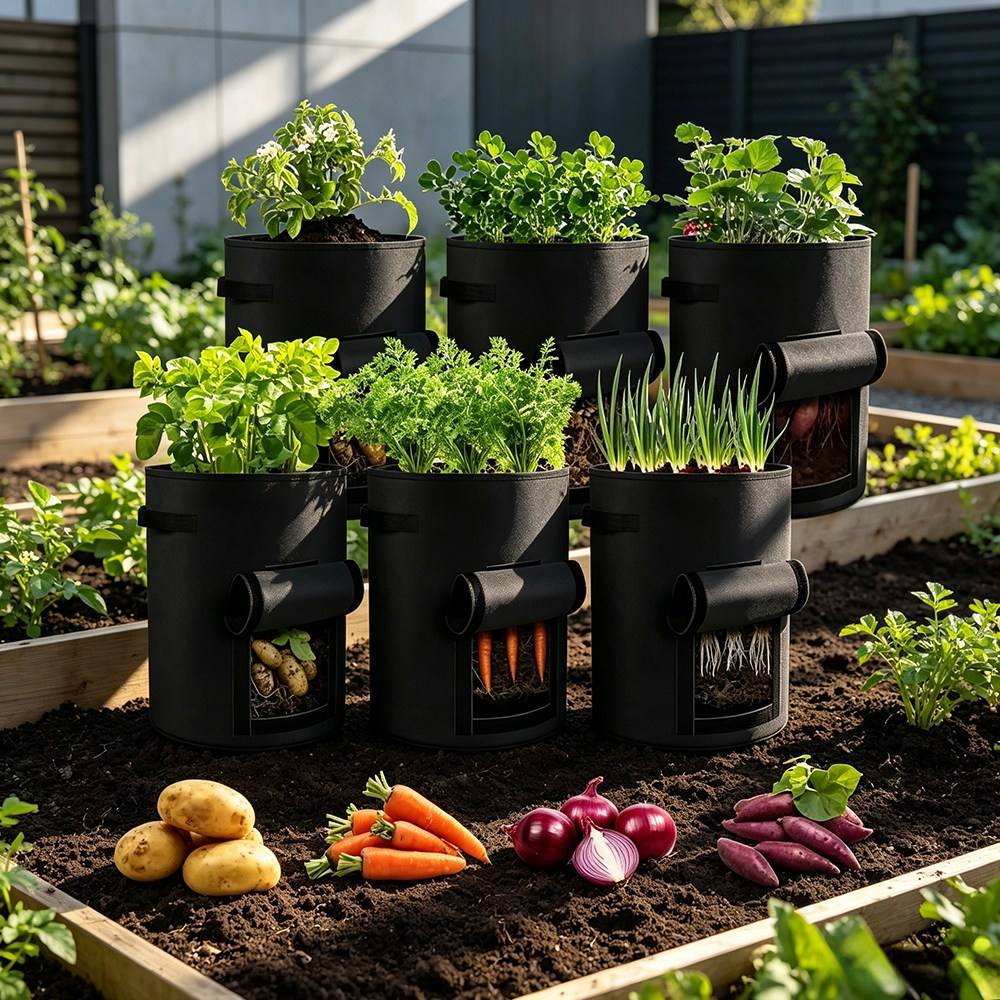
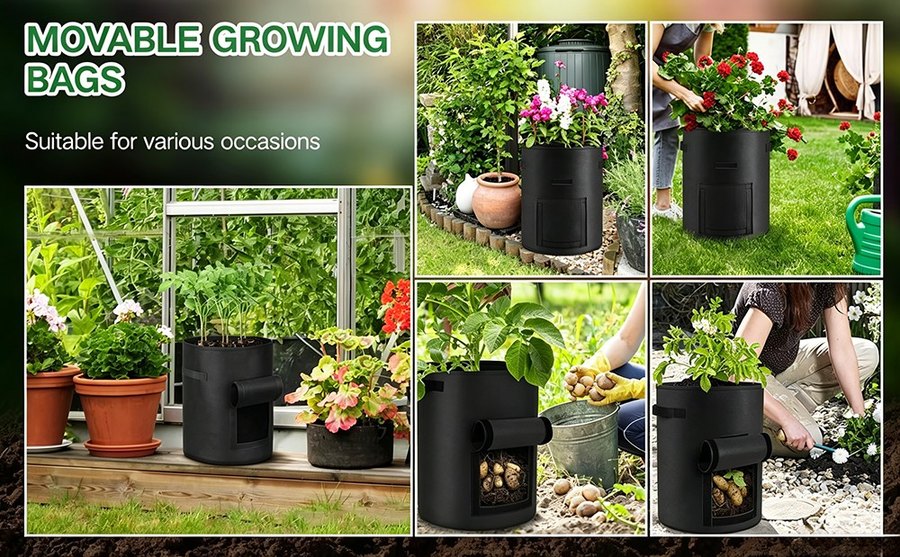
A non-woven bag is inexpensive enough to buy by the thousand and light enough that freight does not eat the saving. It ships flat, stores flat, and takes up almost no space in a shed. When the season ends, the bag can be emptied, shaken out and folded.
It is also easier on the plant at transplant. You can cut the fabric away or lower the root ball out whole, and neither damages the fine roots that the pruning just built.
For a nursery selling bare-root liners or short-cycle vegetable transplants, this is usually the right call. Our 260-320 gsm bags are built to come back for several seasons, though most growers in this segment treat them as a one-to-three season item and plan accordingly.
A hard pot is a tool, not packaging. Once it is assembled it stands up on its own, which matters more than it sounds when you are moving two hundred of them on a trolley, or when a tall plant needs to stay upright without a stake.
The wall holds its shape when the pot is lifted wet. The base holds the root ball together when you move it. Assembly and disassembly are the same two screws, so it stacks flat for storage and opens again next season.
And it lasts. Our root control containers are built for twenty years and beyond in normal nursery use, which changes the arithmetic completely for a grower who is potting the same crop every year. You stop buying containers and start amortising them.
The trade-off is up-front cost and handling discipline. A hard pot that gets stepped on and cracked is worse than a bag, so it has to live on a pallet and not in a pile on the floor.
Most of the disappointment I hear about air pruning containers has nothing to do with air pots versus fabric bags. It is a container that was too big.
An oversized container holds a core of wet media that the roots have not reached yet. That core stays wet, the roots stay shallow, and establishment slows down instead of speeding up. The plant spends the first month filling the space instead of growing.
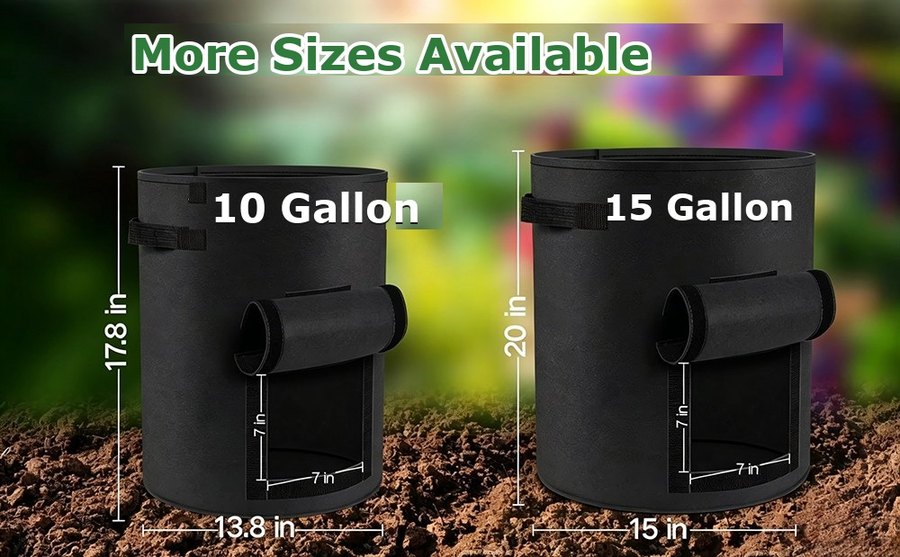
Match the container to the root mass you expect at the end, not to the space you have on the bench. Our standard heights run from 20 cm to 70 cm for exactly this reason, and most nurseries settle on two sizes rather than five. One handling routine beats a perfect match on every line.
Both container types dry faster than a solid plastic pot, and neither dries evenly.
A fabric bag loses water through the whole wall, including the sides that face the sun and the wind. The edge of a block dries out two days before the middle does, which is why bag-grown plants on the outside row often look smaller than the ones inside.
A hard pot loses water mainly through the cone openings, so the pattern is vertical strips rather than the whole surface. It drains fast at the wall and stays wetter in the centre, especially in a large container.
Neither is a problem if the irrigation is set for it. It becomes a problem when someone moves a crop from solid pots to air pots and keeps the same watering schedule. That is usually when the first crop fails, not because the container is wrong but because nothing else changed with it.
If you flood a bench rather than drip, look at the base before anything else.
A fabric bag wicks from the bottom and stays wet for a long time after the flood drains. That can be an advantage or the start of root rot, depending on how long your cycle is and how warm the house is.
A hard pot with a closed base behaves predictably. Media inside the pot, water in the channel, and the two meet only through the drainage path you designed. If the base is open to the bench, the pot is behaving like a bag whether you intended it or not.
Pick by crop cycle and by labour, not by unit price.
If the plant leaves in eight weeks and the container leaves with it, buy fabric. If the plant stays for a season or more and the container stays with you, buy hard plastic and stop thinking about it for a decade.
If you are somewhere in between, buy a pallet of each and run them side by side for one cycle. Two hundred plants will tell you more than any supplier, including me.
Sichuan Zhifang Net Industry Co., Ltd. has been making root control containers and agricultural netting since 2011, from a plant of nearly 10,000 m² with more than 50 production lines. We supply growers in 32 countries. Every carton carries a ZF security label inside the pack, which has settled more than one argument about whether a shipment was ours, five years after it was made. Customers running thicker non-woven bags report getting several seasons out of them before the fabric goes slack, which is the point at which a bag stops pruning and starts sagging. Root control containers are built for 20 years and beyond in normal nursery use, and our horticultural netting carries a guaranteed UV stabilisation of 500 kly.
Not in general. It is better for multi-season crops, for tall plants that need to stand upright, and for growers who handle pots mechanically. A bag is better for one-season crops, for volume, and for freight cost.
You can, but you will probably want to adjust. A bag dries from the whole surface and a hard pot dries mainly at the wall, so the same mix behaves differently in each. Coir-heavy mixes hide this longer than peat-heavy ones.
A hard pot with a closed base does, and it behaves predictably. A fabric bag wicks water up and holds it, so the drain time matters more than the flood time. If you are on a flood bench and unsure, look at the large-farm container range before deciding.
Bags, by a wide margin. They nest flat and weigh almost nothing, so a container load carries far more units. Hard pots need assembly and take volume, though they stack down again after the season.
If you want the bag side of the range, it is under non-woven grow bags; the whole planting bag category is worth a look if you sell several crops.


