
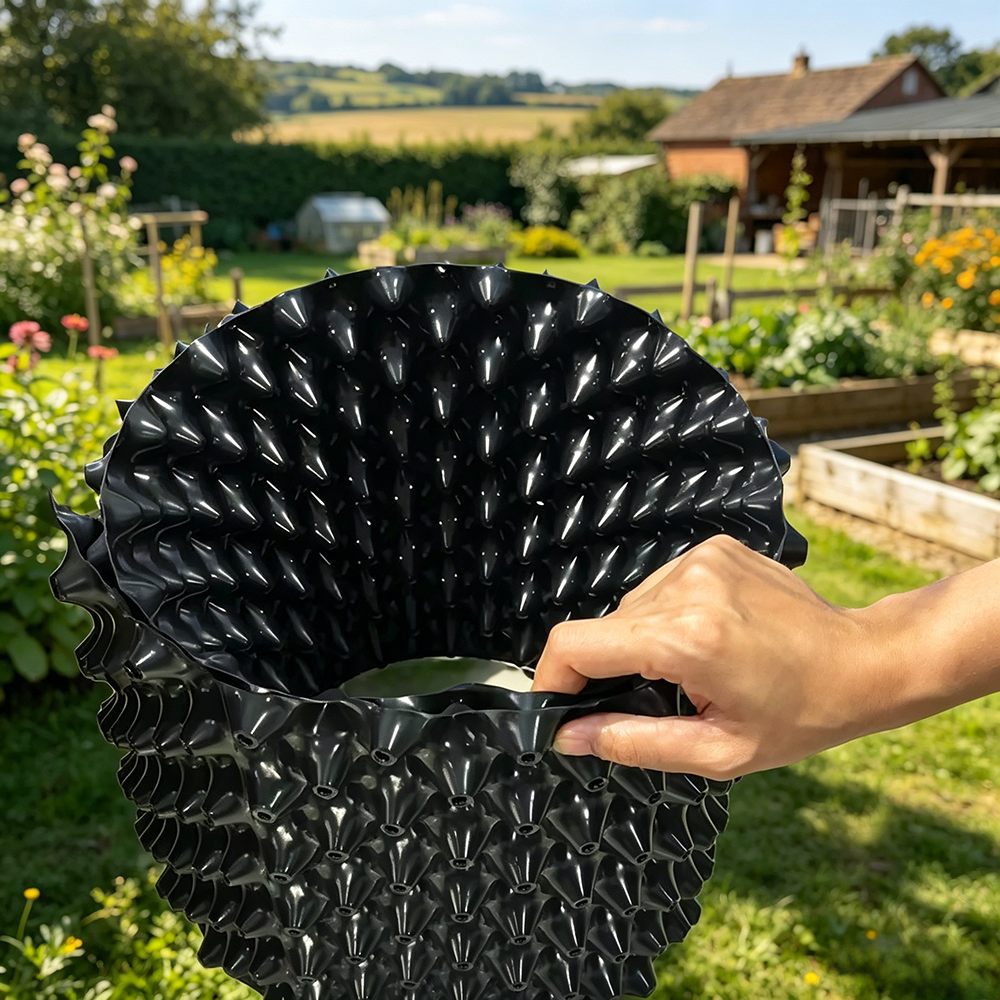
By Mark Wu, Co-founder & Technical Director, Sichuan Zhifang Net Industry Co., Ltd.
Most growers buy root control containers for the season the plant is growing. The container actually earns its money in the gap before that, the weeks or months when the plant is sitting in a holding row waiting for ground to be ready, a contract to land, or the weather to turn.
That gap is where roots are either built or lost, and almost everything that goes wrong in it is a handling problem rather than a container problem.
In the ground, a root that circles has somewhere to go and time to correct. In a pot, it does not.
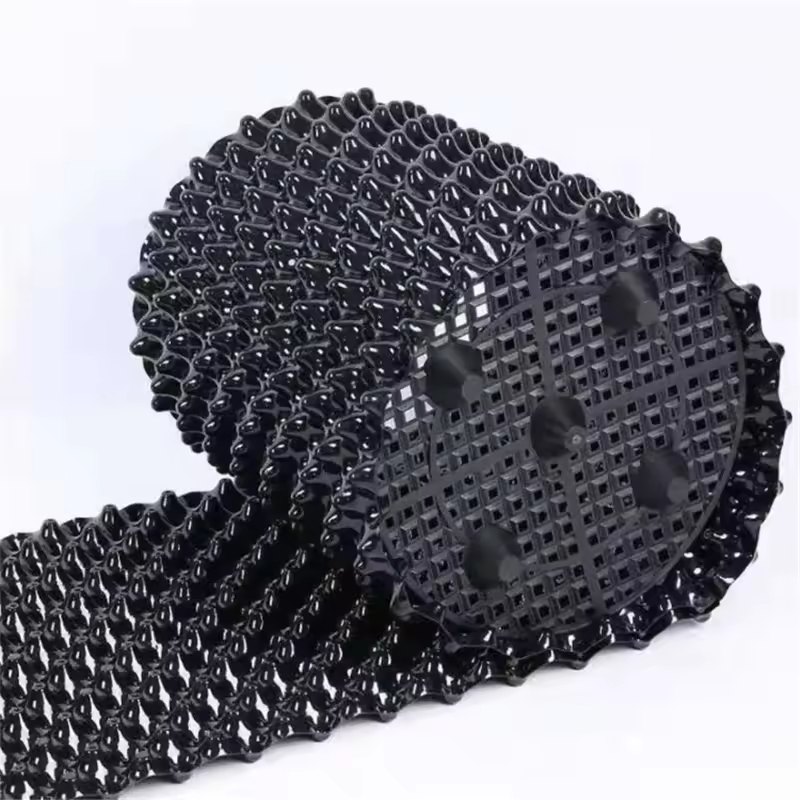
A conventional pot during a two-month wait produces a root mass wound tight against the wall, because the wall is the only boundary the plant can find. By the time the plant goes out, the outer roots have already learned the wrong habit. An air pruning pot interrupts that. The tip stops at the wall openings, and the plant keeps building roots inside the volume instead of around the edge.
That is the whole case for paying more for the container, and it only works if the holding row is set up to let air reach the wall.
Pots pushed shoulder to shoulder stop being air pruning pots at the contact points. Where two pots touch, there is no air movement, no drying, and no pruning. Roots grow into that gap and the two root balls start to knit together.
I space pots so a hand fits between them, and more than that on the windward side of a row. On a bench or a concrete pad, the same rule applies along the row, not just across it. It looks like wasted space in a nursery where space is rent. It is the least expensive habit you will adopt all season.
A plant in a pot has a small base and a large top. A row of them in an exposed holding area will go over in the first decent gust, and a pot that falls rolls, cracks at the fold, and lands on a neighbour.
Three things fix it, in order of cost. Shelter the row, using a windbreak net or the lee side of a building. Group tall plants in shorter blocks rather than one long row. Stake or tie what is left. And when a plant does go over, stand it up the same day, because a root ball that sits on its side for a week dries unevenly and the plant never quite recovers its shape.
Holding rows fail on water more than on anything else, and they fail in both directions.
In summer, an air pot in full sun dries faster than a solid pot, and a holding row is usually the least irrigated part of a nursery because it is not producing anything. Hand watering a long row in the heat is where plants get a soaking on Monday and nothing until Thursday.
In winter the problem reverses. The plant needs little, the media stays wet, and a pot that sits in a puddle has a permanently saturated base. That is the start of root rot, and it looks like nothing until the plant fails to push in spring.
The practical answer is the same in both seasons. Put the row on drip with a timer, and get the pots off the ground on a pallet or a bench with drainage, so water leaves the base instead of standing under it.
Most of the plants growers hold over winter are hardy enough for the cold. What kills them is the freeze and thaw cycle at the base of a wet pot.
Water expands when it freezes. A pot with a saturated base and no drainage path will push its base disc up, crack at the fold, and leave the root ball sitting in ice. A pot with a clean drainage path and a pallet under it comes through the same night intact.
If you hold stock through winter, check two things before the first frost. Is the base clear, and is the pot standing on something that drains. Everything else is secondary.
A container has a working life in weeks, and it is set by how fast the plant fills it, not by the calendar.
A plant is ready to move up when roots reach the wall and the openings in numbers, or when water starts passing straight through the pot on irrigation. Waiting past that point wastes the advantage the container gave you, because the plant stops building new roots and starts circling inside the volume it already filled.
If the ground is not ready and the plant is filling the pot, the answer is to upsize rather than wait. That is the case where keeping two or three sizes of container in stock pays for itself.
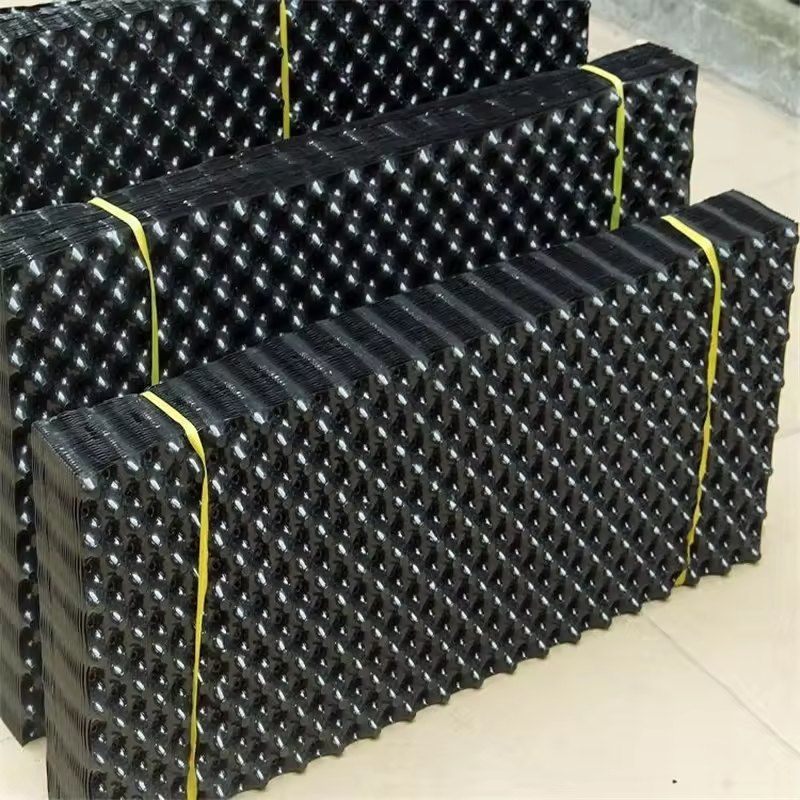
Bundled and stacked, a run of empty pots takes very little shed space, which is one reason a hard container beats a bag on a farm that holds stock year round. Store them out of direct sun, on a pallet, and not under anything heavy, because a pot that gets stood on is a pot that leaks at the base next season.
Sichuan Zhifang Net Industry Co., Ltd. has been making root control containers and agricultural netting since 2011, from a plant of nearly 10,000 m² with more than 50 production lines. We supply growers in 32 countries, and every carton carries a ZF security label inside the pack, which has settled more than one argument about whether a shipment was ours five years after it was made. Root control containers are built for 20 years and beyond in normal nursery use, and the taller sizes in the range are the ones most holding operations end up standardising on.
As long as it takes to fill the container and no longer. Once roots reach the wall in quantity, the plant needs more volume or needs to go out. A season in the same pot is usually too long for a fast-growing liner.
In a hot climate, yes. Shade slows water loss from the pot and reduces the midday swing. It does not replace irrigation, and it does not fix a row that has no spacing.
They are still growing, so yes, but lightly. A slow-release mix or a low-strength fertigation schedule is enough. Heavy feeding in a small volume builds soft growth that the wind will break before the plant sells. If you are matching containers to a holding plan, the taller root control containers cover the sizes trees need, and the full range covers everything from liners upward. For the root biology behind this, see why roots stop at the wall.


