
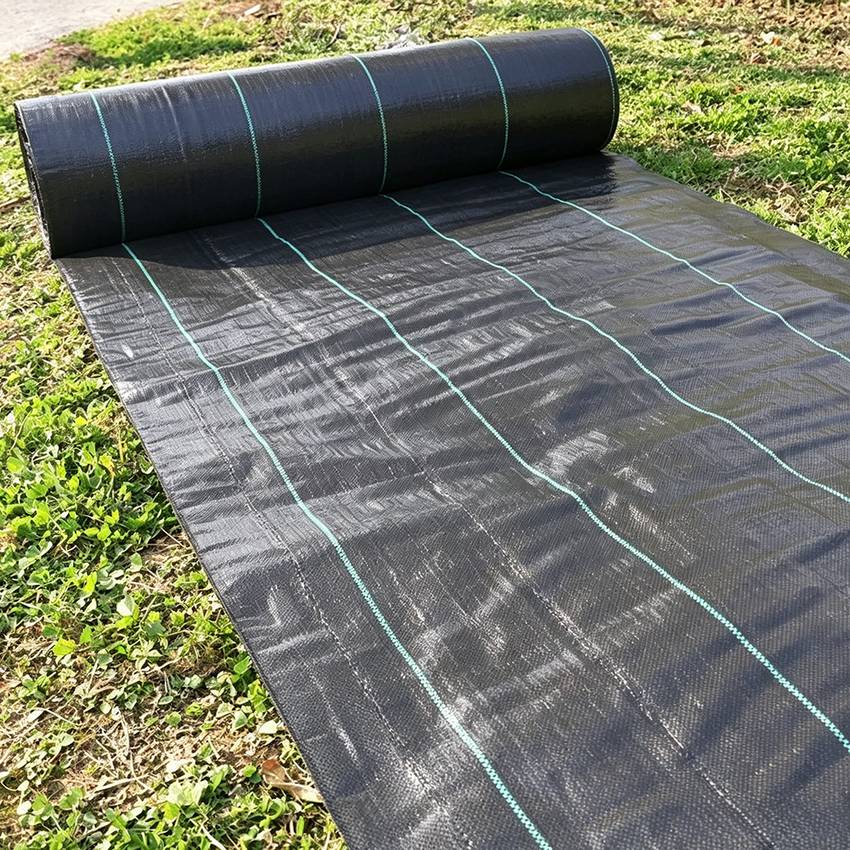
By Mark Wu, Co-founder & Technical Director, Sichuan Zhifang Net Industry Co., Ltd.
Search for landscape fabric and you will find two camps. One sells it as a permanent solution. The other says it never works, kills your soil, and turns into a mess within two seasons.
Both are describing real experiences. The difference is almost always the material in the bag, not the idea.
The fabric that fails is the thin, soft, black cloth sold by the metre at a garden centre. It feels like felt, it tears when you pull it, and it is usually the lowest-priced thing on the shelf.
Two seasons later it has become a wet, claggy layer with weed roots through it. Weeds are growing on top of the silt that has collected in it, not through it. When you try to lift it, it comes up in strips.
That is not a failure of weed barrier fabric. That is a failure of a product that was never specified for permanent use. Its job was to sit under mulch for one or two seasons, and it did that job.
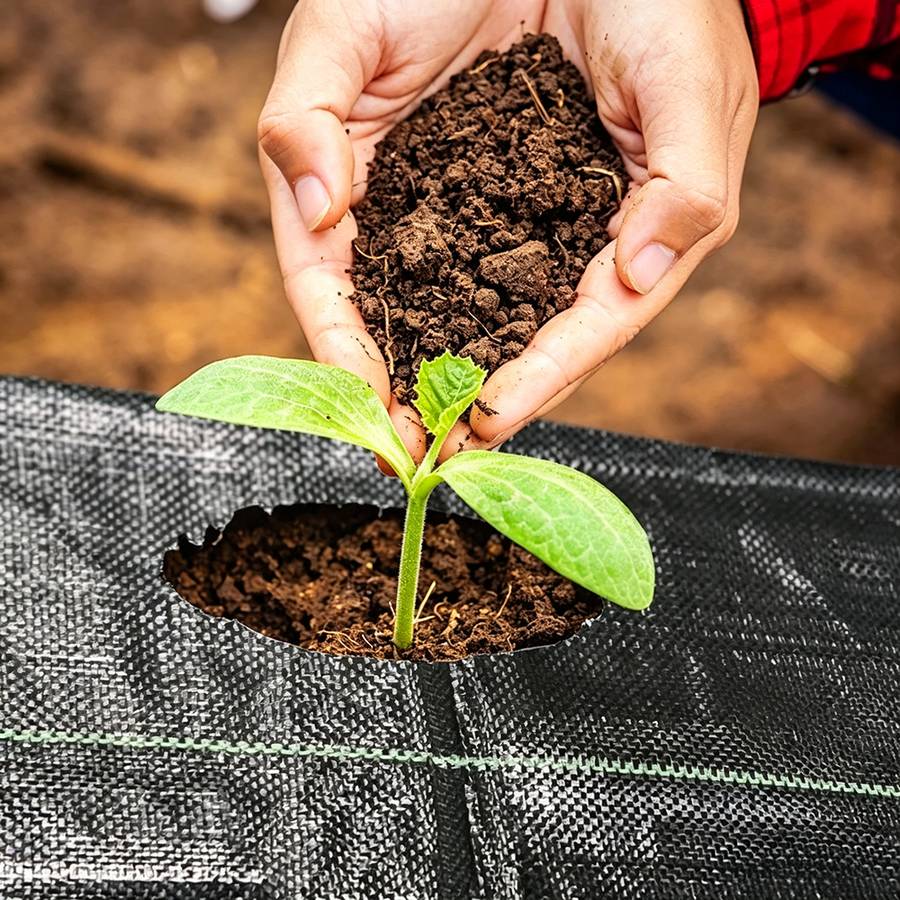
Four requirements, and economy fabric misses at least two of them.
It has to hold tension. A mat is only as good as its ability to stay flat. Fabric that stretches sags into hollows, water pools, silt collects, and weeds establish in the silt. Woven fabric holds; light non-woven does not.
It has to survive ultraviolet. This is the requirement people forget, because they think the mat is protected by being on the ground. If any part of it is exposed, the sun is working on it every day. Untreated polypropylene embrittles, then cracks along the fold lines. A mat quoted in years without a UV figure is a mat with no promise attached.
It has to pass water without passing light. That sounds contradictory and it is the whole trick: the openings are large enough for water and small enough to exclude the light a seed needs. Woven tape fabric does this naturally through the gaps between tapes.
It has to have a finished edge. Every panel is cut somewhere. A raw cut edge on woven material can run, and the run becomes the tear that ends the mat's life. Heat-sealed, stitched or taped edges are what buy the extra seasons.
Three situations where a heavy woven mat is still the wrong tool, and the criticism is fair.
Over established perennial weeds. Couch grass, bindweed and their relatives will find the seams and the planting holes. A mat suppresses annual weeds beautifully and merely inconveniences a rhizome.
In a bed you replant constantly. Every hole you cut is a weak point, and every crop change means lifting and relaying. For a salad bed worked four times a year, a mat is more labour than it saves.
Over shallow tree roots. Fabric laid tight over surface roots reduces gas exchange in exactly the zone the tree depends on. Orchard rows work when the mat sits in the clean strip between trees, not over the root plate.
A thin mat laid under mulch in a mild spring will look like a success. It suppressed the weeds, it lasted the season, and the gardener who bought it recommends it.
That is not evidence that the product works. It is evidence that almost anything works for one season in good conditions. The test that separates products is the second and third season, in a hot summer, on a windy site, with the mat exposed.
This is why grower recommendations and garden-centre reviews disagree so sharply, and why both can be honest. They are describing different products in different conditions.
Pick up a sample and do four things.
Pull it hard across the width. If it distorts and stays distorted, it will sag in the field.
Try to tear it from a cut edge. If it runs more than a centimetre, the edge is not finished.
Hold it up to the light. You want a dense, even weave. Patches that look thinner will be the first places to fail.
Ask for the UV figure in kly, and the weight in gsm. Those two numbers, plus the edge finish, predict most of what will happen over the next decade.
A light mat looks like a bargain because it is compared per square metre with a heavy one. The comparison that matters is per square metre per year, including the labour of laying it again.
That is the whole argument. Heavy woven fabric costs more once and less every season after the first. The light stuff costs less once and more every time you replace it.
Sichuan Zhifang Net Industry Co., Ltd. has been making woven ground cover and shade netting since 2011, from a plant of nearly 10,000 m² with more than 50 production lines, supplying growers in 32 countries. Our ground cover is woven from 100% virgin HDPE with a guaranteed UV stabilisation of 500 kly, in weights from 90 to 150 gsm, and every roll carries a ZF security label inside the pack.
Heavy woven fabric does, for years. Thin non-woven fabric suppresses them for a season and then becomes a habitat for them. The complaint usually traces back to the second product.
A permeable mat does not. It reduces evaporation and keeps the surface cooler, while rain and air still pass. Film is the material that smothers soil, and it is a different product with a different job.
Ask for the UV dose rather than a year count. Exposed, a good woven mat will give five to ten years in most climates; buried under mulch, considerably longer. If you want the installation mistakes that shorten that life, this covers them. The ground cover range lists weight per item, and heavy woven grades are the ones built for permanent rows.


