
By Mark Wu, Co-founder & Technical Director, Sichuan Zhifang Net Industry Co., Ltd.
Every shade net brochure eventually says the same thing: it lowers your energy costs. It is usually true, it is almost never quantified, and the reason is that the saving depends on a number nobody wants to publish, which is how many hours your fans were running before.
So let me put the argument in the right order. Shade does not reduce a bill by itself. It reduces a load, and whether that load matters depends on what is doing the cooling.
In a protected crop, the meter is usually feeding three things: ventilation fans, circulation fans, and pumps.
Pumps run on a schedule and barely change with shade, unless you were irrigating heavily because the house was hot. Circulation fans run to keep air moving over the canopy, and shade changes that need only slightly.
The big variable is ventilation. In a fan-and-pad house or a mechanically ventilated tunnel, the fans are sized to remove a heat load, and that heat load is mostly solar radiation landing on the structure. Cut the radiation before it enters, and the fans have less to remove. In a naturally ventilated house, the same physics applies but the "fan" is the vent opening, and the saving shows up as a cooler house rather than a smaller bill.
So the honest statement is narrower than the brochure: shade saves electricity where mechanical cooling is doing the work, and especially where it runs through the afternoon.
Radiation peaks in the middle of the day, and so does the cooling load. A fan system that is adequate in the morning is working flat out at two in the afternoon, which is exactly when electricity is most expensive on many tariffs and exactly when a house with no shade is most likely to overheat anyway.
A net that removes a share of that peak does two things at once: it cuts the kWh, and it stops the house from needing the last, most expensive increment of fan capacity. In a house that was marginally undersized, that second effect is worth more than the first.
Here is the part the brochure leaves out. Every percent of shade is a percent of light the crop does not get, and light is the raw material of yield.
If a crop is already light-limited in your climate, shading it to save fan hours is trading a harvest for a bill. If the crop is heat-stressed and shutting down stomata at midday, the shade is not costing you light at all, because the plant was not using that light anyway. The same 50% net can be a waste in one house and a bargain in the next, on the same farm.
The test is not the thermometer. It is whether the crop's growth rate improves when you shade it. If it does not, you have bought a smaller electricity bill with a larger yield loss.
This is where the two products genuinely differ, and it matters most for internal screens.
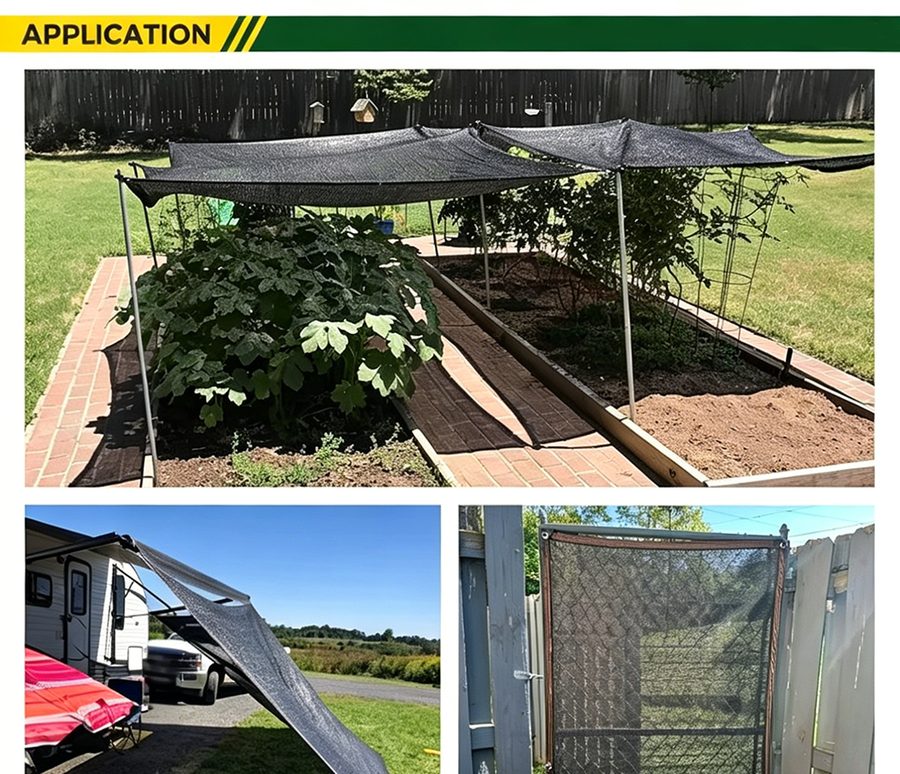
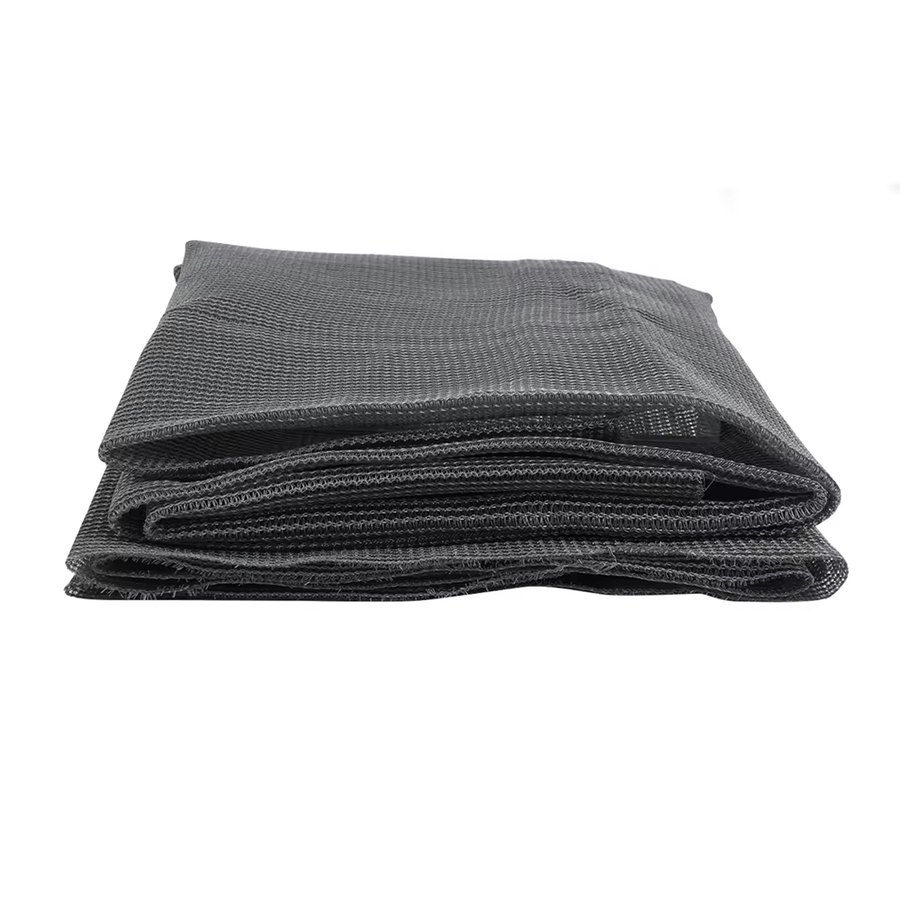
A black net absorbs radiation, warms up, and re-radiates part of that heat into the house. It blocks light effectively, and it puts heat into the air below it. In an internal screen over a crop, that heat is inside the envelope.
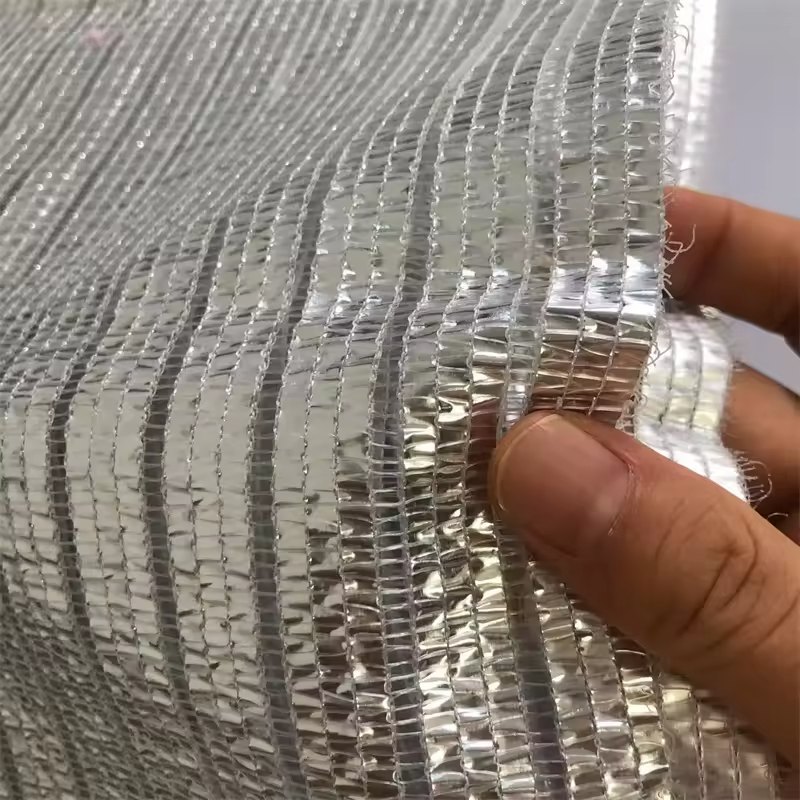
A reflective or aluminised net sends a share of the radiation back out. The fabric itself stays cooler, and less heat is released downward. That is why reflective screens are the usual choice where the goal is cooling rather than light reduction, and why they cost more.
For external netting, the difference is smaller, because the heat that a black net absorbs is outside the house anyway. It still runs hotter, which ages the fabric faster, and that is a lifetime cost rather than an electricity one.
If you want the number for your own house, run this for two weeks.
Put a clamp meter or a plug-in energy logger on the fan circuit. Log kWh per day for one week with the net as it is. Then cover one bay with the net you are considering, log again, and keep everything else identical: same vent settings, same irrigation, same crop stage.
Then write the crop result next to it. Leaf area, or fresh weight at the end of the cycle, in the shaded bay and the unshaded one. Two numbers, side by side, and the decision makes itself.
What you will usually find is that the saving is real but modest, in the range of a few percent of the total nursery bill rather than the headline figure, and that it is worth having only when the crop response is neutral or positive.
Pays: hot climates, mechanically ventilated houses, expensive or unreliable grid power, crops that shut down at midday, and houses where fans are already running at maximum through the afternoon.
Does not pay: mild climates, passive houses where fans are a minor load, crops that are light-limited, and any situation where the net is being bought as an energy measure while nobody checks what happened to the yield.
Shade is a climate tool first and an energy tool second. Buy it for the crop, and treat the electricity saving as a bonus that sometimes pays for the net and sometimes does not.
Anyone who tells you a shade net will cut your energy bill by a specific percentage, without asking about your fans, your tariff or your crop, is guessing.
Sichuan Zhifang Net Industry Co., Ltd. has been making shade netting and root control containers since 2011, from a plant of nearly 10,000 m² with more than 50 production lines, supplying growers in 32 countries. Our netting is warp-knitted from 100% virgin HDPE with a guaranteed UV stabilisation of 500 kly, in standard and aluminised versions, and every roll carries a ZF security label inside the pack. In the 2022 European heatwave, a customer's warp-knitted panels came through intact while plain woven net in the same district tore across large areas.
Only where mechanical cooling is a significant load. It reduces the heat load the fans have to remove. In a naturally ventilated house the benefit shows up as temperature, not as kWh.
For internal screens in a hot climate, often yes, because it keeps the heat out of the envelope rather than releasing it inside. For external netting the difference is smaller and the case is weaker.
There is no universal number. The only reliable test is a side-by-side bay with the crop measured. If you want the background on how percentage is chosen, this covers it, and the reflective options are listed under aluminium foil shade net and the full shade net range.


