
By Mark Wu, Co-founder & Technical Director, Sichuan Zhifang Net Industry Co., Ltd.
"Weed mat" describes a job, not a product. Under that name you can buy a woven polypropylene sheet, a needle-punched non-woven fabric, a black polyethylene film, or a roll of jute that is designed to rot.
They all block light, so they all stop weeds. They do completely different things to the soil underneath, and that is the part that decides whether the ground is better or worse two seasons later.
Woven PP is a grid of flat tapes. It is the material most ground cover is made from, and for most landscape and orchard work it is the right starting point.
The weave is dimensionally stable, so it holds tension across a wide panel without stretching into a sag. It passes water through the gaps between tapes rather than through the fibre, which means drainage is fast and predictable. And it is strong in the direction that matters, which is the one that resists being pulled by a machine or walked on by a crew.
The weakness is at the cut edge, where the tapes can run. A heat-sealed or stitched border is what stops a panel from unravelling in its second season, and it is the first thing to check on a quotation.
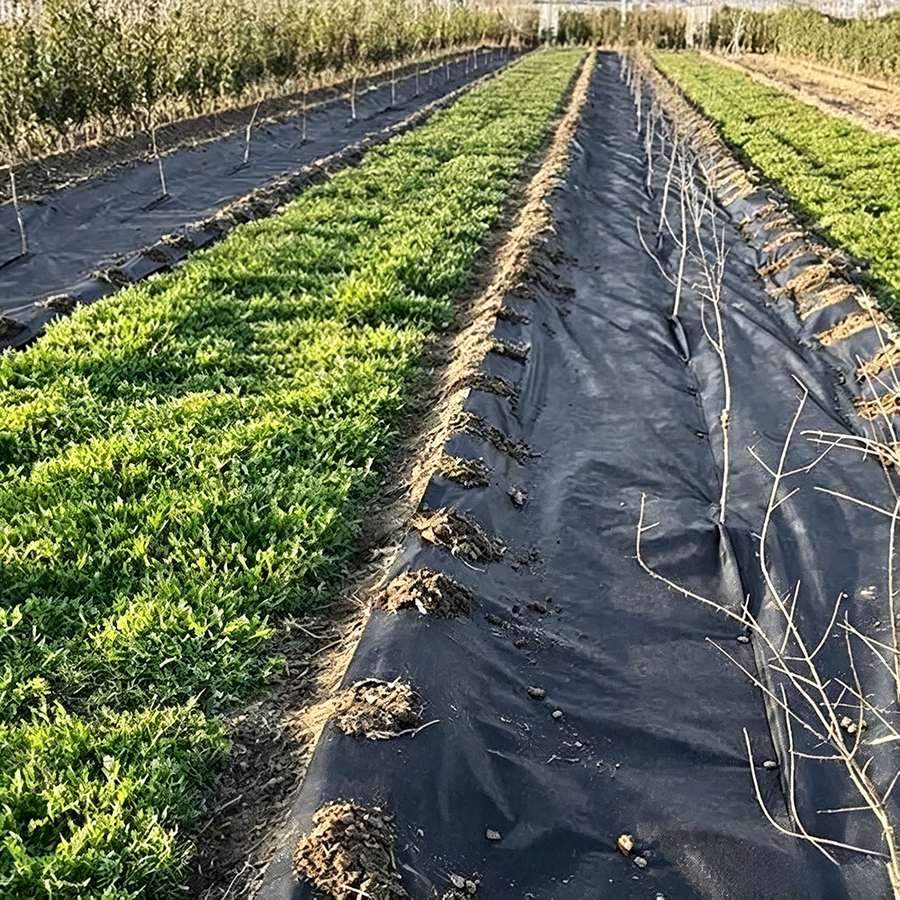
Non-woven fabric is a mat of fibres rather than a weave. Water passes through the fibre structure itself, so it spreads laterally as it goes down instead of running through discrete openings.
That makes it a better choice on slopes and on soils that crust, because water is distributed rather than channelled. It is also softer to handle and easier to cut cleanly around a plant.
What it does not do is hold high tension. A wide non-woven panel wants support, and it will stretch under a load that a woven sheet would shrug off. For a small bed or a nursery bench it is excellent. For a hectare of orchard rows, the tension requirement usually pushes you back to woven.
Black PE film is not really a weed mat in the same sense. It is a barrier, and it is close to absolute: no light, no water, no air.
That is useful in specific places. Fumigation and soil solarisation, where you want the ground sealed. Paths and storage areas, where nothing is meant to grow. Short-term ground protection during construction.
It is a poor choice for a planting bed, for one reason: the soil underneath goes anaerobic. Without gas exchange, root activity falls, and the film also concentrates heat and water in ways that are hard to manage. If you use film at all in a bed, it belongs under a mulch layer, not exposed, and it belongs on a rotation you plan to lift.
Jute, coir and paper mats are designed to break down, and while they do they add organic matter to the surface.
For a vegetable bed that will be reworked every season, that is a genuine advantage: you are not lifting a sheet and storing it, and the material becomes part of the soil. The trade-off is duration. A jute mat will not give you three seasons, and on a windy site it needs weighting from day one.
Where they fail is when a buyer expects them to do the job of a woven sheet. They are a seasonal mulch with a weed-suppressing head start, not permanent infrastructure.
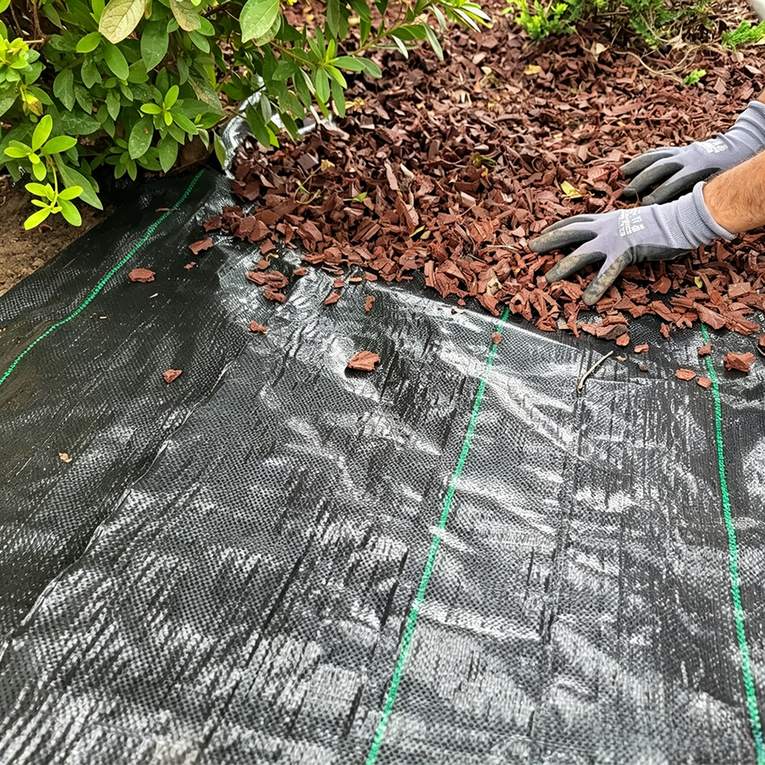
Whatever you lay down, three things change underneath.
Water. A permeable mat reduces evaporation from the surface, which is the main reason beds under cover hold moisture longer. An impermeable one stops rain entering altogether, which is a completely different outcome.
Air and temperature. Woven and non-woven materials still allow gas exchange. Film does not. A dark mat also warms the soil earlier in spring and keeps it cooler in high summer, which can be useful or a problem depending on the crop and the season.
Life in the soil. Earthworm activity continues under permeable mats, and stops under film. This is not a small detail: worm channels are how water and roots move through a heavy soil.
The honest summary is that a permeable mat is a moisture and weed tool, and an impermeable one is a barrier. Confusing the two is the most common specification error we see.
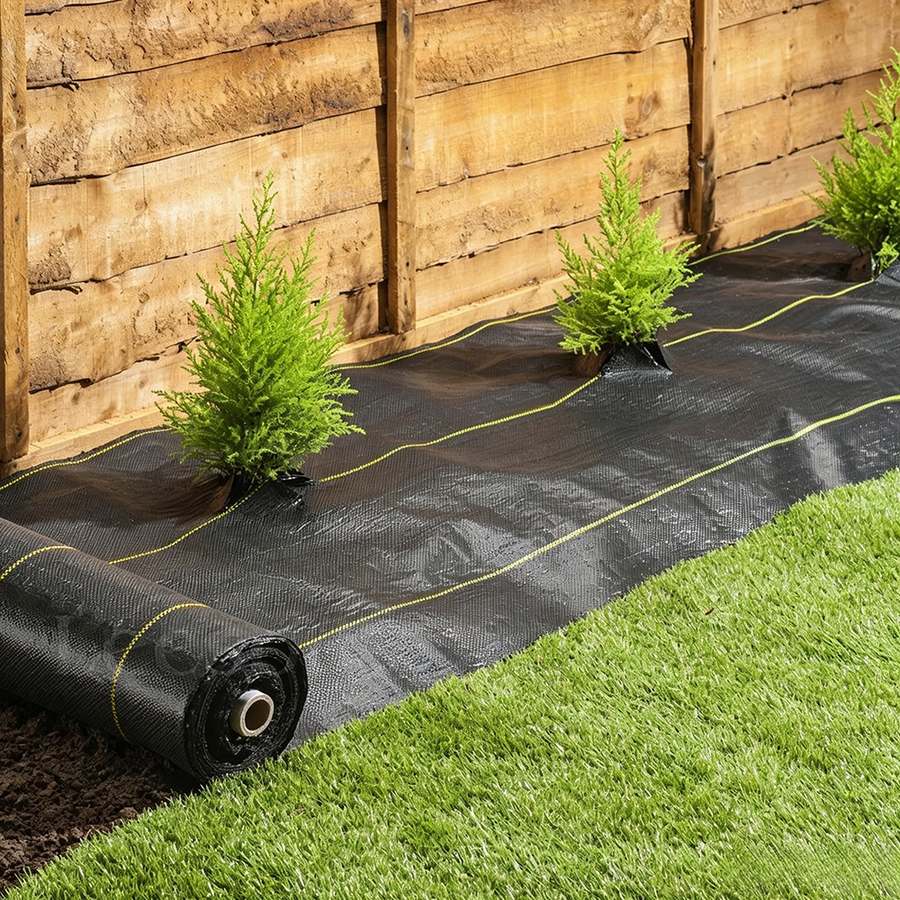
For orchard rows and vineyard, woven PP, heavy grade, with a reinforced edge.
For a vegetable bed that gets reworked each year, biodegradable or a light non-woven, accepting that it is a seasonal input.
For a nursery bench or a small landscape job, non-woven, because it cuts and lies easily.
For solarisation, paths and site protection, film, with the understanding that it is not a planting surface.
Sichuan Zhifang Net Industry Co., Ltd. has been making ground cover fabric and shade netting since 2011, from a plant of nearly 10,000 m² with more than 50 production lines, supplying growers in 32 countries. Our ground cover is woven from 100% virgin HDPE with a guaranteed UV stabilisation of 500 kly, in weights from 90 to 150 gsm, and every roll carries a ZF security label inside the pack. In Australia, a grower who had replaced a recycled-feedstock mat that crumbled in its first year with our virgin HDPE fabric still had that fabric in service years later.
Both stop light, so both control weeds. Woven holds tension and lasts longer on wide panels. Non-woven distributes water better on slopes. The choice is about the site, not about weed performance.
Yes, with a permeable mat, and the hole should be no larger than the plant needs. Cut it tight and the mat keeps working around the stem for years.
A permeable mat does not. Film does, because it stops gas exchange and water. That is why film belongs on paths and solarisation, not on a bed you expect to crop from. If you want the failure modes of a badly installed mat, this covers them. The ground cover range lists weight and width per item, and heavy woven grades are the ones for orchard rows.


