
By Mark Wu, Co-founder & Technical Director, Sichuan Zhifang Net Industry Co., Ltd.
Two growers order the same net. Same shade percentage, same colour, same supplier. One ends the summer with a cool house and firm fruit. The other ends it with pale, stretched plants and a thermometer that never went below the outside reading.
The difference is usually not the net. It is where the net hangs.
This is the decision that gets made by accident, because it usually follows whatever the structure already has.
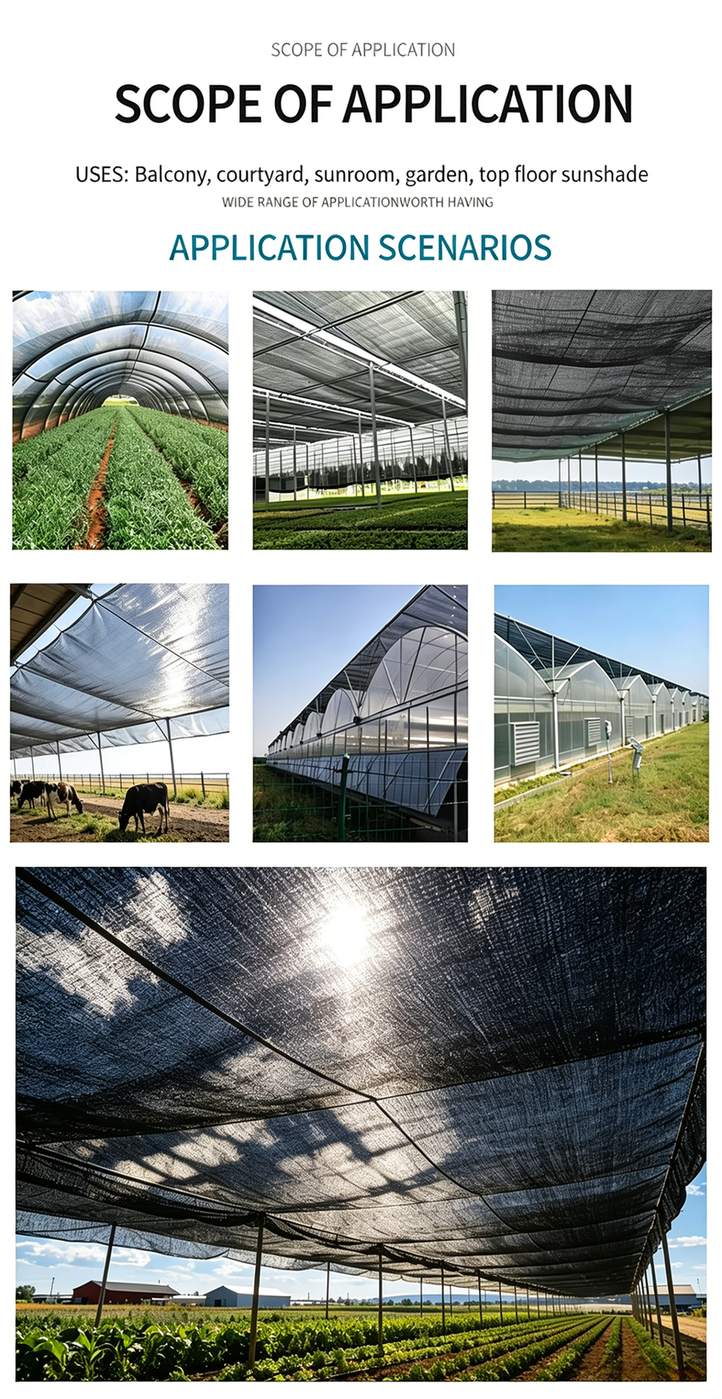
A net stretched above the roof intercepts the radiation before it touches anything. The heat never enters the building. That is the whole point of external shading, and it is why it outperforms internal screens of the same percentage, sometimes by a wide margin. The structure stays cooler too, which matters for a glasshouse that would otherwise re-radiate all afternoon.
A screen hung inside, below the roof, is working on light that has already passed through the covering. The glazing absorbed a share of the energy, warmed up, and is now radiating into the house. You are reducing the light reaching the crop, but a good part of the heat load is already inside and stays there.
So internal screens are excellent for light control and for heat retention at night. They are a poor substitute for external shading in a hot climate, and buying a 70% internal screen to fix a temperature problem that a 50% external net would solve is a common and expensive mistake.
A roof net cuts the sun that comes from overhead. It does nothing about the sun that arrives at a low angle in the early morning and late afternoon, which is exactly when the light lands directly on the side of a crop and on the people working in it.
On an open field structure, that means side panels on at least the western and eastern edges. On a greenhouse, it means considering whether the walls need screening for a few hours a day. The cost is real, and so is the difference in the crop on the sunward wall.
A net stretched close over the plants traps a layer of still, hot air between the fabric and the canopy. The crop sits in it.
Leave a gap. On a tunnel or a bench structure, a metre or more above the canopy is worth having, because it lets air move under the net and carry the heat away. On a low field frame, the same logic still applies at a smaller scale: the net should be a roof, not a lid.
A shade net is not a roof. Rain passes through it, in droplets fine enough that it lands like a heavy mist rather than a downpour. That is usually an advantage, because it means you do not have to take the net down to water.
The exception is a sagging panel. Where the net dips, water collects, and a stretched net holding water is a net pulling on its fixings with several kilos of load. That is how most shade structures fail, and it is why the fall of the frame matters as much as the tightness of the net.
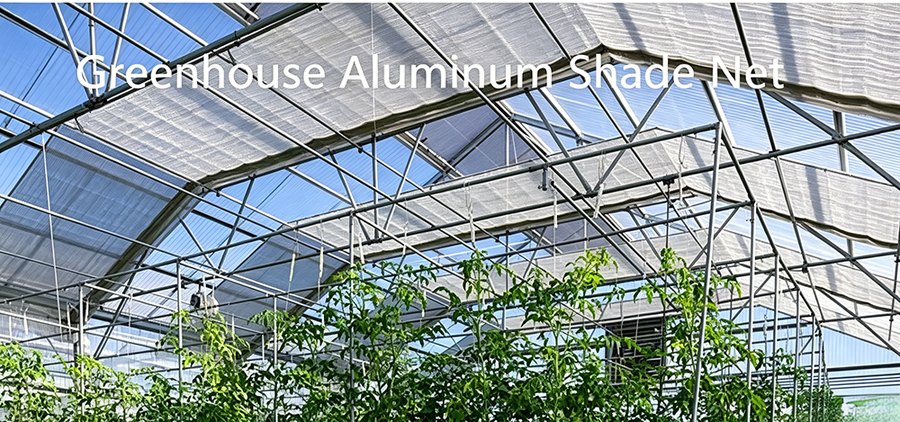
An external net catches wind like a sail, and the load is concentrated at the perimeter and at every fixing point.
Three things keep it up. A frame with supports close enough together that the panel cannot drum. Edge reinforcement with a rope channel or eyelets rather than raw fabric. And clips that grip without cutting, because a wire fixing will saw through the mesh at the contact point within a season or two.
If a structure is going to carry external netting permanently, the frame should be designed for it from the start. Retrofitting a shade frame onto a structure that was never meant to carry one is where bent posts and torn panels come from.
Open field with steel hoops. External, roof plus at least one side, high enough to walk under. This is the classic field shade house, and it is the lowest cost per square metre of coverage.
Tunnel or multi-span film house. External, above the film, with the frame rated for the extra wind load. Internal is only worth it if the goal is light reduction rather than cooling.
Glass house. Internal screens are common because the structure is designed for them and they double as energy screens at night. In a hot climate, external net over the glass still wins on temperature.
Terrace, nursery bench, small garden. Overhead external, fixed to a rigid frame, with the net kept clear of the plants by at least half a metre.
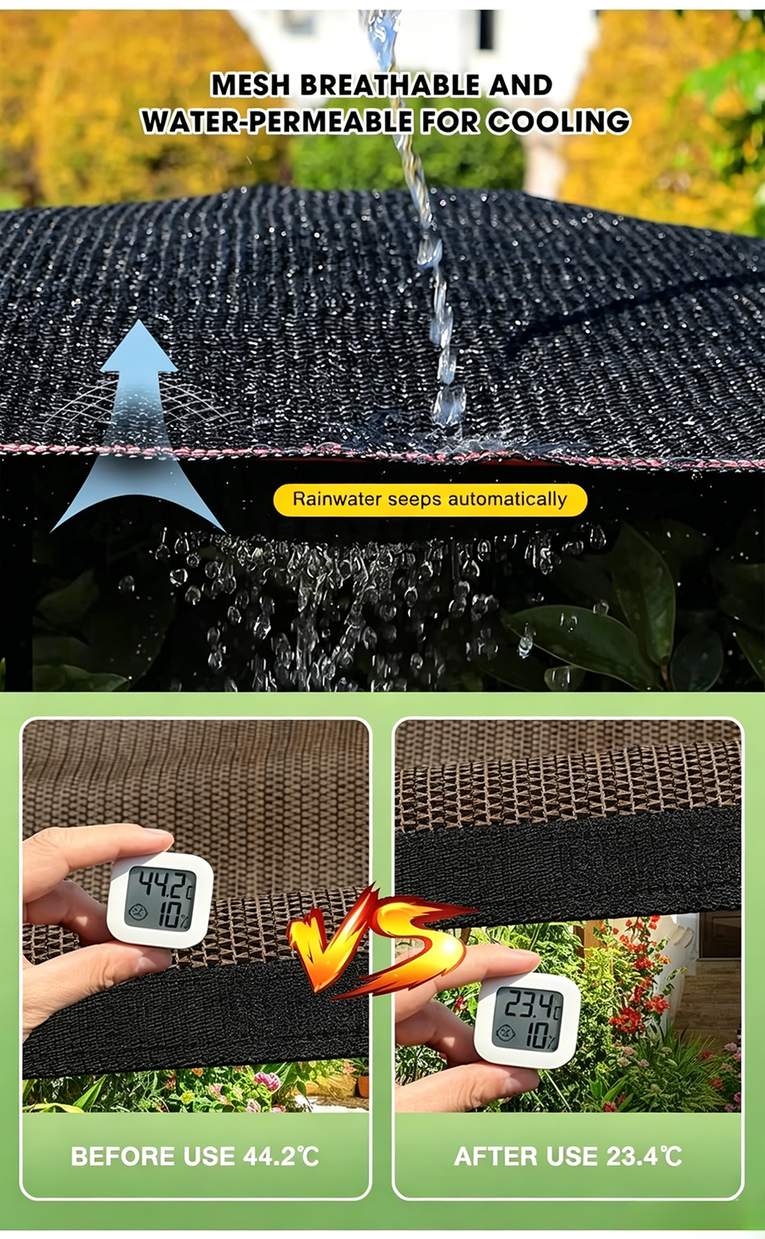
If you want to know whether the placement is working, put the thermometer where the plant is, not where the net is.
A sensor at roof height will tell you the net is doing something. A sensor at canopy height tells you whether the crop is. On more than one farm I have seen a well-shaded roof above a canopy that was still running several degrees above the outside air, because the air under the net was not moving.
That reading is also the fastest way to find out that you needed side screening, not a darker roof.
Sichuan Zhifang Net Industry Co., Ltd. has been making shade netting and root control containers since 2011, from a plant of nearly 10,000 m² with more than 50 production lines, and supplies growers in 32 countries. Our shade netting is warp-knitted from 100% virgin HDPE with a guaranteed UV stabilisation of 500 kly, and every roll carries a ZF security label inside the pack. In the 2022 European heatwave, a customer's warp-knitted panels came through intact while plain woven net in the same district tore across large areas, which is what an external net has to survive when it is the first thing the weather hits.
Yes, in two cases. When the structure is a glasshouse with an existing screen system, and when you want to keep heat in at night. It is not a cooling substitute for external net in a hot climate.
As far as the structure allows, with a practical minimum around half a metre and a metre or more on a commercial house. The gap is there so air can move under the net.
It will work, but it traps heat against the film and it abrades the covering where the two rub. A small gap or a proper shade frame is better. For the screen side of this, thermal retention screens are the internal option, and the shade net range covers the external grades. If you are shading a structure rather than a field, black shade net is the usual starting point.


