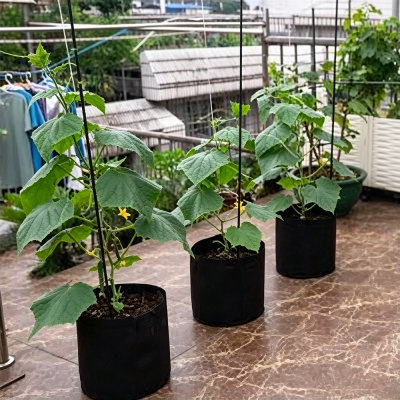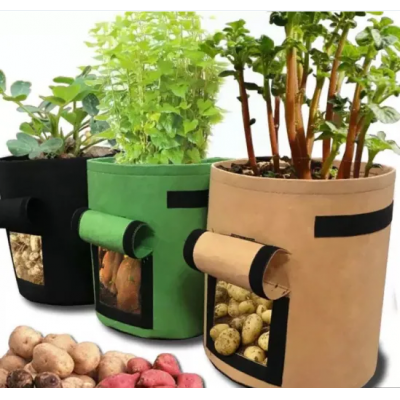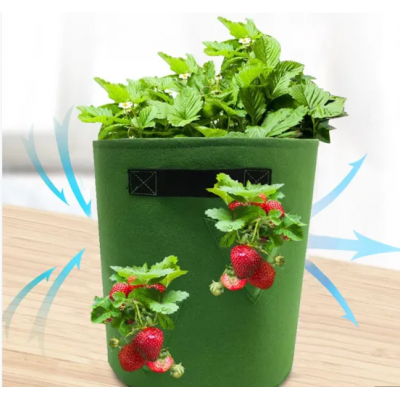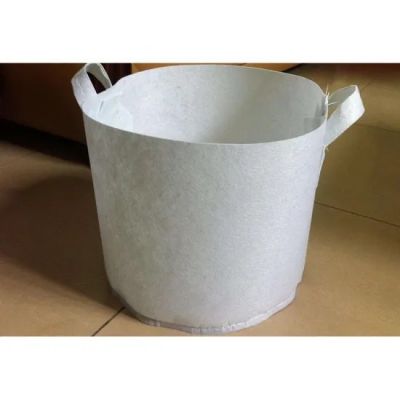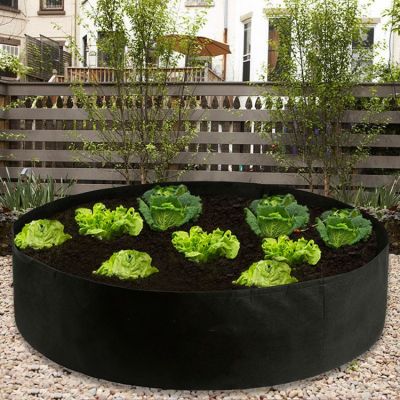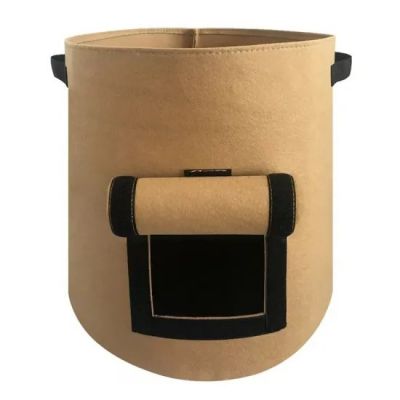
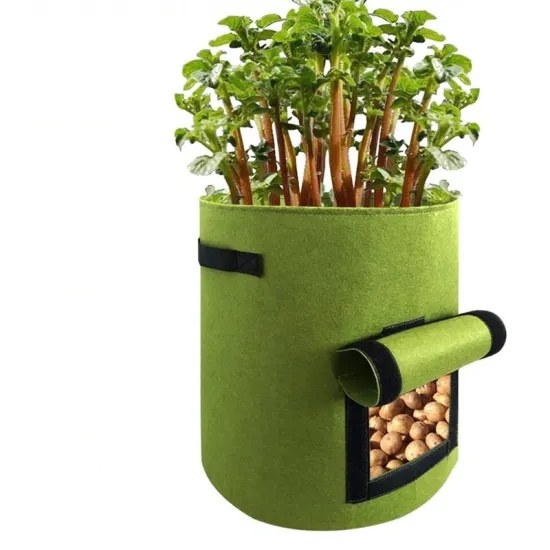
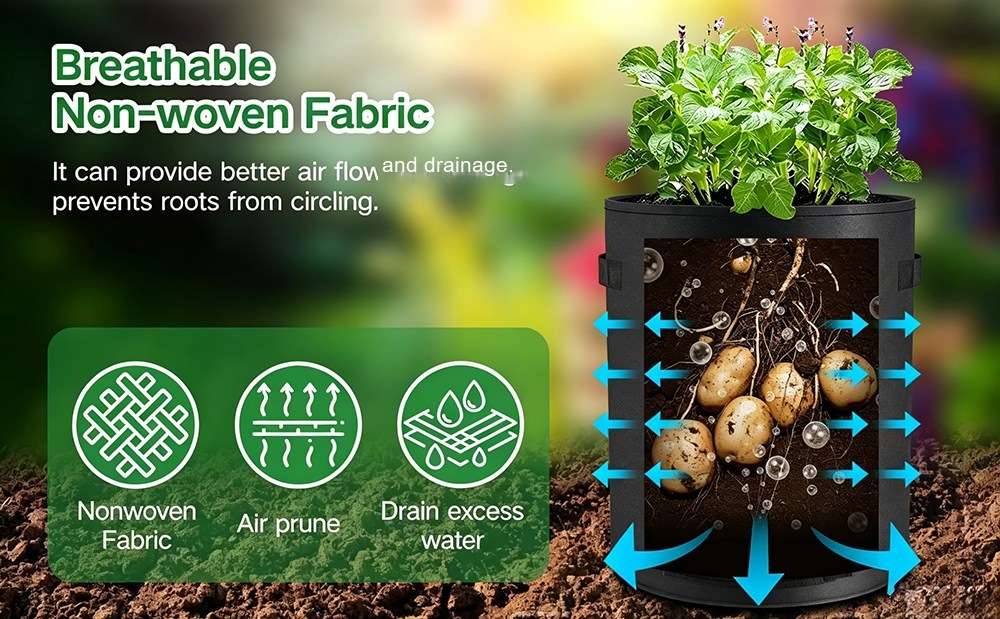
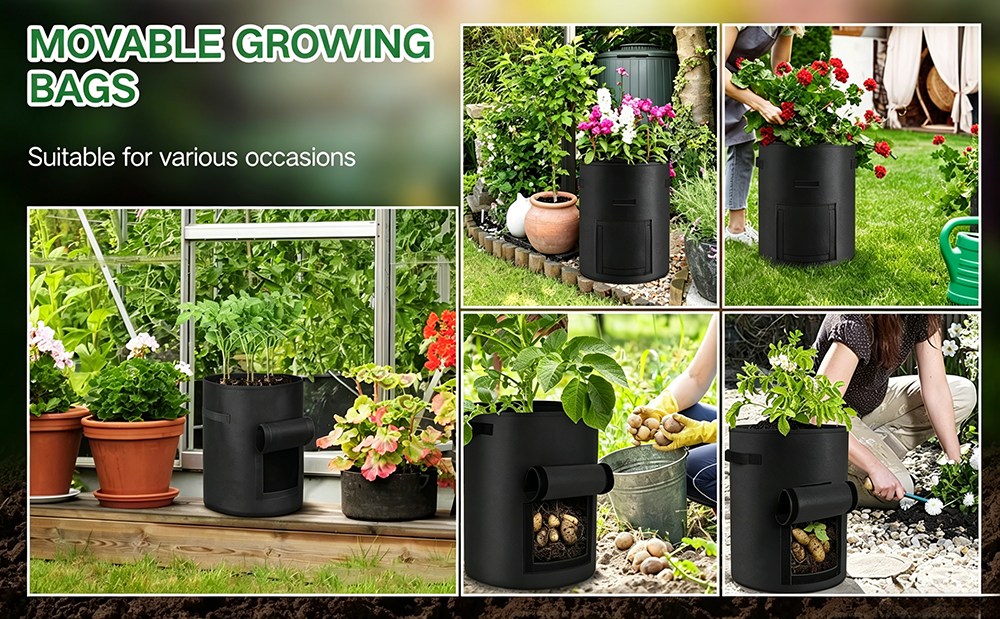
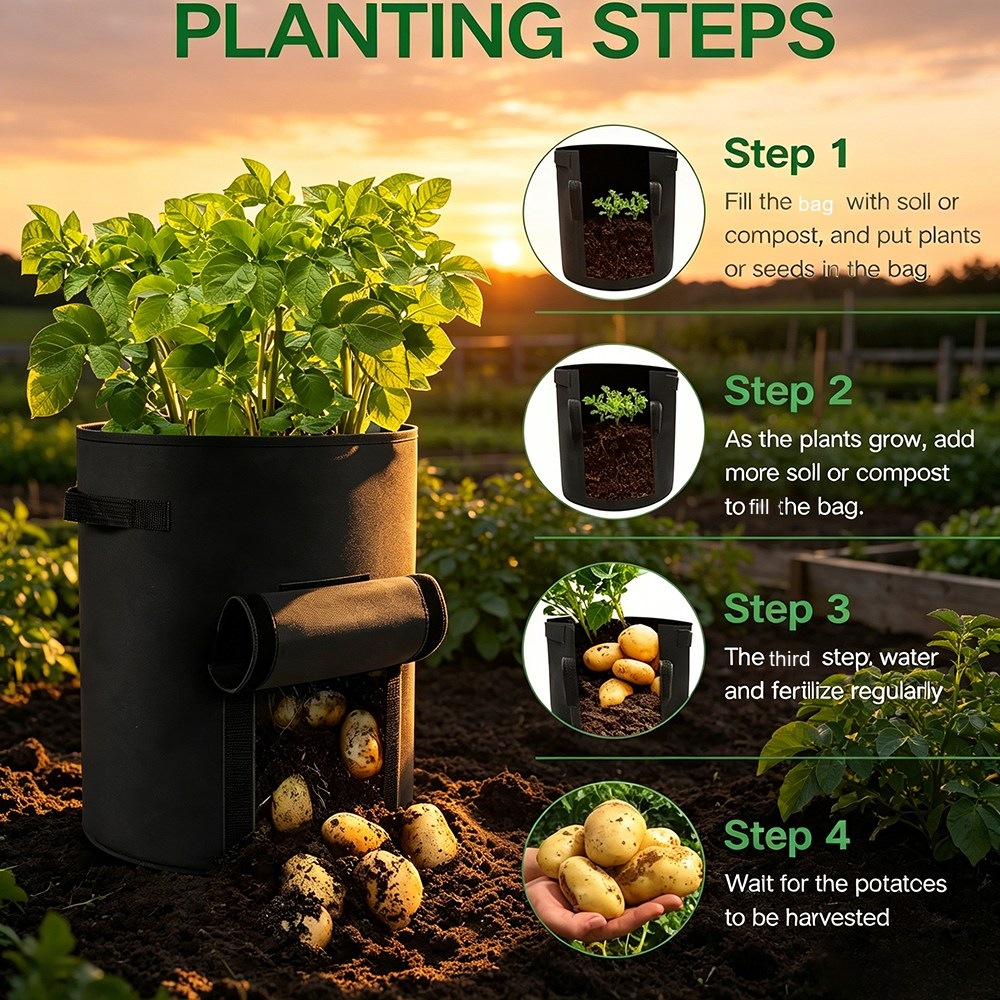
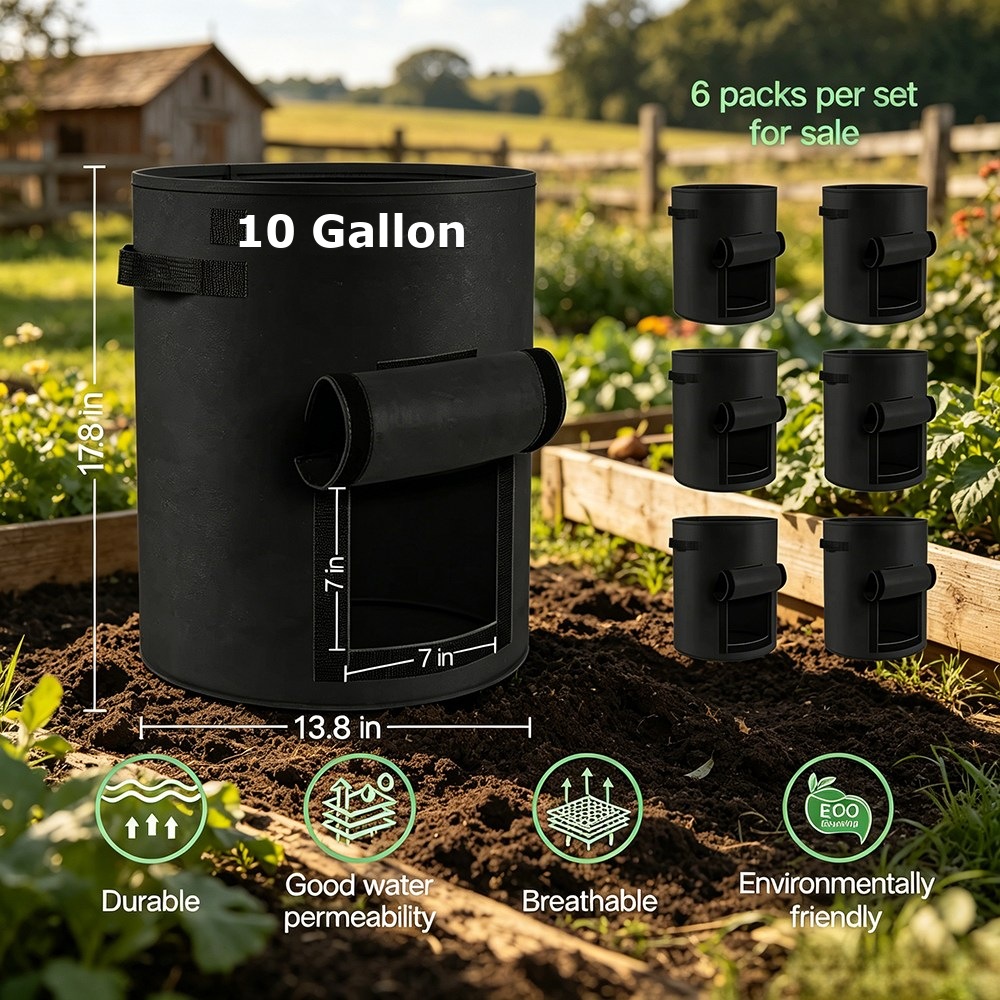
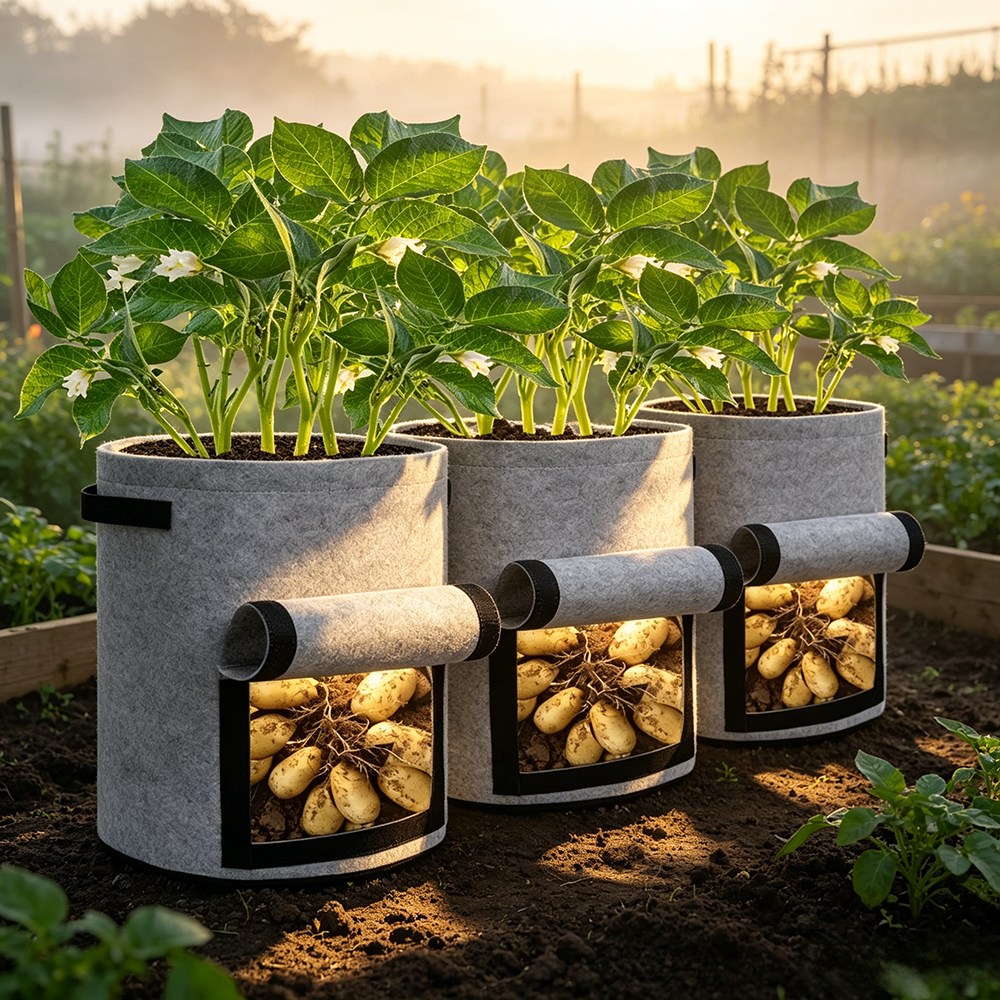
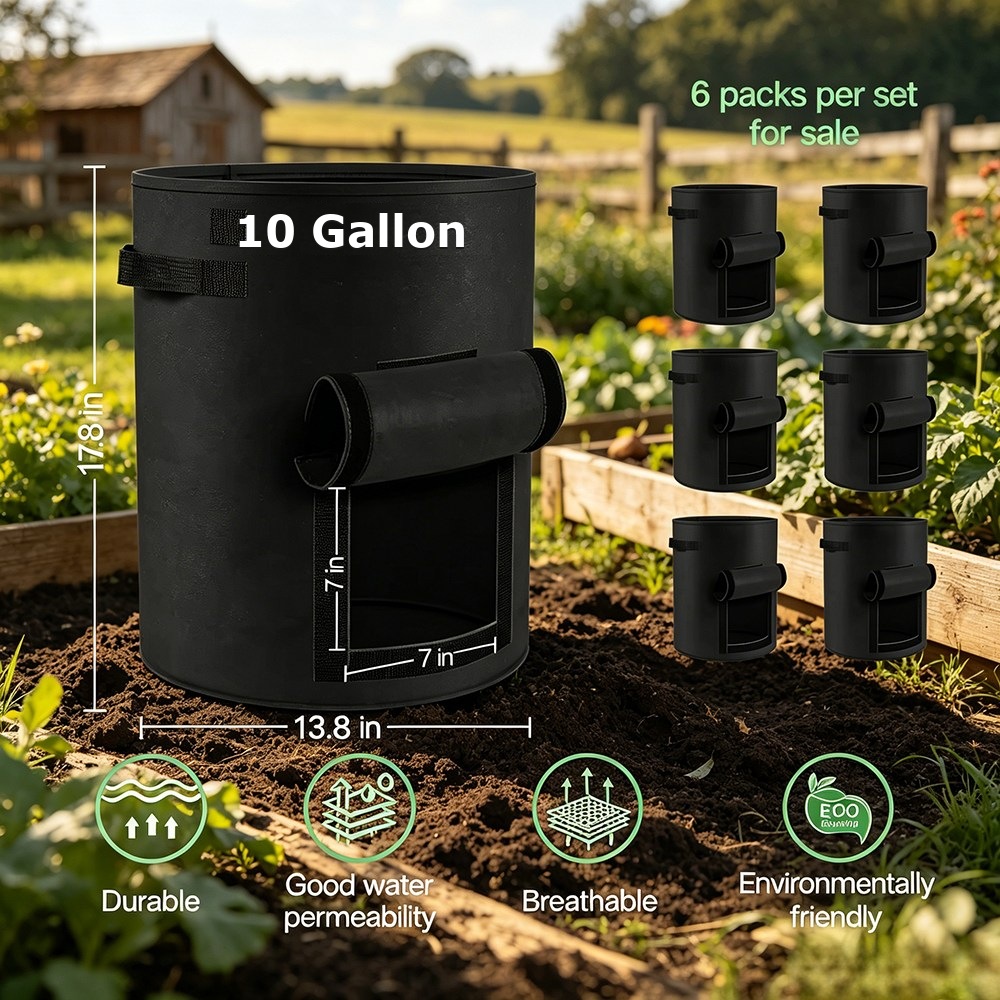
Nursery rows produce bags in the same way they produce plants, by the thousand, and at the end of the cycle somebody has to deal with them. This one is made from non-woven felt that breaks down after use, so spent bags do not have to be gathered and sent away as plastic. The wall breathes and drains while it lasts, which keeps roots fibrous and stops the waterlogged pocket that forms at the base of a sealed pot, and the round body lifts out of a tray without catching on a corner. A side window covered by a roll-back flap shows the crop finishing below the surface.
A nursery runs on repetition: the same bag, the same bench, the same lift, thousands of times a season. What goes wrong is rarely the first week. It is the bag that stays wet through a wet month, and the pile of spent plastic waiting at the end of it.
The body is non-woven felt, which passes air to the root zone and lets surplus water leave instead of holding it against the roots: that is what stops the soft, brown-rooted start a sealed sleeve produces. The same felt is made to break down after use, so a nursery is not left holding a shed full of spent bags that have to be collected and sent away. Roots meet air at the wall and stop there, so the root ball comes away fibrous rather than coiled at the base.
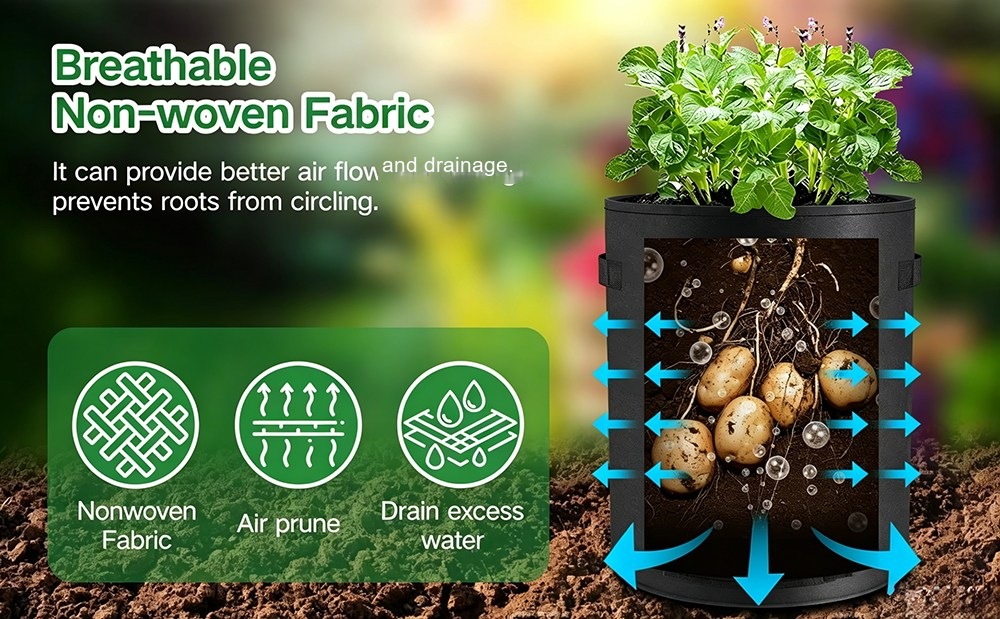
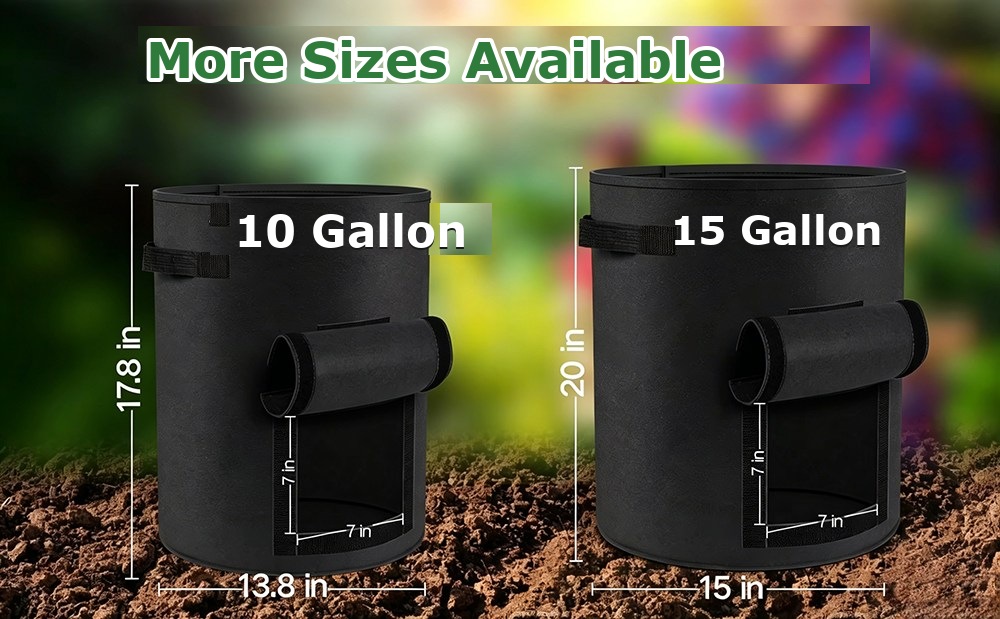
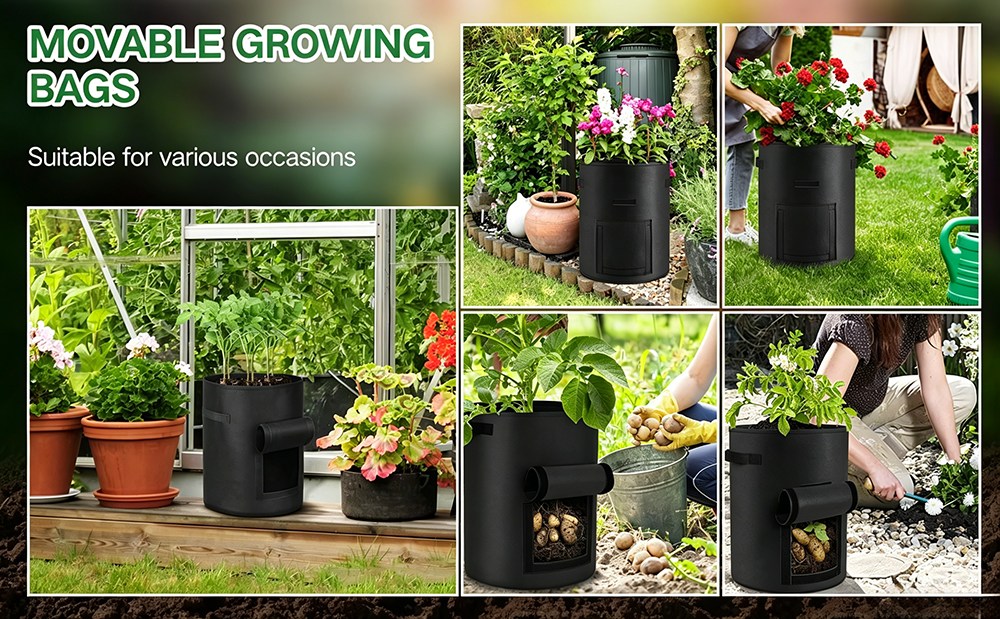
The round body drops into a bench slot or a tray without the corners that catch when seedlings are moved in batches, and it lifts out with the root ball intact. The side window is covered by a flap that rolls back and holds out of the way, so crops that finish below the surface can be checked and picked without emptying the bag. Strawberries, tomatoes and leaf crops all run in the same wall. The wall system is shared across the air pruning pot range.
| Use | Seedling raising and nursery planting |
| Material | Non-woven felt fabric |
| Form | Round |
| Window | Side window with a roll-back cover |
| Handles | 2 stitched handles |
| Degradation | Felt made to break down after use |
| Base | Flat stitched base |
| Packing | Bag, pallet or carton |
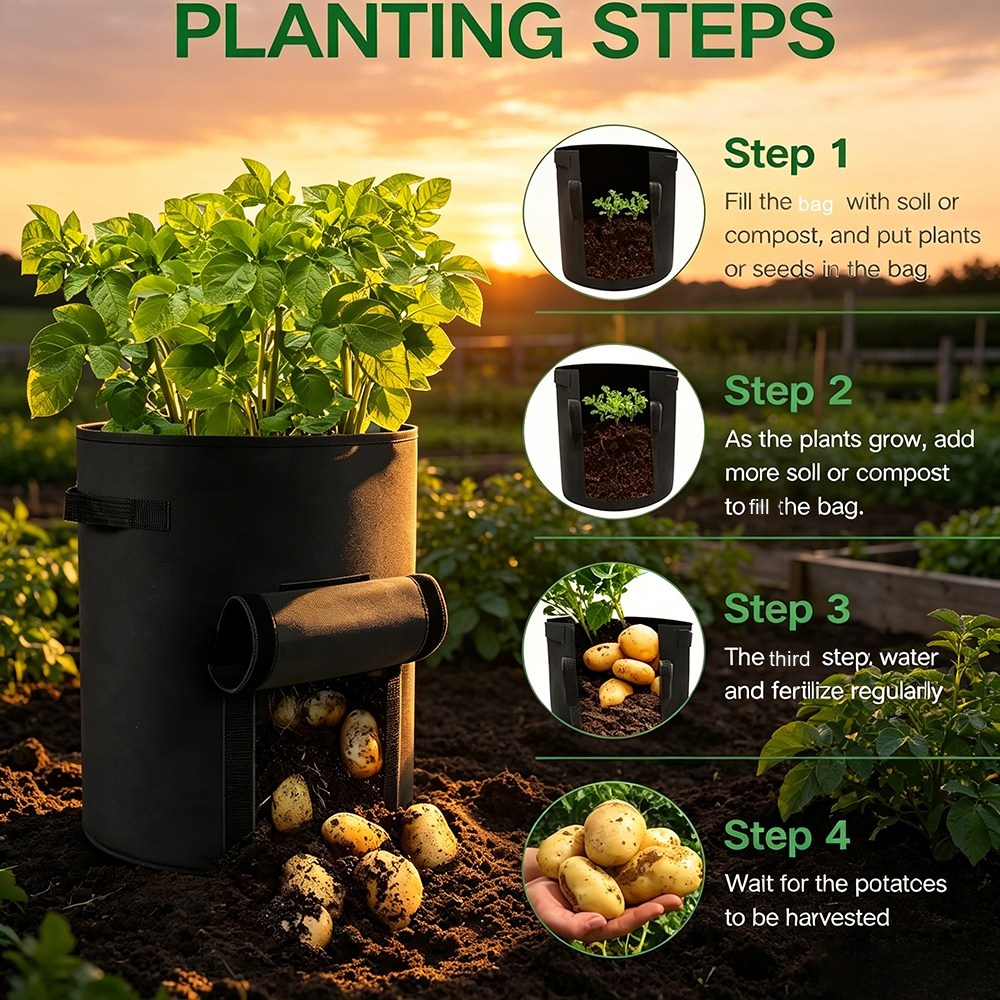
Bags are lifted in batches, so the handles are stitched through the wall instead of run along one seam, which spreads the pull across the felt. The rim is turned and stitched so the bag holds its shape when it is picked up full, and the flat base lets it stand on a bench without tipping while it is filled. The window flap rolls back and closes again between pickings. Seed trays and starter pots sit alongside in the seedling and propagation range.
Please tell us the diameters and volumes your programme works to, since the same wall is built across a range of round formats. Orders ship in bags, on pallets or in cartons, and the flat bag stores in a fraction of the space a stack of rigid pots takes. The wider soft container range sits in the planting bag range. Container and growing media supply is covered at HortiDaily and FreshPlaza.
What does degradable mean for a nursery?
The felt is made to break down after use, so spent bags do not have to be collected and disposed of as plastic at the end of the cycle.
Does the bag still drain while it lasts?
Yes. The wall breathes and passes surplus water for the whole life of the bag, which is what keeps roots fibrous rather than waterlogged.
How are bulk orders packed?
In bags, on pallets or in cartons, with mixed formats combined in one load.
Tell us the formats, volumes and packing your programme needs, and we will come back with the sample and lead time.
Mark Wu, Co-founder & Technical Director, Sichuan Zhifang Net Industry. 15 years manufacturing agricultural nettings for growers in 32 countries.