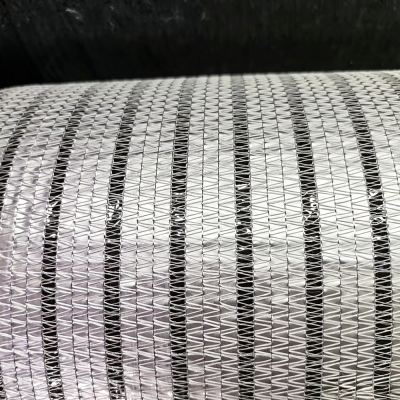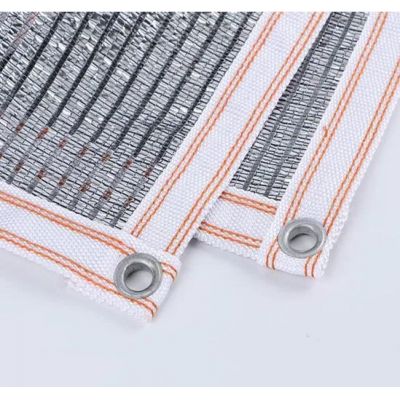


This aluminet mesh cloth works on a different principle to a plain black net. The aluminium surface bounces a large share of the sun straight back off the house, so the air under the screen stays cooler instead of simply being shaded, and the crop is not left in heavy darkness. It is the cloth growers pick for greenhouses and orchards in hot climates where the problem is heat load rather than light alone, and it can be run as a roof cover or on a fence line where reflected glare matters.
A black net and an aluminum mesh cloth do different jobs. The black net blocks light and leaves the heat in place; the aluminum cloth reflects the sun back off the house so the crop sits in a cooler, lighter shade. On a greenhouse or an orchard in a hot climate that difference is the whole reason to order the aluminet type.
The aluminium layer sits on the warp and weft threads of the mesh, so each strand carries a reflective face. When the cloth is run over a house or a bench, a large share of the incoming solar energy is bounced back out rather than absorbed into the fabric. The air under the screen therefore stays cooler than it would under a solid black net of the same shade rate, and the cooling load on the house comes down with it.
Because the mesh is open rather than solid, air still moves through it, so the house does not sit in a still pocket of heat. That combination of reflection and airflow is what growers are buying when they move from a plain net to an aluminet cloth.
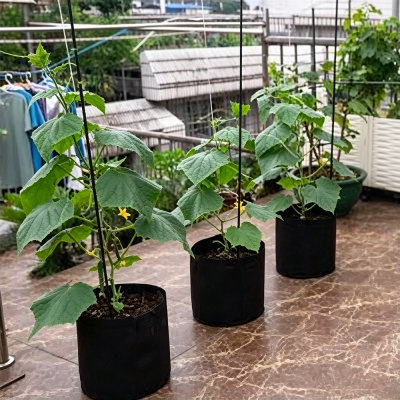
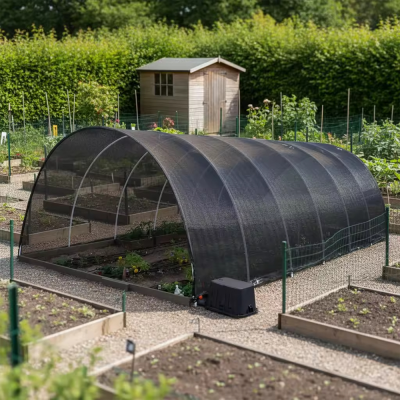
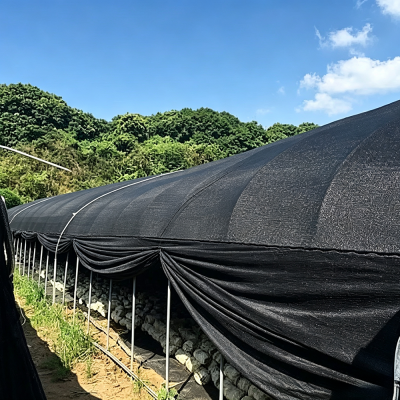
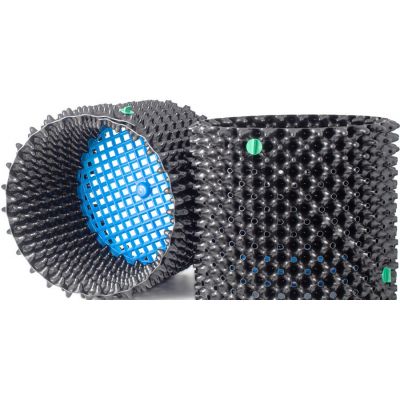
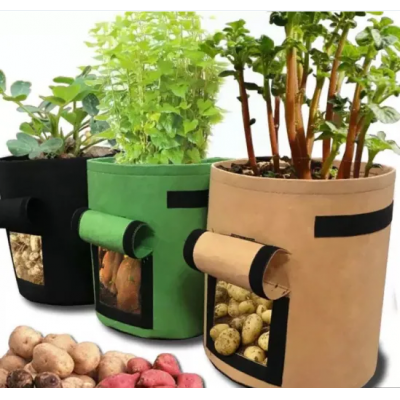
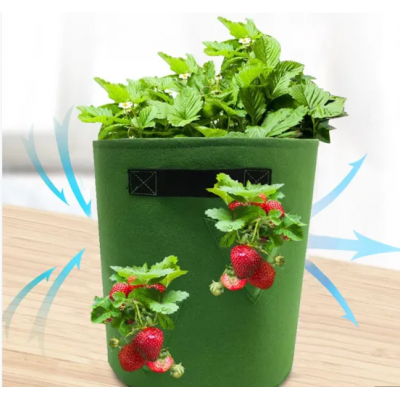
The cloth is run as a roof screen over greenhouses, over nursery benches, and along orchard rows where fruit would otherwise take heat straight from the afternoon sun. On a house it is tensioned to the frame or run as an internal screen; on an orchard it is held on posts and wires above the canopy. Growers running container crops under the same cover often pair it with a planting bag, and the wider shade net range covers the black and green knitted types where the job is light control rather than reflection.
Where the reflective face is pointed at the crop rather than the sky, the cloth also lifts the light that reaches the lower leaves, which helps work in a tunnel or a house with a tall crop.
| Material | HDPE mesh with aluminum coating |
| Construction | Woven aluminet mesh |
| Surface | Reflective silver, one or both faces |
| Shade Rate | Made to order across the range |
| Use | Greenhouse, orchard, indoor and outdoor shading |
| UV | UV stabilised against long sun exposure |
| Model | ZF-SHA-002 |
| Packing | Export package, customised on request |
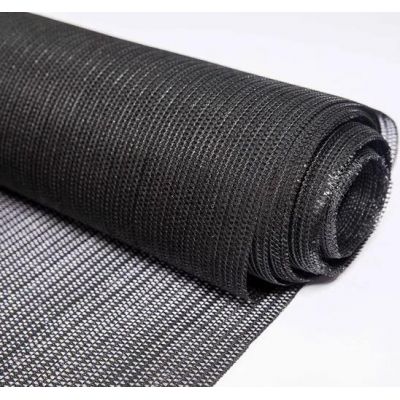
The two cloths are not substitutes for each other. A plain knitted net is the lower-cost way to cut light and is the right choice where the crop wants shade and the climate is moderate. The aluminet cloth costs more because of the aluminium layer, and it earns that back where heat load is the problem: a reflective screen can hold the house cooler with less ventilation, and it does not leave the crop in the heavy shade a denser black net would. A knitted monofilament net covers the light-control side of the range, while this cloth covers the reflective side.

Width, length and shade rate are made to order, so the first detail to confirm is the span of the house or the size of the orchard bay. Rolls ship in export packing and are cut to suit the frame. Growers tracking how reflective screens perform across a season can follow trade coverage such as HortiDaily and FreshPlaza for what is being installed on commercial sites.
Is an aluminum mesh cloth better than a black net?
It depends on the job. A black net is the lower-cost way to cut light. The aluminum cloth reflects the sun off the house instead of absorbing it, so it suits hot sites where heat load rather than light alone is the problem.
Does the reflective face have to point a particular way?
Point the reflective face at the source of the heat for the strongest effect, and toward the crop where you also want the light lifted to the lower leaves. Tell us the crop and the site and we will advise.
Can it be used on an orchard as well as a greenhouse?
Yes. The same cloth is run over greenhouse frames and along orchard rows on posts and wires above the canopy.
Tell us the crop, the span and the shade rate you are working to, and we will confirm the width, the surface and the packing that suit your order.
Mark Wu, Co-founder & Technical Director, Sichuan Zhifang Net Industry. 15 years manufacturing agricultural nettings for growers in 32 countries.