

A bale is only as good as the wrap that is still on it when it reaches the feeder, and the net takes punishment long after the baler has moved on. It sits under the stack, faces the weather on the outside row, and takes the grab tines when the bale is picked up for a second time. This roll is 100 per cent new HDPE, warp knitted into an open mesh that holds its shape under that handling rather than stretching out. Two weights cover the range: 8.33 gsm for standard hay and 10 gsm where bales are stacked deep or moved more than once. Widths run 1 m to 1.7 m and lengths 2000 m to 3000 m.
Most of a wrapped bale’s life happens after the baler has left the field. It sits in a stack, it faces whatever the weather does to the outside row, and sooner or later it is picked up again and moved to the feeder. The net is what is holding the bale together through all of that, and the rolls that fail are usually the ones that were chosen for the baler rather than for the whole season.
Once the bale leaves the baler the net faces three different loads. The first is compression, from the weight of bales stacked on top and from the outer bales pressing inward. The second is UV exposure, which is heaviest on the outside row that gets no shade. The third is mechanical, from grab tines and loader forks that bite into the bale when it is moved a second time. A 10 gsm roll holding 43 to 55 N handles stacked and frequently moved bales, while the 8.33 gsm roll at 35 to 43 N is enough where bales are wrapped and fed without a second move.
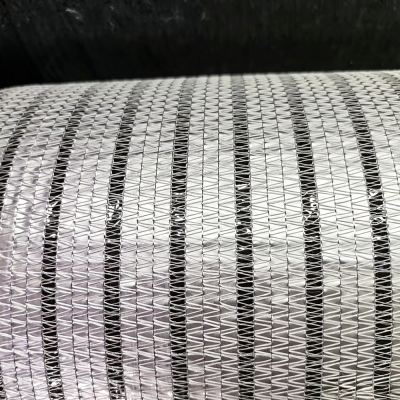
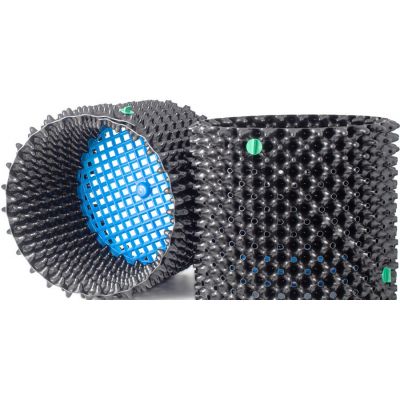
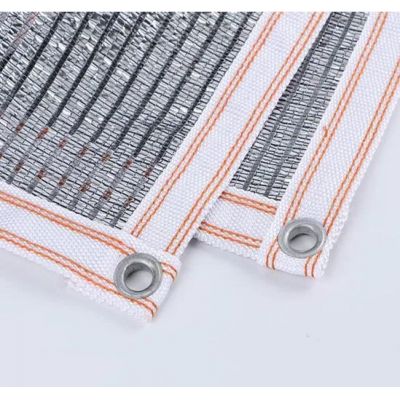
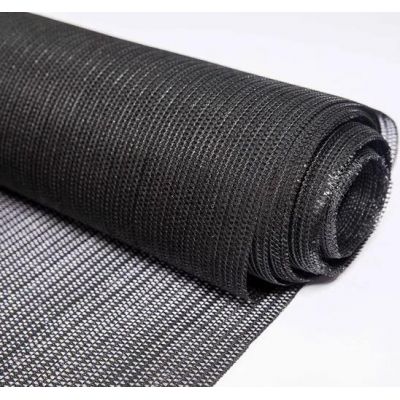
A net that stretches out of shape lets the bale spread, and a spread bale is one that lets water in along the gaps. Warp knitting builds the mesh as one interlocked structure, so the roll holds its width across the full length instead of widening as it unwinds, and the wrap stays flat against the bale rather than forming pockets where rain collects. That flat surface also keeps bale wrap net sitting evenly, so when the bale is opened the net lifts away in one piece instead of tearing into strips. For buyers specifying across a mixed farm, the bale net wrap range sits alongside the shade net and planting bag ranges that go to the same growers.
| Material | 100% new HDPE, warp knitted |
| Weight | 8.33 g/m2 or 10 g/m2 |
| Tension | 8.33 g: 35-43 N | 10 g: 43-55 N |
| Net Width | 1 m, 1.22 m, 1.23 m, 1.62 m, 1.7 m or by requirement |
| Roll Length | 2000 m, 2134 m, 2500 m, 3000 m or by requirement |
| Colour | White |
| Function | Reduce weather related spoilage |
| Packing | Rolls on cardboard tubes, 16 or 12 rolls per pallet |
How a bale is stored decides which roll suits it. Bales stacked two or three high put continuous load on the net of the lower bales, and bales stored outside in a single row take the full UV load on one face. Bales that are moved a second time are opened by grab tines that grip through the wrap, so the net has to resist tearing at the point of contact rather than simply being strong in a straight pull. Where a farm runs several bale sizes and stores them differently, a mix of 8.33 and 10 gsm rolls in one width is the usual answer. Rolls are supplied cut to the market convention, so a North American order arrives as 48 or 51 inch by 9840 feet, or 64 and 67 inch by 7000 and 8000 feet.
Rolls ship on cardboard tubes, 16 or 12 to a pallet, giving 190 to 210 rolls in a 20 ft container and 490 to 510 in a 40 HQ. Minimum order is 2 tons, delivery is about 15 days after deposit, and capacity runs at 400 tons a month so seasonal orders can be scheduled ahead. When costing a season, work from bales rather than rolls: a bale takes two to three turns of net, so a 3000 m roll gives a predictable bale count once the diameter is fixed. Trade coverage of how growers handle storage, such as HortiDaily and FreshPlaza, is worth following if you are specifying for a mixed farm.
Which weight should I choose for bales that are stacked?
Stacked or frequently moved bales suit the 10 gsm roll at 43 to 55 N, because the net is under load from the bales above as well as from handling. Bales that are wrapped and fed without a second move are well served by the 8.33 gsm roll at 35 to 43 N. Tell us how the bales are stored and moved and we will confirm the weight.
Does the wrap protect the bale from rain on its own?
The net holds the bale together and keeps the surface closed, and the flat open mesh lets rain run off rather than collecting in valleys. Where bales are stored outside for a long period, the net is used with bale wrap film and the two are removed together at feed out.
What widths and lengths can you supply?
Widths run 1 m to 1.7 m, equivalent to 48, 51, 64 and 67 inch rolls, and lengths run 2000 m to 3000 m, equivalent to 7000, 8000 and 9840 feet. Intermediate sizes are made to requirement. Tell us the baler width and the roll length in the unit your manual uses and we will confirm the match.
Tell us how your bales are stored and moved, the baler width and the roll length your manual quotes, and we will confirm the weight, the roll and the packing for your order.
Mark Wu, Co-founder & Technical Director, Sichuan Zhifang Net Industry. 15 years manufacturing agricultural nettings for growers in 32 countries.