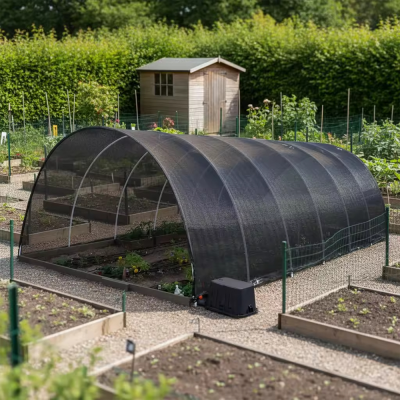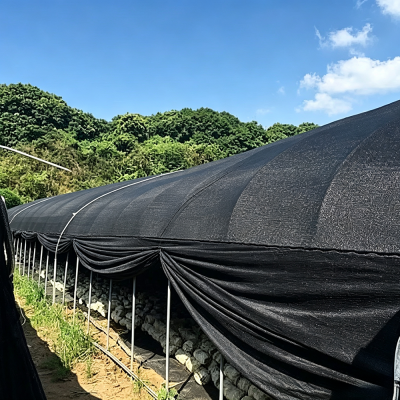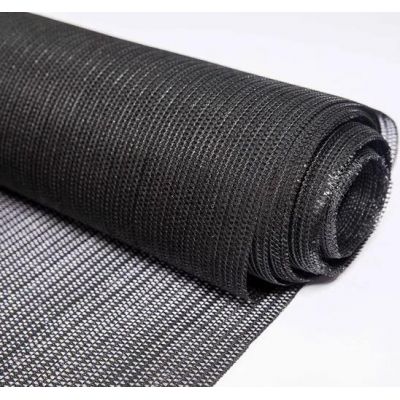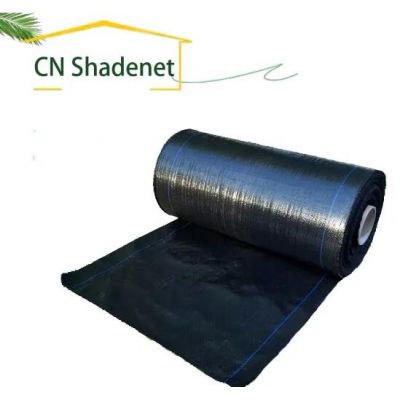


This is the green netting we supply for building site fencing, where the job is to close the site off from the street: the net runs along the site fence and hides the working area, the plant and the materials behind it, and the knitted HDPE construction means a gust passes through part of it instead of loading the fence panels. Green is the usual choice on a site boundary because it reads as planting rather than as hoarding. It goes out in rolls cut to the height of the fence, with eyelets where the run is tied.
A site fence panel on its own still lets the street see straight into the working area, which is why the net goes on afterwards. This is the green netting we supply for building site fencing: it runs along the fence, closes the site off from view, and because it is a knitted mesh rather than a solid sheet, a gust passes through part of it instead of loading the panels.
The net is what turns a bare fence line into something the street sees as a boundary: it hides the working area, the plant and the stacked materials, and it takes the hard edge off wind crossing an open site. Because the mesh is knitted rather than solid, it does not behave like a sail on a fence that is only lightly braced, and the green reads as planting rather than as hoarding, which is why it is the usual colour on a boundary that faces housing. UV resistance is worked into the HDPE yarn so it holds through a build that runs over a summer.
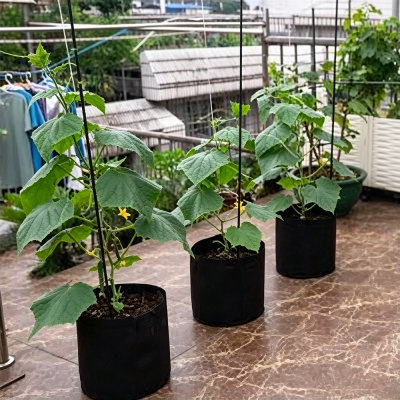
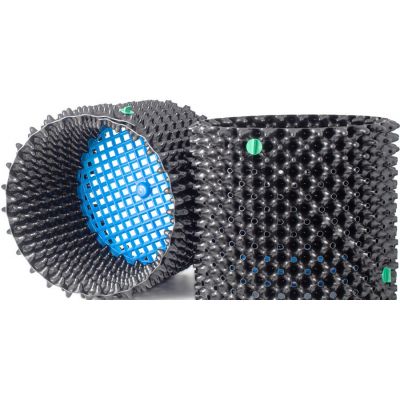
The net goes onto temporary site fencing, hoarding panels, scaffold screening and the boundary fence around a storage yard, and because it is cut to the fence height you give us, the same roll covers a low hoarding and a taller site fence. Growers screening a crop behind the same netting often pair it with a planting bag, and the wider shade net range covers the shade grades where light rather than screening is the problem.
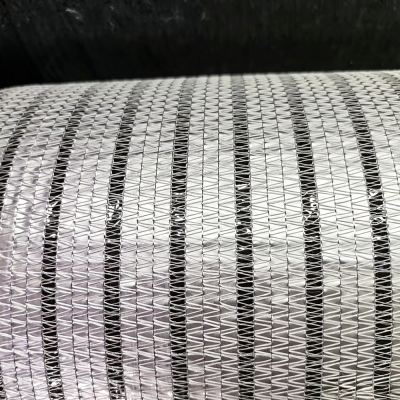
| Material | Knitted HDPE mesh with UV resistant yarn |
| Function | Site screening and wind reduction |
| Colour | Green, other colours customised on request |
| Form | Roll, cut to the fence height you give us |
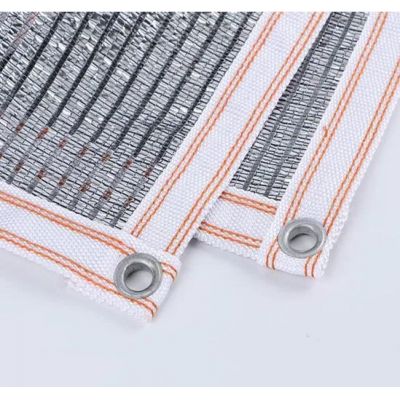
| Edges | Plain roll, or bound with eyelets on request |
| Fixings | Tied to posts or panels with rope, wire or ties |
| Application | Site fencing, hoarding and scaffold screening |
| Packing | PP woven bag, customised on request |
The net is supplied by the roll so each section of fence can be covered at its own height rather than in stock panels, and it is tied to the posts or panels through eyelets where a bound edge is ordered. That also means it comes down, rolls up and goes onto the next phase of the same site rather than being scrapped with the fence. A knitted monofilament net covers the shading job where a finer weave is wanted, while this netting covers the site screening work.
Height, roll length, colour and edge finish are all made to order, so the first detail to confirm is the height of the site fence and the total run. Netting ships in PP woven bags. Buyers tracking how site screening performs can follow trade coverage such as HortiDaily and FreshPlaza for what is being installed.
What is it used for on a site?
It closes a site fence off from view, hides the working area and the stacked materials, and takes the edge off wind crossing an open site.
Can it be moved between phases of a job?
Yes. It is tied through eyelets rather than stapled, so it comes down, rolls up and goes onto the next temporary fence.
Can I order a different height, run or colour?
Yes. Height, roll length, colour and edge finish are all made to order. Tell us the fence height and the run.
Tell us the height and the total run of site fence you are covering, and the colour you are working to, and we will confirm the roll and the packing that suit your order.
Mark Wu, Co-founder & Technical Director, Sichuan Zhifang Net Industry. 15 years manufacturing agricultural nettings for growers in 32 countries.