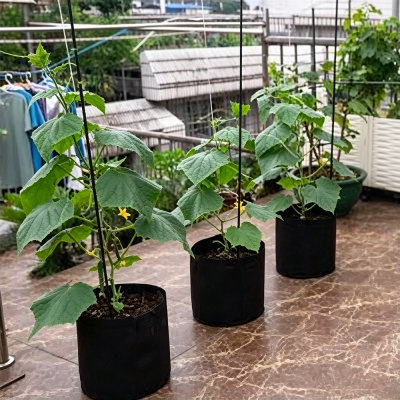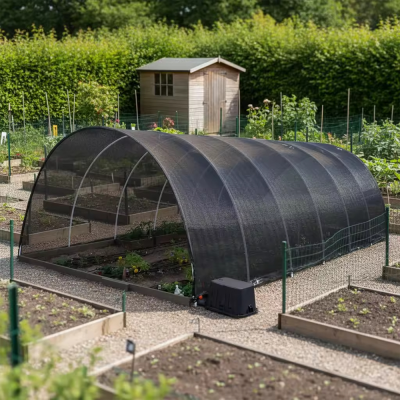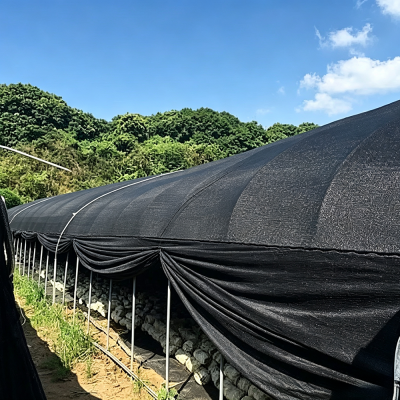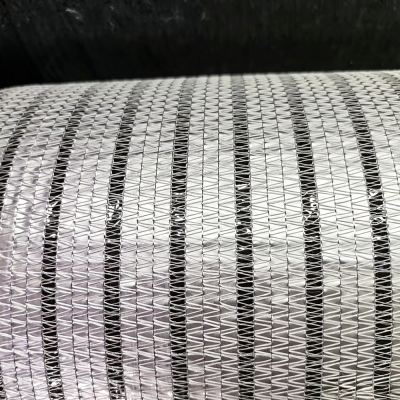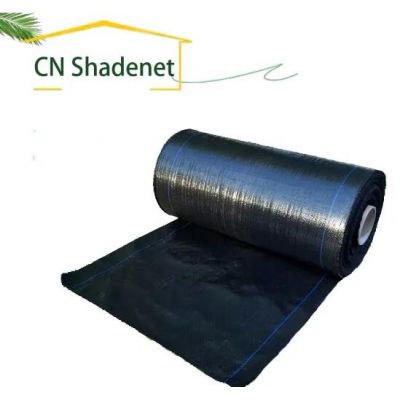


Not every strip of ground is a field. A lot of the area that needs covering on a working site is narrow: the walkway down a greenhouse, the gap between two rows of pots, the ground under a bench. Those strips are awkward because a wide roll wastes most of its width on them, and the offcut is the wrong shape to use anywhere else. This grade is supplied in narrower rolls from 1 m to 3 m for exactly that reason, so the width matches the strip instead of the strip having to be fitted around the roll. It is woven HDPE with UV resistance, holds back 99% of the light, and lets water and air through.
Ground cover is usually discussed in terms of blocks and bays, but a good share of the area on a nursery or a greenhouse is narrow: a walkway, the space between two rows of pots, the strip under a bench. Those are the places where a wide roll is the wrong tool, and where a cover ends up being cut down with most of the width going to waste.
The reason to buy a narrow roll is that the offcut problem disappears. A walkway of 1.2 m takes a 1.2 m roll and the whole width is used; the same walkway covered from a 6 m roll leaves a strip that is the wrong shape for anything else on the site. Narrow rolls are also easier to handle in a house with benches and pipes in the way, and easier to lift and relay when the layout changes. The same logic applies between rows of pots and under containers: the width is chosen to match the gap, and the length is cut on site. Widths run from 1 m to 3 m, which covers most walkways and pot spacings without a join.
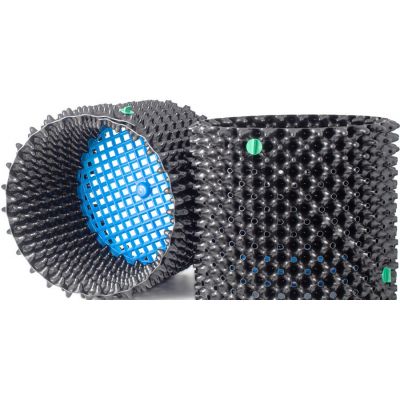
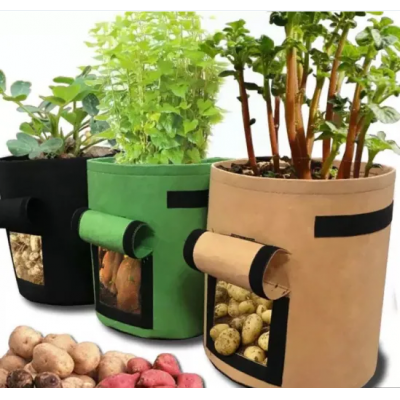
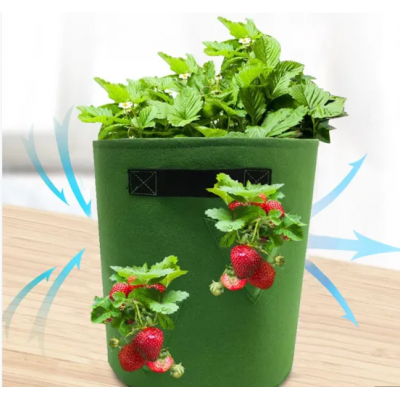
The cloth is laid down greenhouse walkways where a clean, walkable surface matters more than the area covered, between rows of pots and container beds in a nursery, and under benches where weeds would otherwise come up through the slats. Because the weave is permeable, water from overhead irrigation and from the beds drains through instead of pooling on the walkway. The HDPE construction with UV resistance is what allows the same cloth to be laid on open nursery ground as well as indoors. Growers potting into containers on the same floor often order a planting bag alongside it, and the shade net range covers the covers that go over the crop rather than on the ground.
| Model | WB-011 |
| Material | Woven HDPE with UV resistance |
| Width | 1 m to 3 m |
| Weight | Made to order |
| Length | Cut to your requirement |
| Colour | Black, white or mixed |
| Light blocking | 99% |
| MOQ | 5000 m2 |
The working life quoted for this grade is three to four seasons, and what sets it is the combination of the weave and the UV resistance rather than the weight alone. A narrow roll takes less load than a wide one, because it is usually being walked on rather than driven over, so the failure in a walkway is normally at the edge and at the cut ends rather than in the middle of the panel. That is why the edges want pinning or battening even on a narrow strip, and why the cut ends are worth tucking under rather than leaving exposed to be kicked. Where a wider cover is wanted for a block rather than a strip, the same material is supplied in wider rolls. Where the requirement is covering the crop above ground rather than the ground below, a knitted monofilament net is the better fit.
Width, weight, length and colour are made to order, and the standard minimum order quantity is 5000 m2. Rolls ship flat packed, which keeps the freight volume down on bulk orders, and they are wrapped and labelled for resale where the goods are being sold on. Tell us the walkway widths, the pot spacing and the total area, and we will confirm the widths and the cut lengths rather than leaving you to work them out from the roll sizes. Buyers tracking what is laid in greenhouses and nurseries can follow trade coverage such as HortiDaily and FreshPlaza for what growers are installing.
Why not just cut a wide roll down to the walkway width?
You can, but the offcut is usually the wrong shape to be used anywhere else, so most of the width is wasted. A narrow roll matched to the gap uses the full width and is easier to handle indoors.
Does water drain off a walkway cover?
The weave is permeable, so water passes through rather than standing on the surface. That is what keeps the walkway usable while the house is being watered.
How long does it last on a walkway?
Three to four seasons is the working life for this grade, and on a walked surface the edges and cut ends are what need attention rather than the middle of the panel. Tell us the use and we will advise.
Tell us the walkway widths, the pot spacing and the total area, and we will confirm the widths, the cut lengths, the roll sizes and the packing that suit your order.
Mark Wu, Co-founder & Technical Director, Sichuan Zhifang Net Industry. 15 years manufacturing agricultural nettings for growers in 32 countries.