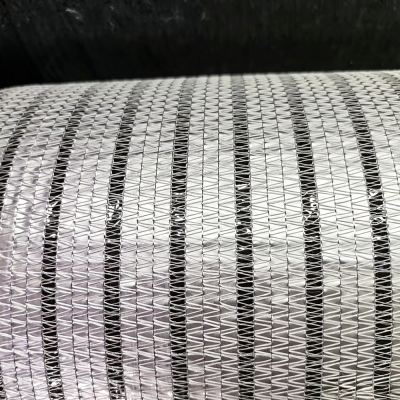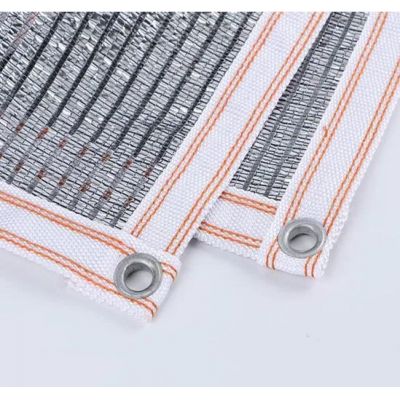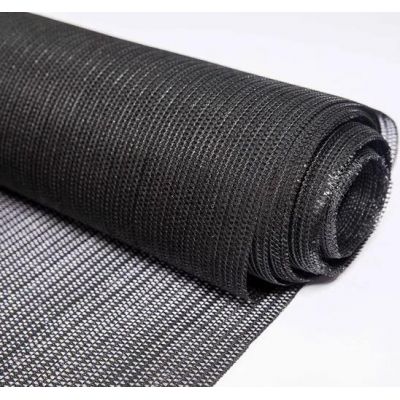


This is the striped privacy screen we supply for balconies, fences and garden boundaries, and the stripe is what buyers notice first because it reads as a screen rather than a plain net when it is run along a railing. It works on the same principle as a solid screen: the weave is dense enough to break up what can be seen through it, so a balcony or a garden boundary stays private while the air still moves. The eyelets come fitted, so it is tied to a railing or a fence line rather than being stapled, and the HDPE yarn carries UV resistance.
A plain screen on a balcony railing can read as a net thrown over the rail. A striped one reads as a screen, which is why it is the grade most buyers ask for when the cover faces the street or a neighbouring building. This one is a knitted HDPE screen supplied with the eyelets already fitted, so it goes straight onto a railing or a fence line.
The stripe is a visual device rather than a structural one, but it changes how the screen reads: a horizontal stripe sits with the lines of a railing rather than fighting them, so a balcony looks screened instead of draped. Functionally it is the same dense knitted HDPE as a plain screen, so it breaks up the sight line into the balcony or the garden and takes the edge off wind across the gap. The weave stays open enough for air to move, which is what keeps a screened balcony usable rather than closed in.
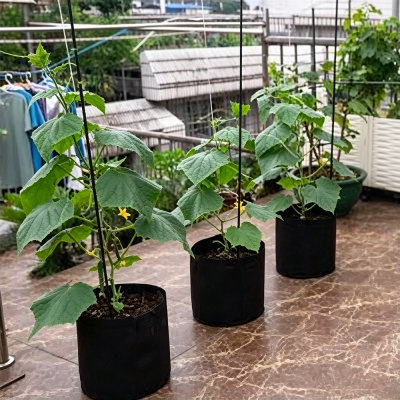
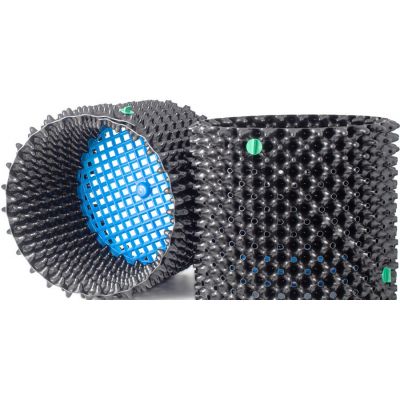
The screen is tied along a balcony railing, across a garden fence line, along a boundary at the edge of a plot and over a gate where the view through needs breaking up. Because it is cut to the height you give us, the same roll covers a single balcony rail and a long fence run at the foot of a garden. Households screening a bed behind the same net often pair it with a planting bag, and the wider shade net range covers the shading grades where light rather than privacy is the problem.
| Material | Knitted HDPE mesh with UV resistant yarn |
| Colour | Grey and white stripe, customised on request |
| Function | Privacy screening and wind reduction |
| Form | Roll or finished screen, cut to height |
| Edges | Bound edge with metal grommets |
| Finish | Open mesh, permeable to air |
| Application | Balcony railing, fence line and garden boundary |
| Packing | Export package, customised on request |
Because the eyelets are already set along the edge, the screen is tied to a railing, a fence post or a wire run with rope or ties rather than being stapled or tacked, so it can be taken down for a season and put back without the edge fraying. That is what makes a screen practical on a rented balcony as well as on a garden boundary. A knitted monofilament net covers the shading job where a lighter weave is wanted, while this screen covers the privacy and windbreak work.
Height, roll length and colour are all made to order, so the first detail to confirm is the height of the rail or fence you are screening and the total run. Screens ship in export packing and are cut to suit. Buyers tracking how screening performs outdoors can follow trade coverage such as HortiDaily and FreshPlaza for what is being installed.
Why choose a striped screen over a plain one?
The stripe sits with the lines of a railing, so a balcony reads as screened rather than draped. The weave and the privacy it gives are the same.
Can it be fitted without drilling?
Yes, where the screen carries eyelets it can be tied to a railing, a post or a wire run with rope or ties rather than stapled.
Can I order a different height, run or colour?
Yes. Height, roll length and colour are all made to order. Tell us the run you are screening and we will advise.
Tell us the height and the total run you are screening, and the colour you are working to, and we will confirm the roll and the packing that suit your order.
Mark Wu, Co-founder & Technical Director, Sichuan Zhifang Net Industry. 15 years manufacturing agricultural nettings for growers in 32 countries.