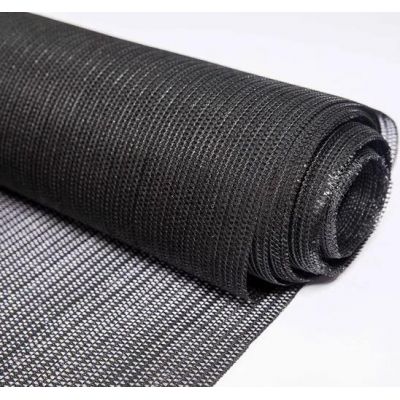


This is the privacy screen netting we supply for garden fences, and with this grade it is worth being specific about the weave, because that is where the UV protection actually sits: the HDPE yarn is extruded with the stabiliser in it rather than coated afterwards, so the mesh does not go brittle at a fold or pale out from the surface inward. The knit is dense enough that the view through a fence is broken up rather than softened, and open enough that wind still passes through instead of loading the fence behind it.
On a screen netting the UV protection is not a coating sprayed on at the end, it is extruded into the yarn, and that difference is what decides whether the mesh is still usable in year three. This is the privacy screen netting we supply for garden fences, dense enough to break up the view through a fence and open enough that wind still passes through it.
A surface treatment on a woven or knitted mesh fails from the outside in: the coating wears at the fold and the fibre underneath is exposed. Putting the stabiliser into the HDPE before the yarn is drawn avoids that, so a screen that is folded, tied and left up keeps its strength and its colour rather than going brittle where it was creased. That is what matters on a fence screen, because the same section is flexed every time the wind changes direction, and a crease is exactly where a coated mesh starts to go.
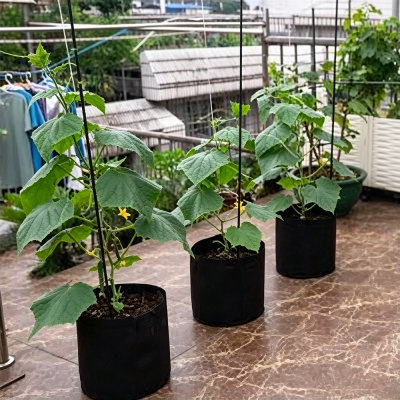
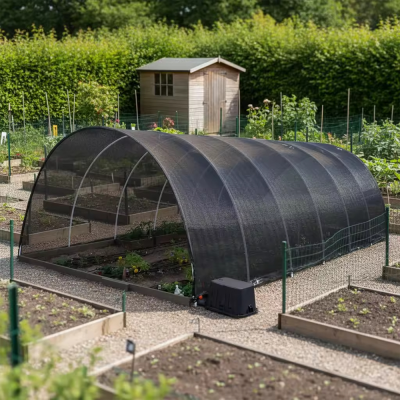
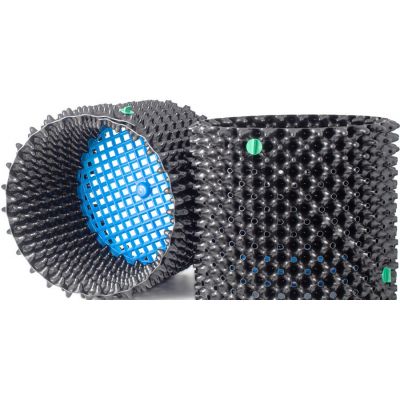
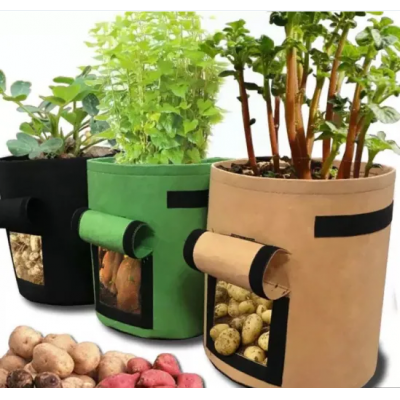
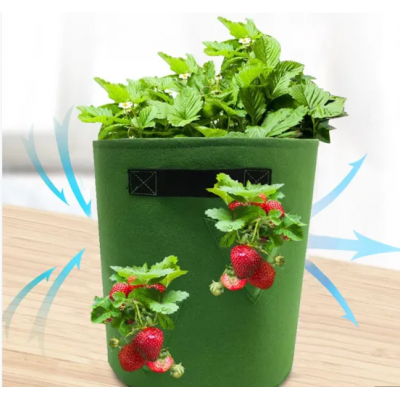
The netting goes along a garden fence, down a side boundary shared with a neighbour, across a yard and over a gate line where the view through needs closing off. Because it is supplied by the roll and cut to the height you give us, one order covers a garden fence and a longer side boundary from the same cloth. Households screening a bed behind the same netting often pair it with a planting bag, and the wider shade net range covers the shade grades where light rather than privacy is the problem.
| Material | Knitted HDPE mesh, UV stabiliser in the yarn |
| Function | Privacy screening and wind reduction |
| Shade Rate | Made to order |
| Colour | Black, green, brown and grey, customised on request |
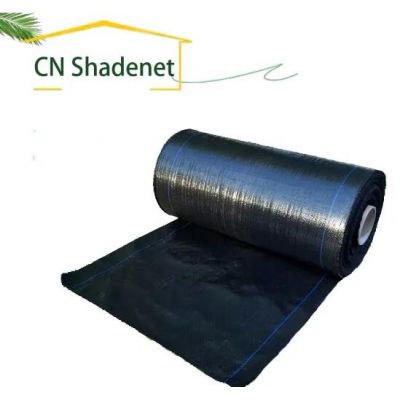
| Form | Roll, cut to the height you give us |
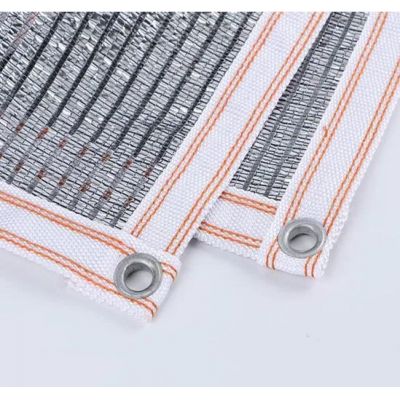
| Edges | Plain roll, or bound with grommets on request |
| Application | Garden fence, side boundary and yard |
| Packing | PP woven bag, customised on request |
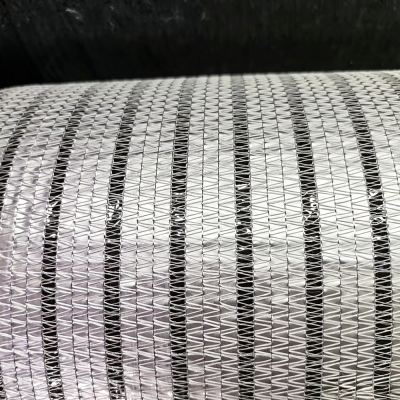
Held up to the light, a dense privacy knit shows two yarn directions crossing at a close pitch, which is why it screens without becoming a sheet: light is broken up rather than stopped, and air still moves through. That is also the difference between this cloth and a shade sail, which is solid and takes the full pressure of a gust. A knitted monofilament net covers the shading job where a finer weave is wanted, while this netting covers the privacy and windbreak work.
Height, roll length and colour are all made to order, so the first detail to confirm is the height of the fence you are screening and the total run. Netting ships in PP woven bags. Buyers tracking how screening performs in the open can follow trade coverage such as HortiDaily and FreshPlaza for what is being installed.
Is the UV protection a coating?
No. The stabiliser is extruded into the HDPE before the yarn is drawn, so the mesh does not fail from the surface inward at a fold or a crease.
Will it block the wind completely?
No. The knit breaks up the view and takes the edge off a gust while still letting air pass, so the load on the fence behind it stays lower than with a solid sheet.
Can I order a different height, run or colour?
Yes. Height, roll length and colour are all made to order. Tell us the run you are screening and we will advise.
Tell us the height and the total run you are screening, and the colour you are working to, and we will confirm the roll and the packing that suit your order.
Mark Wu, Co-founder & Technical Director, Sichuan Zhifang Net Industry. 15 years manufacturing agricultural nettings for growers in 32 countries.