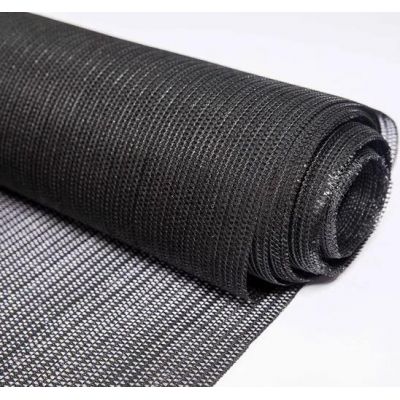


This knitted monofilament net is the workhorse of the range. The warp-knitted HDPE structure holds its shape under tension, lets air move through the house, and can be run at any shade rate from 40% to 99%, so the same cloth covers a light crop cover and a heavy shading job. It is UV stabilised for years of sun, and it is the net growers order when they want one material that will do most of the work on a site rather than a special screen for every bay.
Most growers end up buying one shade material for a whole site rather than a different screen for every bay. A knitted monofilament net is the one that fits that job: it is light enough to work with, strong enough to stay square on a frame, and it can be made at any shade rate between 40% and 99%.
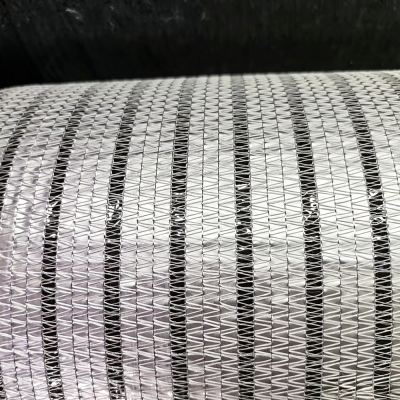
The net is warp knitted from HDPE monofilament, so the strands are locked into each other rather than woven over and under. That construction is what keeps the mesh square under tension and stops a bay from sagging in the middle after a season of wind. It also leaves the mesh open enough for air to move, which matters in a house where heat would otherwise sit under the screen.
The same structure takes UV stabiliser through the strand rather than as a coating, so the net holds its strength under years of sun instead of going brittle and tearing at the fixing points.
The shade rate is set by the density of the knit, and this net is made across the full 40% to 99% band. A light rate over a nursery or a seedling bench takes the edge off the midday sun without slowing growth, while a heavy rate over a house in a hot climate cuts the load on the crop and the cooling system. Growers running several crops on one site often order two or three rates and move them between bays as the season changes.
Because the cloth is knitted rather than coated, the shade rate and the colour are independent: the same rate can be supplied in black, grey or blue.
| Material | HDPE monofilament |
| Construction | Warp knitted net |
| Shade Rate | 40% to 99%, other rates to order |
| Weight | GSM to customer requirement |
| Colour | Black, grey, blue, other options to order |
| Use | Agriculture, horticulture, greenhouse, aquaculture |
| Model | ZF-MO-008 |
| Packing | Export package, customised on request |
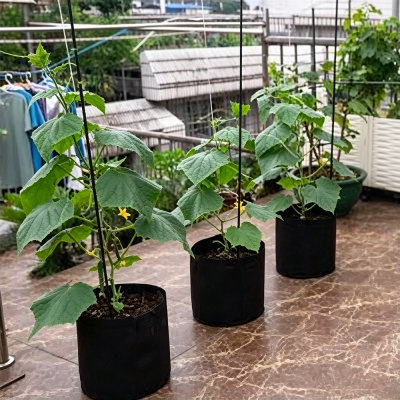
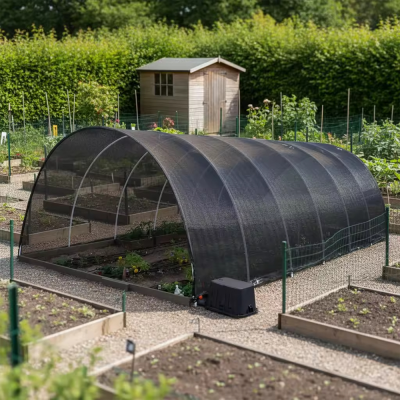
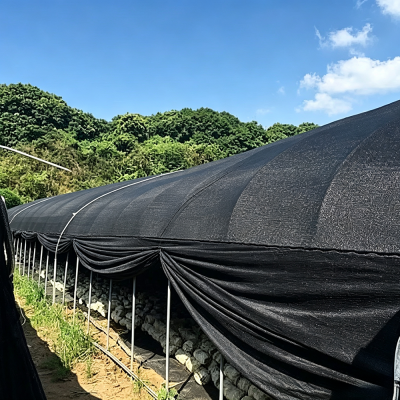
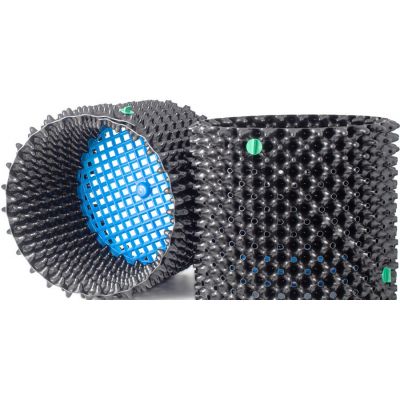
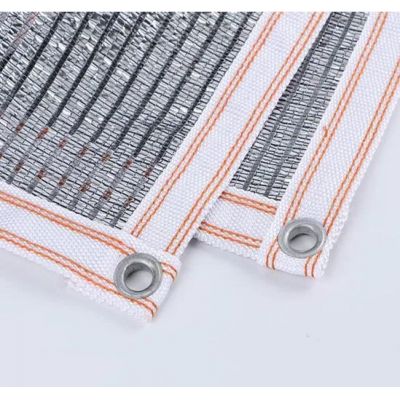
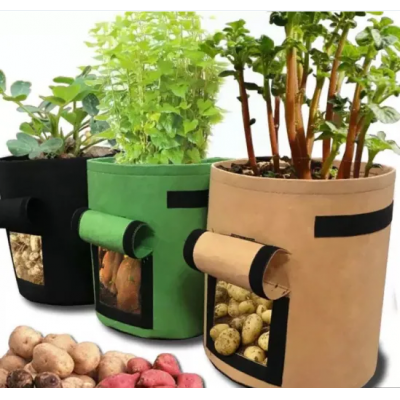
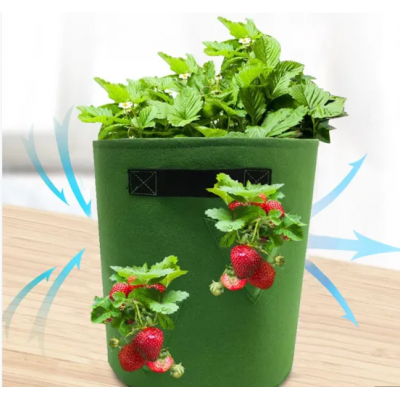
The net is run over greenhouses, shade houses, nursery benches and open field crops, and it is also used over aquaculture ponds where the water has to be kept from boiling through the middle of the day. On a house it is tensioned on the frame or run as a roof screen; on a field it is held on posts and wires. Growers pairing it with container crops run it above a planting bag, and the wider shade net range covers the reflective and thermal types for a different balance of light and heat. A grow bag is often ordered at the same time for nursery work.
Widths, lengths, shade rate and colour are made to order, so the first step is to confirm the span of the house or the size of the field bay. Rolls ship in export packing, and lengths are cut from the roll to suit the frame. Growers tracking how knitted nets behave across a season can follow trade coverage such as HortiDaily and Agriculture.com for what is being installed on commercial sites.
What shade rate should I order?
It depends on the crop and the climate. A light rate over a nursery takes the edge off the sun, and a heavy rate over a house in a hot climate cuts the load on the crop and the cooling system. Tell us the crop and the site and we will suggest a rate.
Does the colour change the shade rate?
No. The shade rate is set by the density of the knit and the colour is independent, so the same rate can be supplied in black, grey or blue.
How long does the UV stabiliser last?
The stabiliser is taken through the strand rather than coated on, so the net holds its strength under years of sun. Exact life depends on the climate and the exposure, and we will advise for your site.
Tell us the crop, the span and the shade rate you are working to, and we will confirm the width, the colour and the packing that suit your order.
Mark Wu, Co-founder & Technical Director, Sichuan Zhifang Net Industry. 15 years manufacturing agricultural nettings for growers in 32 countries.