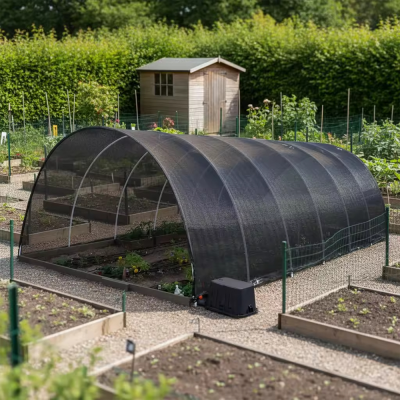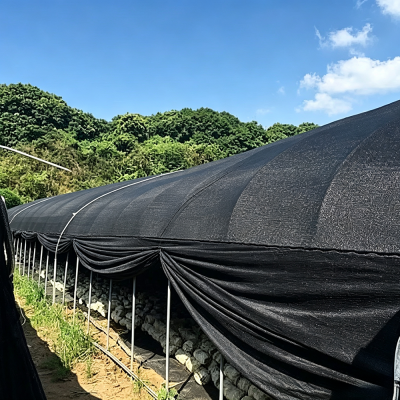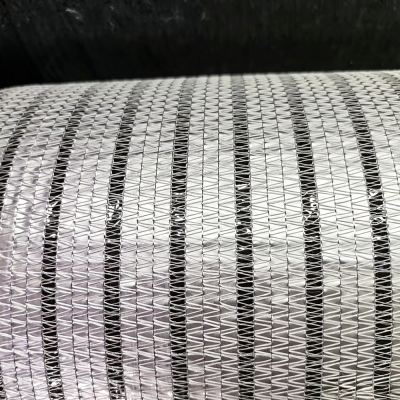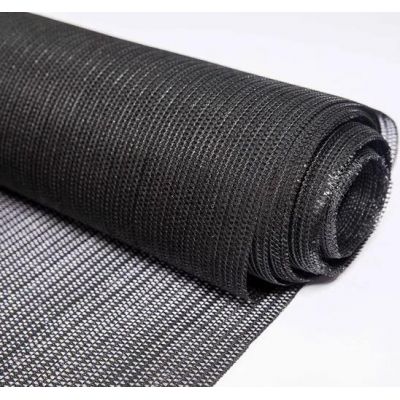


A shade net is one control in a greenhouse climate system, and it has to be chosen with the others in mind. This monofilament HDPE net is knitted from single filaments rather than split tape, so the mesh stays flat, sheds rain and lets air move through with less resistance than a tape weave. The shading rate runs from 40 to 99 per cent in black, grey or blue, and the weight is set by GSM against the crop. Sizes are cut to your bay or bed. UV stabiliser is worked into the yarn rather than applied to the surface.
A greenhouse holds its climate with several controls working together, and the shade net is the one that is often chosen last and specified worst. Ventilation decides how much air moves, a wet pad decides how much cooling is available, and the screen decides how much solar load ever reaches the crop in the first place. Get the screen right and the other two work less. Get it wrong and no amount of venting will recover the day.
The screen sets the solar load entering the house. Everything downstream, the vent area, the fan capacity, even the irrigation schedule, is sized against that number. That is why the shading rate is usually chosen with the crop and the local summer peak in hand, rather than copied from a neighbouring farm that grows something else in a different climate.
On the monofilament knit the shading rate runs from 40 to 99 per cent and the weight is set by GSM against what the house has to do. A grower running cut flowers has a different target from one running tomatoes, and the same construction is knitted at a different rate for each. Tell us the crop and the climate and the rating follows from that.
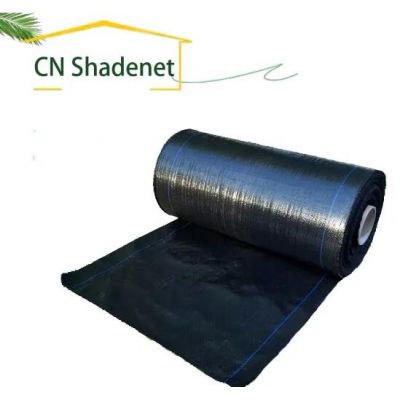
Two nets can carry the same shading percentage and behave completely differently, because the percentage says nothing about how the remaining air moves through the fabric. A tape net leaves larger openings between warp and weft, and the air that crosses it arrives in slower, wider streams. A monofilament knit breaks those openings into a finer pattern, so the mesh resists airflow less and the air under the net stays closer to the open air.
That matters most in the humid weeks, when a screen that traps air turns a manageable house into one that needs extra ventilation. It also matters for rain. The flat knit sheds water rather than holding it, so the net does not sag and pull at its fixings in a downpour.
| Material | HDPE monofilament, UV stabilised in the yarn |
| Construction | Knitted flat mesh |
| Shading rate | 40% to 99%, made to order |
| Colour | Black, grey, blue or customised |
| Weight | Set by GSM against the application |
| Guarantee | 500kly |
| Size | Cut to your bay, bed or roll length |
| Applications | Agriculture, horticulture, greenhouse, aquaculture |
| Model | ZF-MO-005 |
| Packing | Roll in woven bag, customised packing on request |
Few houses want one rate for the whole season. Where the screen is retractable, a heavier rate for the hottest weeks and a lighter one for the shoulders is a normal split, and the same knit covers both. For a fixed roof, the rate is set against the crop that carries the highest light load, since a fixed screen cannot be lightened later.
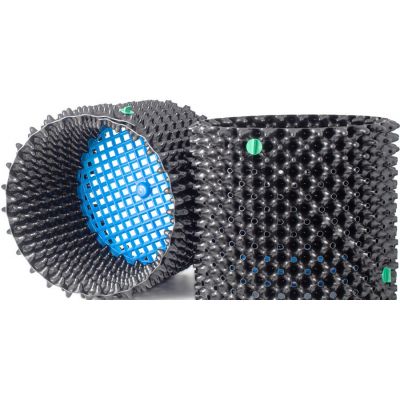
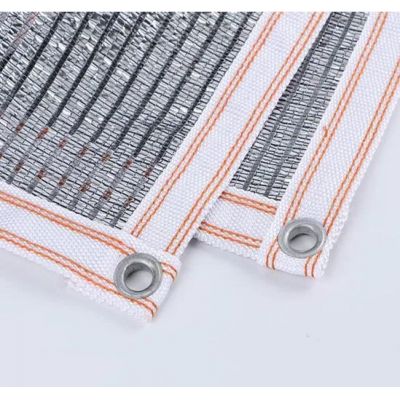
Colour is the other lever. Black gives the deepest shadow for a given rate, while grey and blue reflect more and can run cooler over a sensitive block. A monofilament net is often run alongside a reflective thermal screen on the same house, plain knit for the shoulders of the season and foil for the peak. The wider shade net range covers knitted, flat wire and reflective types, and growers running nursery beds under either usually pair them with a planting bag.
UV performance decides how long a net holds its rating, and it depends on the stabiliser being worked into the yarn rather than coated onto the surface. Surface treatments wash off within a season and the fabric then fails at the fold lines first. Our nets carry the stabiliser through the extrusion and go through the same five in-house checks as the rest of the range before packing.
We have been making agricultural netting since 2011, in a plant of close to 10,000 square metres with more than 50 machines. Greenhouse climate control and screen specification are covered in the open literature, including the industry reporting at greenhouse industry news and the market coverage at fresh produce sector reporting. Company background is on our about page.
How do I pick a shading rate for my house?
Start from the crop rather than the thermometer. Crops that scorch under strong light usually justify the higher end of the range; crops that need light to size and colour lose yield if the house is darkened too far. Send the crop and the summer peak and we will suggest a rate.
Does the net affect humidity under it?
A finer open knit lets air move through with less resistance than tape netting, so the humidity under the net sits closer to the outside air. That is the main reason monofilament is specified in humid climates.
What does the 500kly guarantee refer to?
It is the ultraviolet energy the fabric is rated to take before it starts to degrade. Virgin imported and domestic raw material, UV and anti-ageing additives worked into the yarn, then a shaping treatment.
Can the net be cut to a non-standard bay?
Yes. Sizes are cut to the bay, bed or roll length you specify, and colour and shading rate are quoted together since the two interact.
Send the crop, the bay size and your summer temperature range, and we will confirm the shading rate and colour that suit the house.
Mark Wu, Co-founder & Technical Director, Sichuan Zhifang Net Industry. 15 years manufacturing agricultural nettings for growers in 32 countries.
Running a monofilament net on your house? Leave a review below and tell other growers how it changed the climate under it.