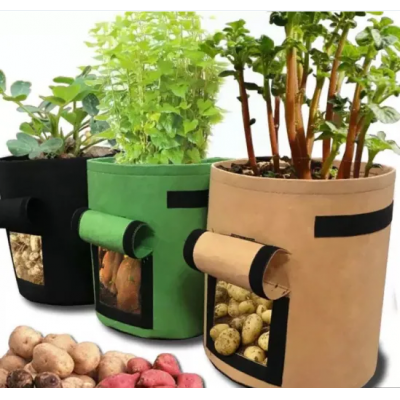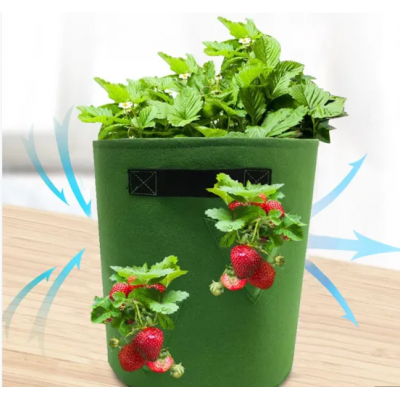


Colour is usually treated as decoration and it is really a temperature decision. A dark container absorbs solar radiation and passes part of it into the growing medium, so the root zone runs warmer than the air; a light or white container reflects most of that radiation instead. In a nursery, a few degrees at the root zone changes how often a block has to be watered, and where seedlings are growing on a heated bench the difference shows up as either steady growth or a cycle of drying out and catching up. White is supplied for exactly that reason, and other colours are matched when a customer needs them.
The colour of a growing container is decided in a meeting about appearance and it pays out in a decision about water. A dark wall absorbs sunlight and warms the medium behind it; a light one reflects and stays closer to air temperature. Neither is wrong, but the irrigation schedule has to follow whichever was chosen.
A white container reflects the bulk of the sunlight that reaches it instead of absorbing it, which keeps the root zone closer to ambient temperature through the middle of the day. The practical effect is a slower drying cycle: the medium in a light tray holds its moisture longer than the same medium in a dark tray on the same bench, so a block can go longer between waterings without the seedlings reaching stress. For crops that are watered by hand or on a fixed timer, that margin is the difference between a steady run and a weekly rescue. Where the crop wants warmth at the root, the same container is supplied in darker colours and the logic simply reverses. The same range thinking runs through the whole root control container range, and for growers working across several crops it sits alongside the shade net and planting bag ranges.
The tray is moulded in food grade polypropylene, which matters for two reasons beyond regulation. It does not carry the plasticisers that can migrate into a growing medium, and it tolerates the washing that a reusable tray gets between batches. UV stabilisers are compounded into the polymer rather than coated on, so a tray that stands in a greenhouse or on an open bench keeps its wall instead of chalking and splitting at the cell rims, which is where a tray usually fails first. Used normally, a tray in this material returns for several seasons before the cell edges show wear.
| Model | NP-002 |
| Material | Food grade polypropylene, UV stabilised |
| Volume Range | 0.5 L to 25 L, sizes made to order |
| Cell Shape | Square, tapered, with base drainage holes |
| Tray Shape | Square |
| Colour | Light as standard, other colours matched on request |
| Options | Handles and printed branding available |
| Packing | 200 pieces per carton, nested |
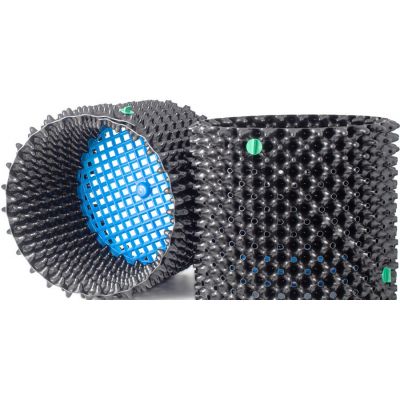
The cells are square and tapered with a drainage hole at the base, and the two details work together. The taper means a plug releases as soon as it starts to move rather than being dragged the full depth of the cell, and the base hole lets a plunger push the plug out from underneath, so the root system travels intact. Square cells use the bench area without the gaps that round cells leave, and they also give the plug corners, which sit more naturally in the square or round container it moves into. Drainage at the base is what keeps a heavily watered tray from holding a saturated layer under the seedlings.
Sizes are made to order across roughly 0.5 to 25 litres, so the same tooling family covers a seedling cell and a container large enough for a young shrub. Handles and printed branding are available where the container is sold under a retailer label, and the trays nest so that storage is compact: a carton holds around 200 pieces with the trays stacked inside each other. Minimum order is 500 pieces with an FOB range of USD 1.2 to 1.6 per piece, samples are available, and delivery runs about 15 days after deposit with L/C and T/T accepted. Trade coverage of how nurseries manage propagation, such as HortiDaily and FreshPlaza, is worth following if you are specifying for more than one crop.
Does a light container really reduce watering?
It slows the drying cycle rather than removing the need to water. A light wall reflects more sunlight, so the medium stays cooler and holds moisture longer than the same medium in a dark container.
Can I order a different colour?
Yes. Colours are matched at the material stage, so dark and coloured options are available where the crop wants a warmer root zone. Tell us the application and we will confirm.
Are the trays reusable?
Yes. Food grade polypropylene takes washing between batches, and the UV stabilisers are compounded into the material, so a tray normally returns for several seasons.
Tell us the crop, the cell count or volume you need and the colour, and we will confirm the tray, the packing and the branding options that suit your order.
Mark Wu, Co-founder & Technical Director, Sichuan Zhifang Net Industry. 15 years manufacturing agricultural nettings and nursery containers for growers in 32 countries.