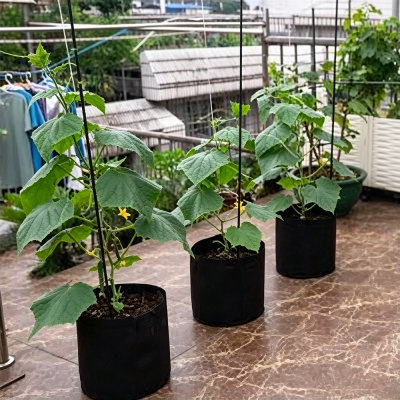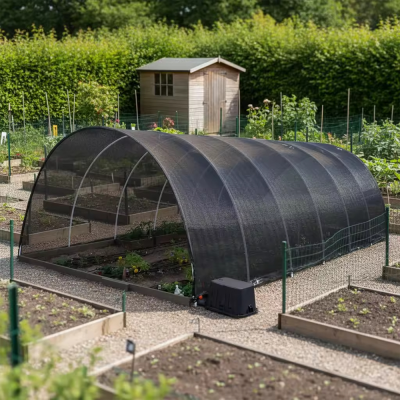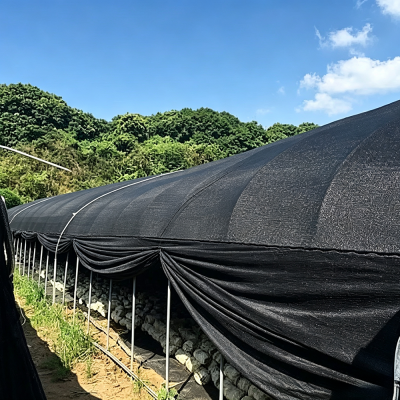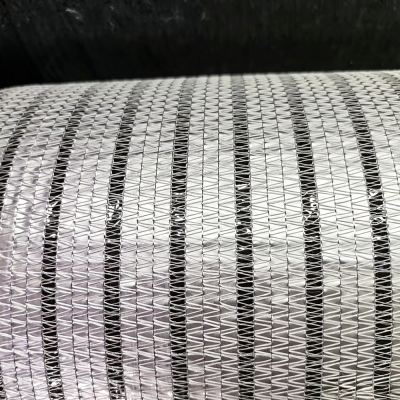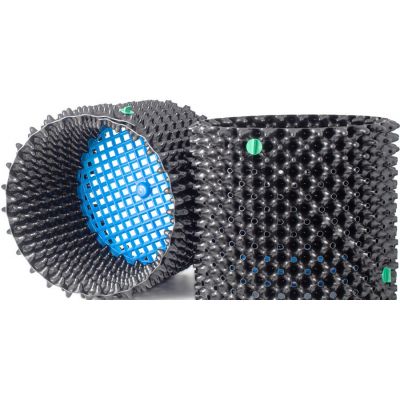


The same container is sold under two size systems and the two are easy to mix up. A 20 by 20 cm pot holds about 6.3 litres, which is roughly 1.7 gallons; a 30 by 30 cm pot holds 21.2 litres, close to 5.6 gallons; 40 by 40 cm gives 50.2 litres or 13.3 gallons; and the 50 and 60 cm sizes hold 98.1 and 169.6 litres, about 25.9 and 44.8 gallons. Buyers working in gallons and buyers working in centimetres are often ordering the same pot. The root pruning wall and the base disc are the same across the range, whatever size system the order is written in.
Nursery stock is bought in gallons in some markets and in centimetres or litres in others, and the same container is described both ways. That is useful once the conversion is understood and frustrating until it is, because an order written in the wrong system produces a pot that is close to the right size rather than the right one, and close is not what a root ball needs.
The conversion is worth keeping on a card. A 20 by 20 cm container holds 6.28 litres, or 1.66 gallons. The 30 by 30 cm size holds 21.2 litres, or 5.6 gallons. A 40 by 40 cm container reaches 50.24 litres, or 13.27 gallons, and the two largest sizes run to 98.13 litres or 25.92 gallons and 169.56 litres or 44.79 gallons. Diameters span 15 cm to 200 cm and heights 15 cm to 60 cm, so the range covers a seedling tube and a field-ready tree from the same moulding family. When the order is written, fix the required root ball diameter first and then pick the volume that holds it, rather than starting from a gallon figure that may have been rounded. The same logic applies across the whole root control container range, and for growers working across several crops it sits alongside the shade net and planting bag ranges.
The container is supplied with a moulded base that sits inside the wall, and it does more than close the bottom. The disc carries the same open pattern as the side wall, so the base also drains and also air prunes: roots that reach the floor of the pot meet the same openings they meet at the sides, and the root mass is trained at the bottom as well as around the circumference. Because the disc is a separate piece, the wall can be cut to the height the crop needs while the base stays standard, which simplifies stocking for a nursery running several pot depths.
| Model | KGQ01 |
| Material | PE, PVC |
| Diameter | 15 cm to 200 cm |
| Height | 15 cm to 60 cm |
| Volume | 6.3 L to 169.6 L (about 1.7 to 44.8 gallon) |
| Thickness | 0.6 mm to 1.5 mm |
| Shape | Round |
| Colour | Black, white or as required |
| Packing | PP bag or carton |
These containers are used where a plant has to be held, moved and planted without a setback: tree stock grown in rows and lifted for sale, hedge plants, and specimen trees that go straight from the nursery into a landscape scheme. Because the roots are fibrous and distributed rather than coiled, the plant lifts with its root ball intact and goes into the ground without root pruning on site, which is the step that usually causes transplant shock. The container can be lifted by hand at the smaller sizes and by machine at the larger ones, and it can be reused the following season.
Minimum order is 500 square metres with an FOB range of USD 1.2 to 1.7 per square metre, samples are available at USD 10 per piece, and delivery runs about 15 days after deposit with L/C and T/T accepted. Because the containers are ordered by area rather than by piece, it is worth converting the requirement to pot count before confirming: the diameter and height of each pot set how many square metres a given number of plants needs, and that number is what should be quoted. Trade coverage of how nurseries manage stock through to the landscape stage, such as HortiDaily and FreshPlaza, is worth following if you are specifying for more than one crop.
Is a 5 gallon pot the same as a 30 cm pot?
Close but not identical. A 30 by 30 cm container holds about 21.2 litres, which is 5.6 gallons, so the gallon figure is usually rounded. Fix the root ball diameter you need first and the volume follows.
Does the base also air prune?
Yes. The base disc carries the same open pattern as the wall, so roots reaching the floor meet air in the same way as roots at the side.
Can the wall be cut to a shorter height?
Yes, and that is one reason the base is a separate piece. The wall is cut to the depth the crop needs while the base stays standard.
Tell us the root ball diameter you are aiming for, the shape and the quantity, and we will confirm the volume, the wall height and the packing that suit your order.
Mark Wu, Co-founder & Technical Director, Sichuan Zhifang Net Industry. 15 years manufacturing agricultural nettings and nursery containers for growers in 32 countries.