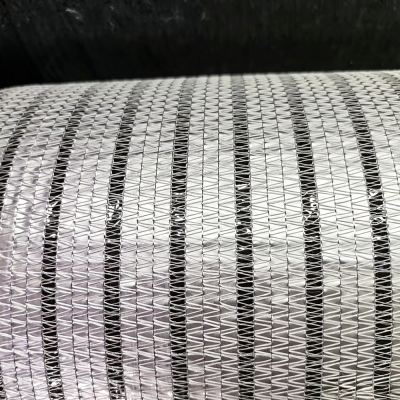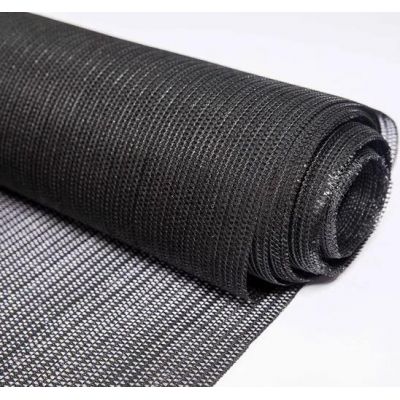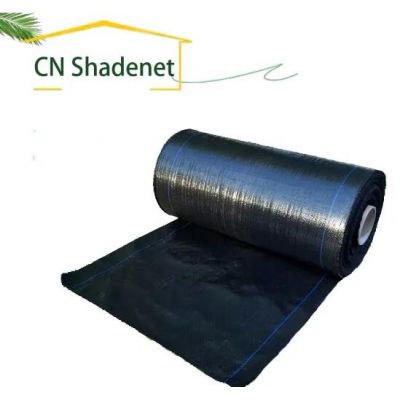


The cover under a tray bay is doing a job that is easy to miss. If weeds come up through the bench slats, the roots find their way into the drainage holes at the bottom of the tray, and the seedling that was growing perfectly well is suddenly competing for water and hard to lift without tearing the root ball. A woven cover over the bench takes that failure out. It has to lie flat so the trays sit level, stay put when walked on, and resist punctures from stones and tools. The cloth is woven polypropylene with UV resistance, and it passes water and air.
A propagation house fails in small ways rather than large ones. One of the smallest is the bottom of the tray: if weeds are coming up through the bench underneath, the roots work into the drainage holes and the seedling that looked fine suddenly will not lift clean. A cover over the bench or the floor is an inexpensive way to remove that failure, provided it lies flat and stays where it is put.
A tray sits on the bench for weeks and the drainage holes are open at the bottom. Any weed growing up through the slats below reaches those holes within days, and once a root has gone in, lifting the tray either tears the root ball or drags the weed with it. Covering the surface below the tray removes the light that the weed needs, so nothing germinates under the bench in the first place. The cover also stops soil and debris dropping through the slats onto whatever is below, which matters where the floor is being kept clean or walkable. Two properties decide whether it works: it has to lie flat so the trays sit level, and it has to stay put when the bay is walked on all day, because a cover that shifts will ruck under a tray and leave a gap at the edge.
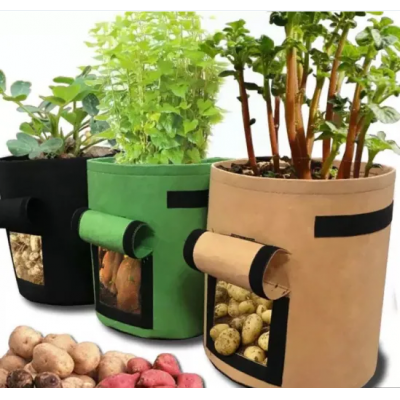
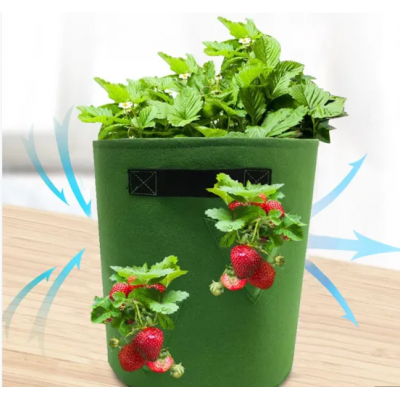
The cloth is laid over bench slats under tray bays, across the floor of a propagation house, and along the walkways and pot groups in a nursery. Because the weave passes water and air, overhead irrigation and misting still drain away instead of ponding on the surface, which is the difference between a cover that helps and one that keeps the bay wet. It is UV stabilised, so it can also be laid outdoors on open nursery ground and container beds. Growers potting into containers on the same floor often order a planting bag alongside it, and the shade net range covers the covers that go over the crop rather than on the ground.
| Model | WB-010 |
| Material | Woven polypropylene, UV resistant |
| Weight | 60 to 400 gsm (2 to 14 oz per square metre) |
| Width | 0.5 m to 6 m (1.6 ft to 20 ft) |
| Roll length | 5 m, 10 m and 20 m, or 16, 33 and 65 ft |
| Colour | Black with a guide line |
| Water and air | Permeable, drains through the weave |
| MOQ | 5000 m2 |
Flatness is a weight question. A cover that is too light will curl at the edges and ruck under a tray, so the grade chosen for a bench usually sits above the lightest end of the range. Staying put is a fixing question, and on a bench it is usually solved with stakes or battens at the ends rather than along the whole length. Puncture resistance matters more than it sounds on a nursery floor, because what is dropped on a cover there is not soil but tools, stones and tray corners, and one puncture at a walked line is where a run starts. All three come down to the same choice between weight and handling. Where the requirement is covering the crop above ground rather than the surface below it, a knitted monofilament net is the better fit.
Weight, width, roll length and colour are made to order, and the standard minimum order quantity is 5000 m2. Rolls are folded for pallet shipping rather than shipped round, which takes a useful amount off the freight volume. Bulk orders are supplied with the stakes needed to anchor the widths ordered. Tell us the bench or bay dimensions, whether the trays are the standard 1020 size and how the bay is used, and we will confirm the weight and the drop widths. Buyers tracking what is used in propagation houses and nurseries can follow trade coverage such as HortiDaily and FreshPlaza for what growers are laying.
Does the cover go under the trays or over the bench?
It goes over the bench surface or the floor, under the trays, so the light is held off the ground below. Tell us the bench or bay layout and we will confirm the width and the drop.
Will it stay flat under a tray that is watered every day?
The weave drains, so water does not pool and lift the cloth. The weight and the end fixings are what keep it flat, and both follow from the bench dimensions. Tell us how the bay is built.
Can it be used outdoors as well as on a bench?
Yes. It is UV stabilised, so the same cloth is laid on open nursery ground and under container beds. Tell us the use and how long it stays down and we will advise on the weight.
Tell us the bench or bay dimensions, the tray size and how the area is used, and we will confirm the weight, the drop widths, the roll sizes and the packing that suit your order.
Mark Wu, Co-founder & Technical Director, Sichuan Zhifang Net Industry. 15 years manufacturing agricultural nettings for growers in 32 countries.