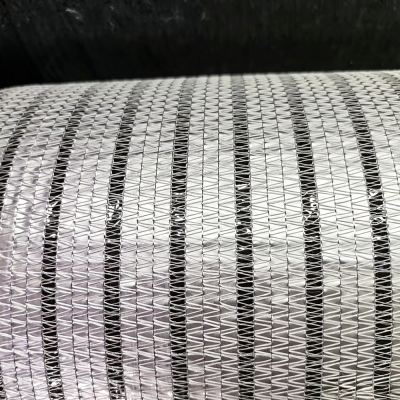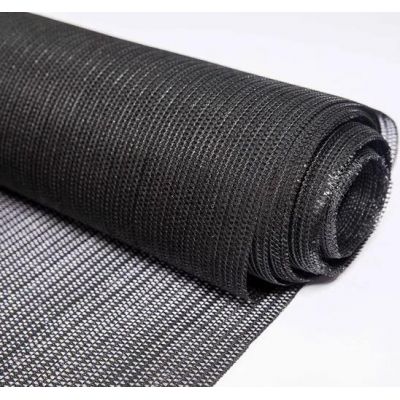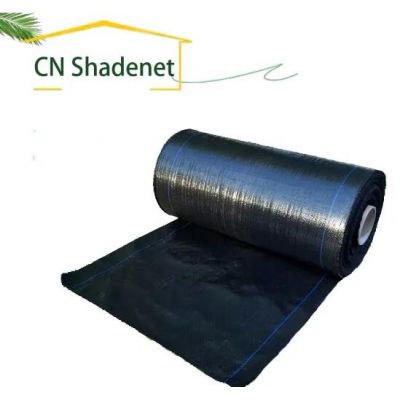


This is the shade netting we supply in a warp knit construction, and the structure is why it is asked for on a fence rather than a crop: warp knit yarns run lengthwise through the cloth, so the mesh holds its shape under tension and does not ladder the way a weft knit can when one yarn is cut. The shade rate is the other variable, made to order anywhere from 30 to 90 percent, so a garden fence can be set light enough to keep a lawn growing behind it or dense enough to screen a boundary outright. Supplied in sand beige.
Two things decide what a shade net does on a fence: how it is knitted and what shade rate it is made at. This one is a warp knit, so the yarns run lengthwise through the cloth and the mesh holds its shape under tension, and it is made to order anywhere from 30 to 90 percent shade, so the same product can keep a lawn growing behind a fence or screen a boundary outright.
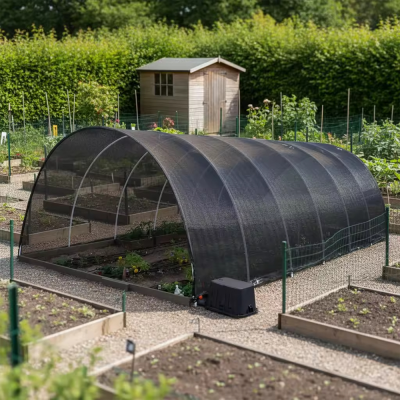
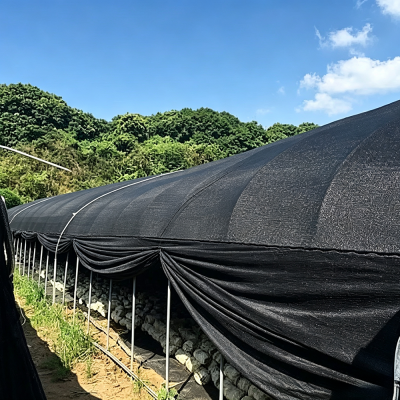
A fence screen is pulled tight and stays under tension for years, which is where the knit structure shows. In a warp knit the yarns run the length of the cloth, so the mesh resists stretching across the span and a cut or a snag does not run the way it does in a weft knit, where one broken yarn can ladder across the width. That makes the cloth the better choice where the cover is strained corner to corner, and it is why the same netting is used both as a fence screen and as a shade cover over a crop.
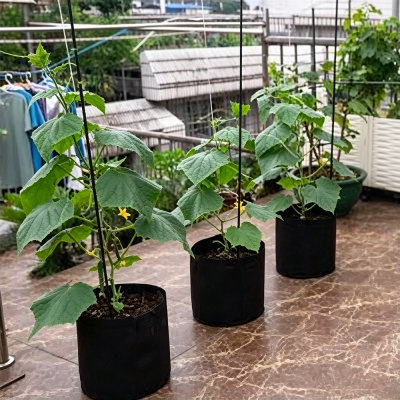
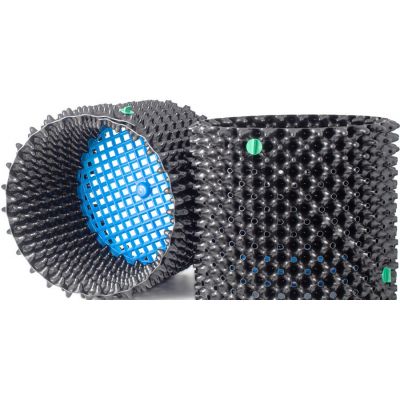
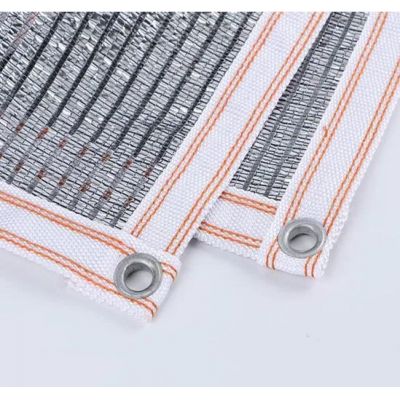
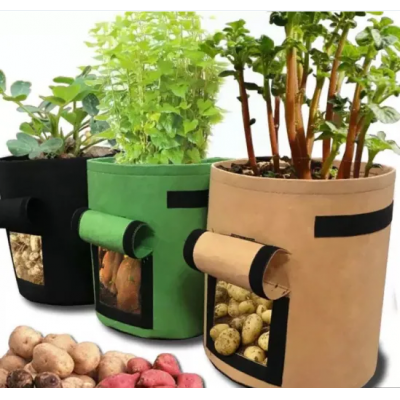
The netting goes along a garden fence, around a patio, across a pool surround and over a yard boundary, and the shade rate is chosen per job rather than taken from a stock cloth. Because it is supplied as a roll cut to the height you give us, one order covers a fence run and a patio span from the same product. Households setting trays under the same netting often pair it with a planting bag, and the wider shade net range covers the reflective and heavy grades where a different cover is wanted.
| Model | FS-002 |
| Material | Warp knit HDPE with UV resistant yarn |
| Shade Rate | 30 to 90 percent, made to order |
| Colour | Sand beige, customised on request |
| Form | Roll, cut to the height you give us |
| Function | Shading, screening and wind reduction |
| Application | Garden fence, patio and pool surround |
| Packing | PP woven bag, customised on request |
The rate is the one number to get right, and it is made to order rather than picked off a shelf. A light rate around thirty to fifty percent suits a lawn or a bed that still has to grow behind the screen; seventy percent and above is for a boundary where the object is to screen the view and cut the heat rather than to keep light on the ground. A knitted monofilament net covers the shading job where a finer weave is wanted, while this netting covers the fence screening work.
Height, roll length, shade rate and colour are all made to order, so the first detail to confirm is the run you are screening and what has to grow behind it. Netting ships in PP woven bags. Buyers tracking how shade netting performs across a season can follow trade coverage such as HortiDaily and FreshPlaza for what is being installed.
What shade rate should I order for a garden fence?
Around thirty to fifty percent where a lawn or a bed still has to grow behind the screen, and seventy percent or more where the object is to screen the view.
Why warp knit rather than weft knit?
The yarns run lengthwise, so the mesh resists stretching across the span and a snag does not ladder across the width the way it can in a weft knit.
Can I order a different height, rate or colour?
Yes. Height, roll length, shade rate and colour are all made to order. Tell us the run and what grows behind it and we will advise.
Tell us the run you are screening, what has to grow behind it and the colour you are working to, and we will confirm the roll and the packing that suit your order.
Mark Wu, Co-founder & Technical Director, Sichuan Zhifang Net Industry. 15 years manufacturing agricultural nettings for growers in 32 countries.