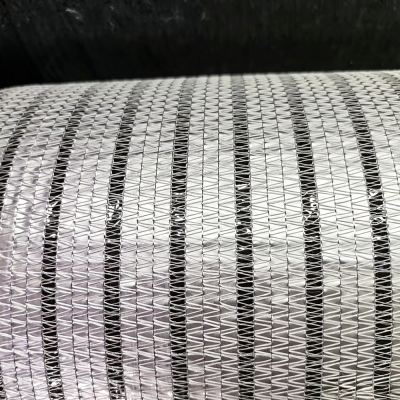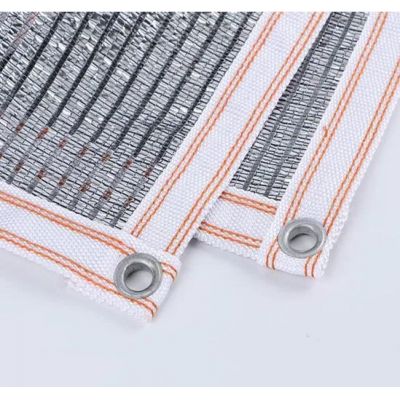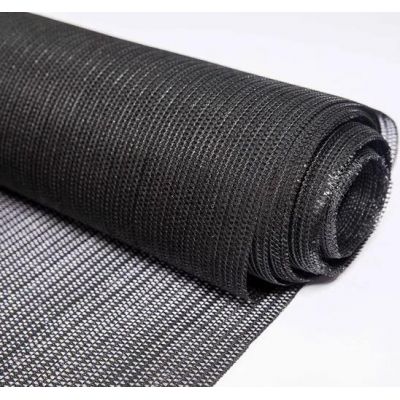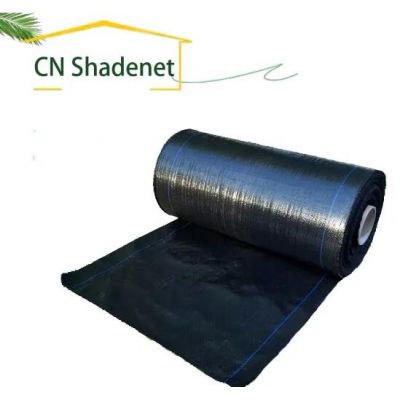


Ask what finishes a ground cover and most buyers say traffic. On a tunnel farm it is usually the sun. The cloth is laid on open ground and left there, so it takes ultraviolet all day, every day, and a cover without stabiliser in the yarn goes brittle at the fold lines long before it wears through anywhere. This one is a 150 gsm double layer polypropylene with the UV protection built into the yarn rather than coated on the surface, which is what carries it through two full seasons of direct sun without cracking. It blocks 99% of the light, so seed underneath does not germinate, while the weave still lets water and air down to the soil.
Ground cover is one of the few things on a farm that is bought and then deliberately left out in the weather for years. It is walked on, but that is not what usually kills it. What kills it is light, and the failure is not dramatic: the cloth simply stops being flexible and starts splitting along the folds it was stored on.
Ultraviolet breaks the polymer chains in polypropylene, and a cover left in the open takes that damage whether or not anything is standing on it. The first sign is not a hole in the middle, it is stiffness: the cloth that came off the roll soft starts to crack when it is folded, and the fold lines are where it splits. Once it splits, the strip is finished, because a cover with a running tear catches on everything afterwards. UV stabiliser compound worked into the yarn is what delays that, and it is the difference between a cover that survives one season and one that is lifted and reused. It is also the line worth checking on a quotation, because two rolls of the same weight can carry very different levels of it.
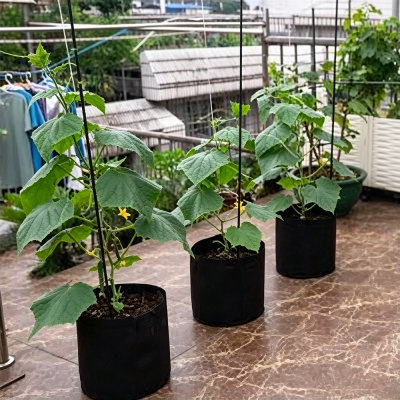
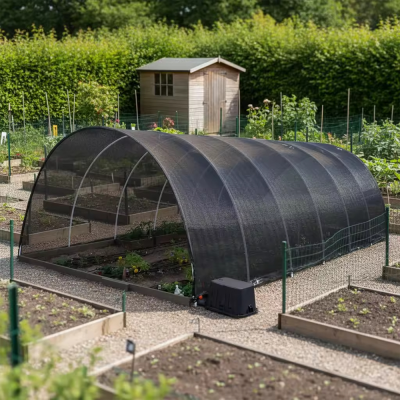
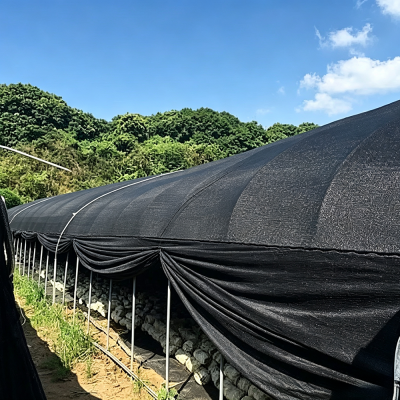
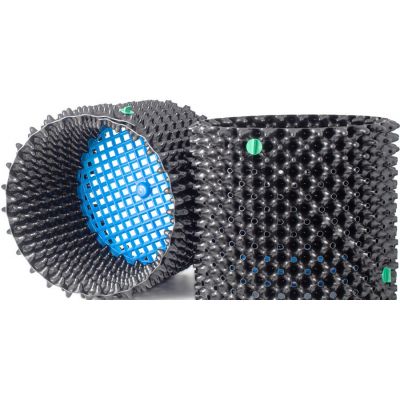
The cloth covers the strips between rows in a tunnel, the aisles and container bays in a nursery, and whole field blocks where hand weeding has become the biggest labour line. Because the weave is permeable, rain and irrigation reach the soil instead of running off, and the ground under the cover stays workable. It also keeps the crop off wet soil where low-growing fruit is being grown, which cuts losses to rot. Growers raising stock on the same ground often order a planting bag alongside it, and the shade net range covers the covers that go over the crop rather than on the ground.
| Model | WB-019 |
| Material | UV stabilised woven polypropylene, double layer |
| Weight | 150 gsm |
| Width | 0.5 m to 4 m |
| Length | Up to 200 m per roll, made to order |
| Edges | Heat sealed |
| Light blocking | 99% |
| Colour | Black |
The double layer construction is what gives the cloth its working life in the open. There is more material at the surface to absorb the light before the yarn underneath is affected, so the cover stays flexible for longer and can be lifted from one block and laid on the next rather than being written off. Blocking 99% of the light is the other half of the job and it is done by the weave itself, not by a coating, so it does not diminish as the cloth weathers. The same properties hold the soil moisture in, which cuts irrigation demand on an open block through a hot spell. Where the requirement is covering the crop above ground rather than the soil, a knitted monofilament net is the better fit.
Width, weight, roll length and colour are made to order, and the standard bulk rolls run from 0.5 m to 4 m wide with lengths of up to 200 m per roll. The rolls are folded flat rather than shipped round, which takes a useful amount off the container volume and the freight on a bulk order. Tell us the block layout, how long the cover is expected to stay down and the sun exposure and we will confirm the grade. Buyers tracking what is being laid in tunnel and field production can follow trade coverage such as HortiDaily and FreshPlaza for what growers are installing.
How long will the cover last in the open?
The UV stabiliser in the yarn is what sets the life, and this grade is built to hold two full seasons of direct sun without cracking. Tell us the exposure and how long it will stay down and we will advise.
What is the double layer for?
It puts more material between the sunlight and the yarn underneath, so the cloth stays flexible longer and can be lifted and relaid. It is a working life decision rather than a weed control one.
Does it reduce irrigation?
It slows the loss of moisture from the soil surface, so an open block needs less water through a hot spell. Tell us how the block is irrigated and we will confirm the width that suits the layout.
Tell us the block layout, the width and weight you have in mind, and how long the cover is expected to stay down, and we will confirm the roll sizes, the cut lengths and the packing that suit your order.
Mark Wu, Co-founder & Technical Director, Sichuan Zhifang Net Industry. 15 years manufacturing agricultural nettings for growers in 32 countries.