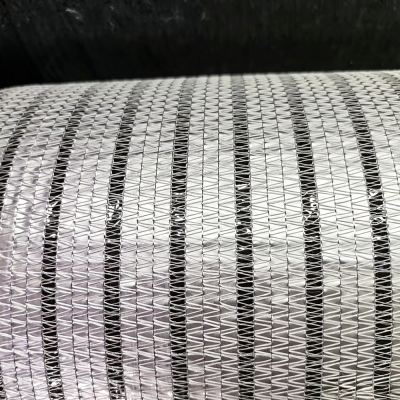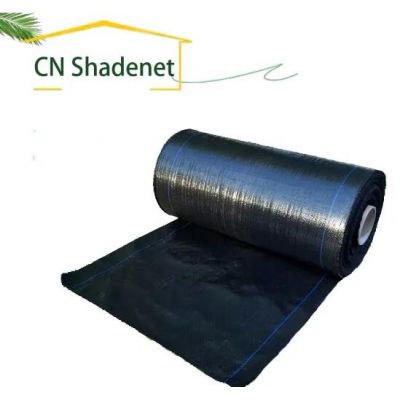


Plastic mulch film does the same job on the soil that this cloth does, and it fails in the same place: water pools on the surface, the soil underneath goes sour, and the film tears into strips that have to be cleared out at the end of the season. A woven polypropylene ground cover is laid the same way but it is permeable, so rain and irrigation pass through to the roots instead of running off, and the fabric is taken up and reused rather than replaced. It is UV stabilised for outdoor life, and it is laid in orchards, nurseries and along greenhouse floors to keep the weeds down without herbicide.
Ground cover on a fruit farm is usually a choice between spraying, hand weeding, or laying something down. Plastic mulch film is the obvious one and it is the one growers move away from, for a reason that only shows up in the second season. This cloth is the version that stays.
A plastic film seals the soil. Water runs off the surface instead of entering it, air does not move through, and the ground underneath stays wet and sour, which is where root problems start. The film also does not survive the season: it goes brittle in the sun and it tears into strips that have to be collected out of the rows by hand. A woven polypropylene cover is permeable, so irrigation and rain reach the roots and the soil still breathes, and it is UV stabilised, so it can be lifted at the end of the crop and laid again the next season. It shades the ground rather than heating it, which matters in an orchard where the film would cook the surface and stress the roots of young trees. Fewer passes with a sprayer or a hoe is the practical result, and a lighter wage bill is the one that shows on the books.
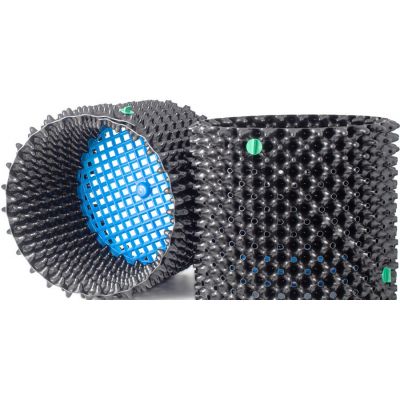
The cloth is laid along tree rows in an orchard, down the aisles and around container beds in a nursery, and over the floor of a greenhouse where weeds come up between benches. In each case it is the same job: hold the light off the soil so nothing germinates under it. Because the fabric is permeable, it is also laid where pots and trays stand, so the water from overhead irrigation is not trapped on the surface. Growers raising stock on the same ground often order a planting bag alongside it, and the shade net range covers the covers that go over the crop rather than on the ground.
| Model | WB-002 |
| Material | 100% woven polypropylene |
| Width | 0.4 m to 6 m |
| Weight | 50 to 150 gsm |
| Length | Cut to your requirement |
| Colour | Black, green and other colours on request |
| Water | Permeable, water and air pass through |
| MOQ | 5000 m2 |
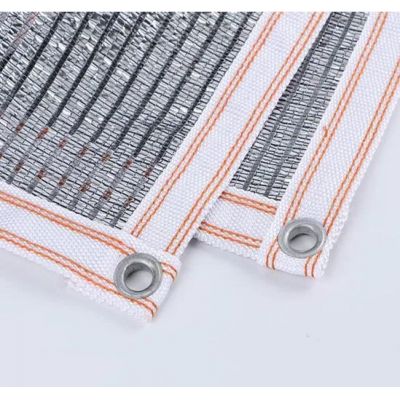
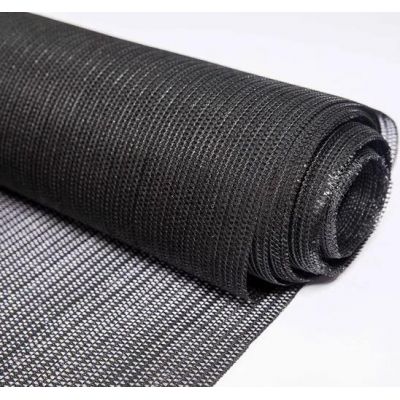
Width is the first line to fix, because it decides how many drops a row needs: the cloth runs from 0.4 m for a narrow container bed up to 6 m where a whole aisle or a tree row is covered in one piece, which saves both the overlap and the pins. Weight is the second, and it decides how the cloth behaves under foot and under wind: the lighter grades at 50 to 80 gsm are laid in a nursery or along a greenhouse floor, and the heavier end up to 150 gsm is used where machinery or foot traffic crosses it. Laying is straightforward: the ground is levelled, the cloth is rolled out and cut to length with a knife, the edges are pinned with ground staples, and the plants go in through slits cut in the fabric. Where the job is covering the crop above ground rather than the soil, a knitted monofilament net is the better fit.
Width, weight, length and colour are made to order, and the standard minimum order quantity is 5000 m2. Length is cut to your requirement and packing follows the order. The materials are covered by SGS, ISO9001, BV and TUV certification, and samples can be supplied cut to the width you are considering so the weight can be judged in the hand before the order is placed. Buyers tracking what is going onto orchard and nursery ground can follow trade coverage such as HortiDaily and FreshPlaza for what growers are laying.
Does water get through the weed mat to the roots?
Yes. The construction is permeable, so rain and irrigation pass through the fabric instead of running off the way they do on a plastic film. That is the main reason the woven cover is chosen over film in an orchard.
Can it be lifted and used again?
Yes. It is UV stabilised for outdoor use and is taken up at the end of the crop and laid again the following season, which is where it differs from plastic film that goes brittle and tears.
Which weight do I need?
The lighter grades from 50 gsm suit nursery beds and greenhouse floors, and the heavier end up to 150 gsm suits ground that machinery or foot traffic crosses. Tell us where it is going and we will confirm the figure.
Tell us the row or bed dimensions, the width and weight you have in mind, and the total area, and we will confirm the roll sizes, the cut lengths and the packing that suit your order.
Mark Wu, Co-founder & Technical Director, Sichuan Zhifang Net Industry. 15 years manufacturing agricultural nettings for growers in 32 countries.