
By Mark Wu, Co-founder & Technical Director, Sichuan Zhifang Net Industry Co., Ltd.
Crop rotation works on a simple principle. If a pathogen builds up in the soil around one crop family, you stop growing that family there for three or four years and the population falls away.
The problem is that a bed does not move. On a small farm, or in a garden with sixteen raised beds planted to the same favourites, you run out of places to rotate to long before the four years are up. Tomatoes go back into the same soil, and the disease comes back a little earlier each season.
A grow bag sidesteps this, because the growing medium in a bag is a variable rather than a fixed asset. That is the argument for bags that nobody puts on the packaging.
Soil in a bed is a long-term investment. You build structure, organic matter and biology in it over years, and you cannot replace it without enormous effort. That is the strength of a bed and also its trap: everything that accumulates in it, good and bad, stays.
Grow bags invert that. When the crop comes out, the medium can go too. The bag is either refilled with fresh mix or refreshed and reused, and the pathogen load resets to whatever you put in.
For a grower fighting root disease in a tired block, that reset is worth more than any input they can buy. It is also the lowest-cost form of rotation available, because you only have to move a bag, not a field.
None of this works if the bag is a container for the same tired soil.
Three things carry the problem forward. Reusing media from a diseased crop without treatment. Putting diseased roots and stems into the compost that goes back into next year's mix. And failing to clean the bags themselves between crops, which matters more than most people expect, because fabric holds soil particles in the weave.
The reset only happens if you actually reset. Half a rotation is worse than none, because it gives you the confidence without the effect.
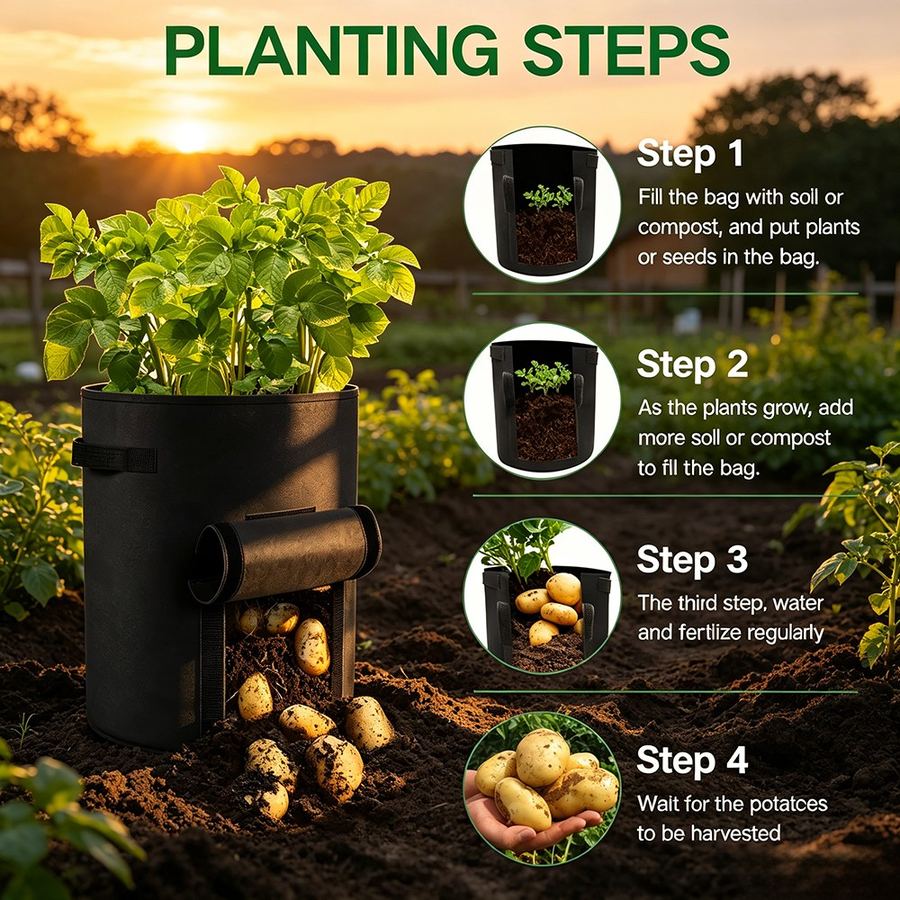
Empty the bag, and knock the root ball apart over a barrow or a sieve. Separate what is reusable from what is not: woody roots and any diseased material go out of the system entirely, not into the compost heap that feeds next season.
Refresh the reusable fraction rather than replacing it. Roughly a quarter of the volume in fresh compost brings back the biology and most of the nutrition, and slow-release organic fertiliser fills the gap. Straight compost on its own is a poor container mix, because it lacks the minerals and the drainage structure that a bag needs.
Then clean the bags. Rinse, wash in soapy water, and dry them fully before storage. A fabric bag stored damp goes mouldy and the fabric weakens at the folds.
A bag does not repeal the rotation rule. If you grow tomatoes in the same bag with the same media for four seasons, you have recreated the bed, just in a smaller and more expensive form.
What the bag gives you is the option to move things around at little cost. Line the bags up in blocks, keep a simple written map of what went where, and move the nightshades one block along each year. Anyone who has tried to rotate a fixed greenhouse border will recognise how much easier this is.
For a nursery, the same logic applies at a different scale. Mother stock and propagation blocks are the places where a soil-borne problem is most expensive, and where replacing the medium is most easily justified.
A related use, and one we see a lot from growers trialling new varieties, is the bag as a disposable trial plot.
A new variety is a guess until it has grown in your conditions. Putting it in a bed means committing a season's space to something that may not sell, and possibly leaving a pathogen behind if it fails badly. A handful of bags on the edge of the block does the same job. You can move them to the best light, give them water separately from the main crop, and tip the whole thing out at the end without touching the rotation plan.
That is a small thing, and it is the reason several of our customers keep a pallet of bags aside from the main order.
Pays: a block with a history of root disease, high-value crops on tired ground, small plots where rotation is impossible, and any situation where a failed crop costs more than a pallet of growing media.
Does not pay: a site with clean soil and no disease history, where a bed costs less per plant. Or a crop that is failing for a reason that has nothing to do with soil, which is most of the time. Diagnosis first, bags second.
A bag is not a cure for foliar disease, insect pressure, or a site with poor drainage. Nor does it fix a crop that is failing because of the wrong variety, the wrong season or the wrong irrigation.
The one thing it reliably changes is the medium, and the medium is only the cause of a minority of crop problems. The reason bags are worth talking about is that when the medium is the cause, they are the fastest and often the lowest-cost way to replace it.
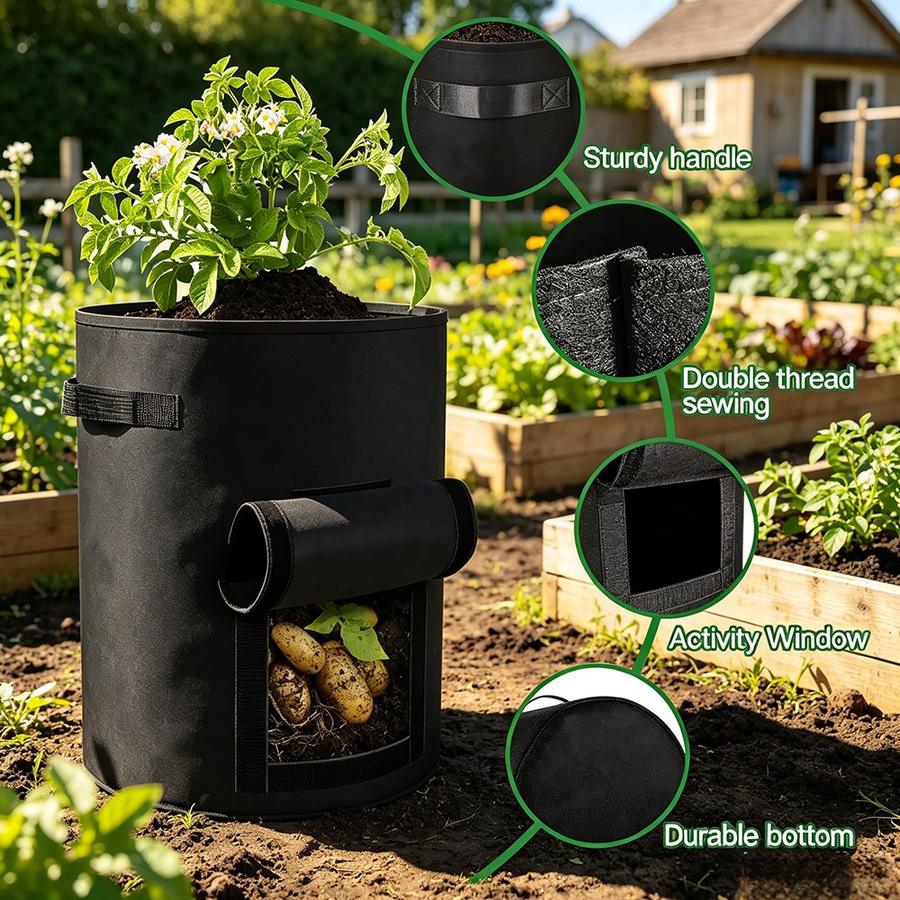
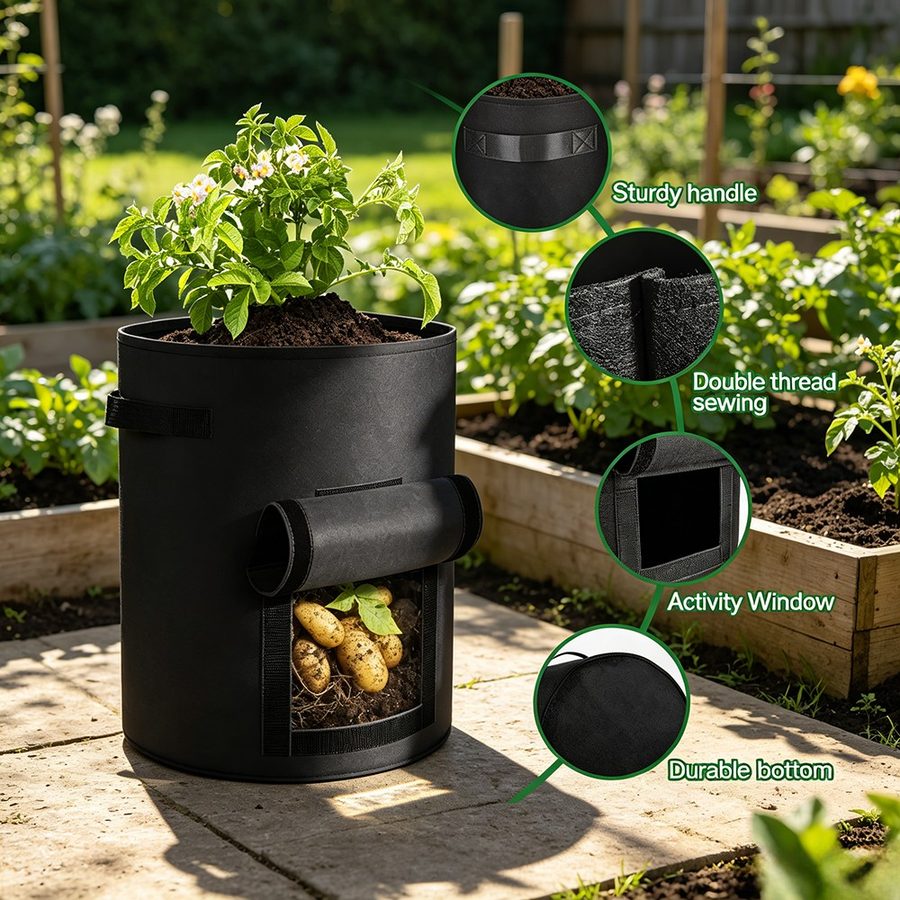
Sichuan Zhifang Net Industry Co., Ltd. has been making non-woven grow bags and shade netting since 2011, from a plant of nearly 10,000 m² with more than 50 production lines, and supplies growers in 32 countries. Our bags are 260-320 gsm non-woven fabric with stitched seams and reinforced handles, built for five years of normal use, and every carton carries a ZF security label inside the pack. Customers running our thicker bags report several seasons of service before the fabric goes slack.
No. Replace it when disease has been in the crop. Otherwise refresh it with about a quarter volume of compost and a slow-release feed, and it will carry another season.
Hot water and soap are enough for cleaning fabric. What matters more is drying them completely before storage, because damp storage damages the fabric faster than any pathogen.
No. It removes one route, the soil-borne one. Airborne disease, insects and irrigation problems all still apply. The non-woven grow bag range covers the sizes used for rotation blocks, and the wider planting bag range lists volume and GSM per item. If you are replacing a failed block and want a heavier bag for multi-season use, this is the grade to look at.


