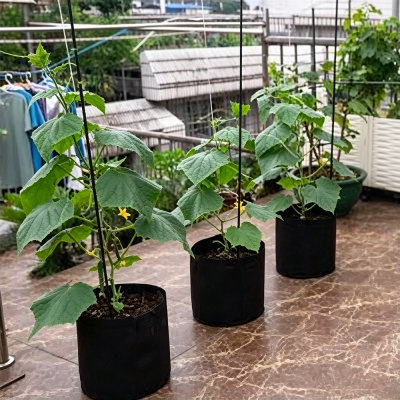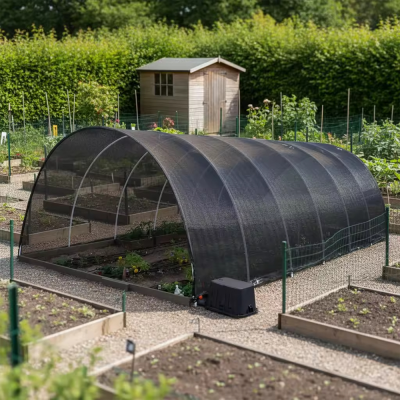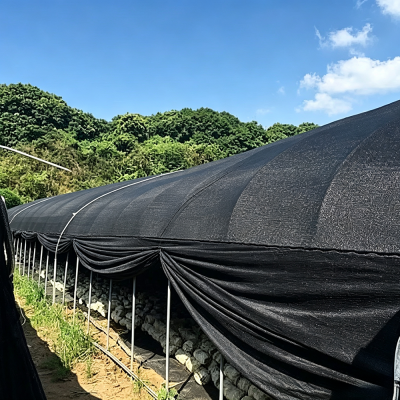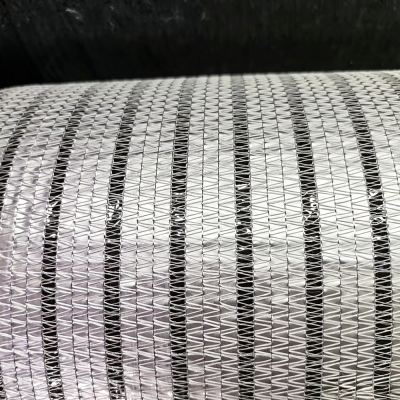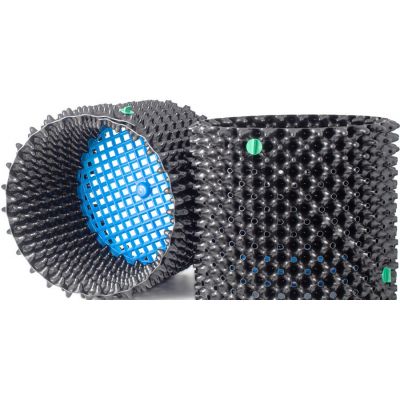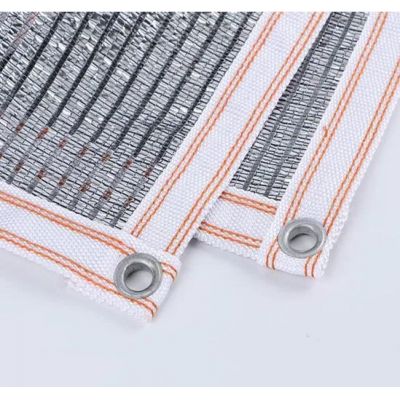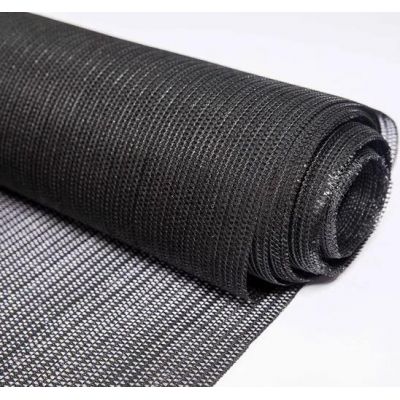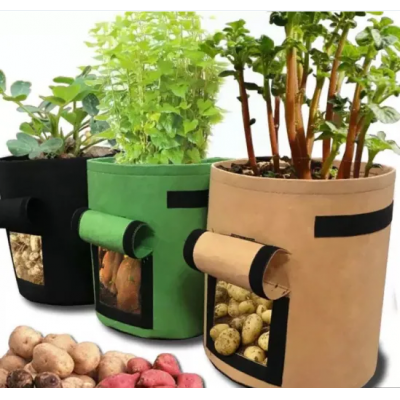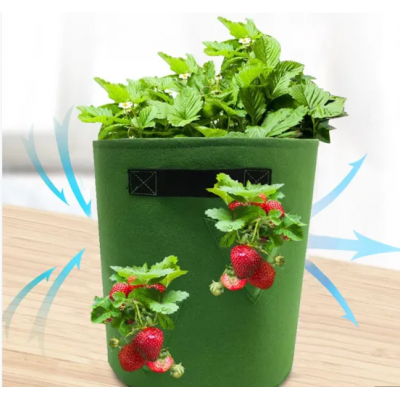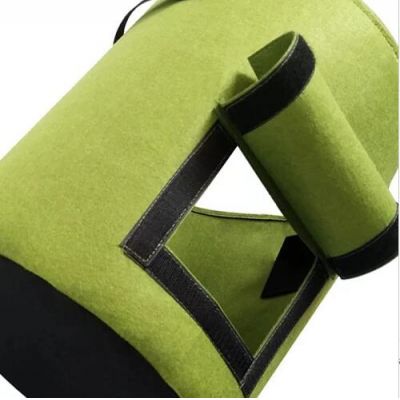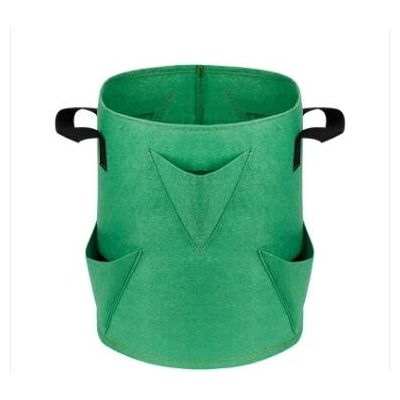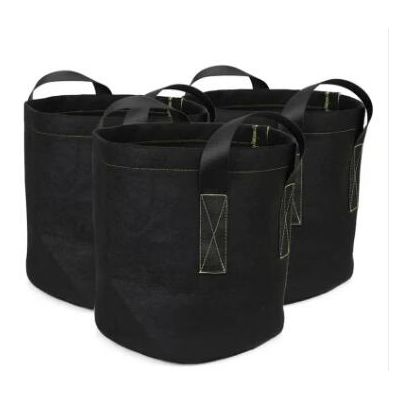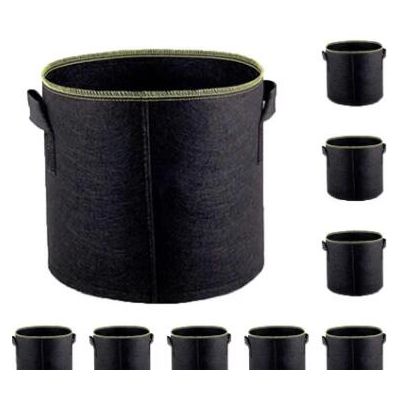
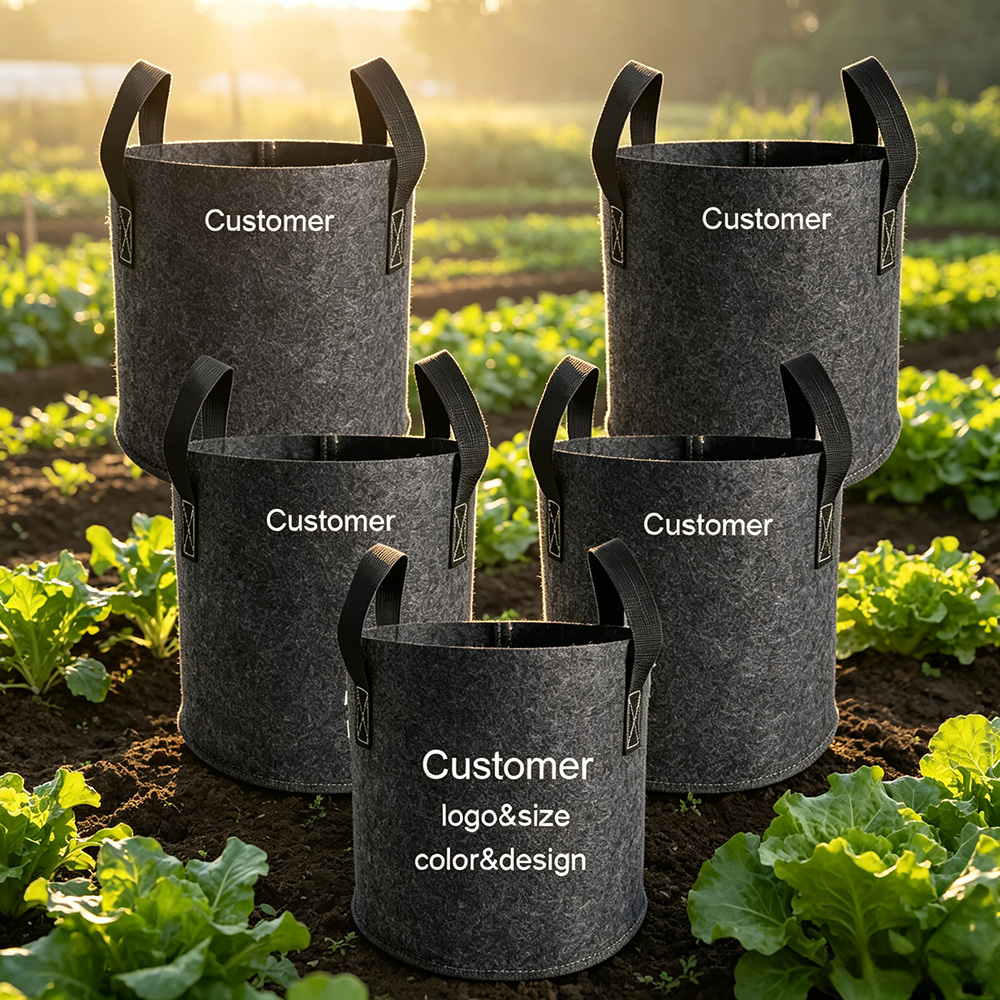
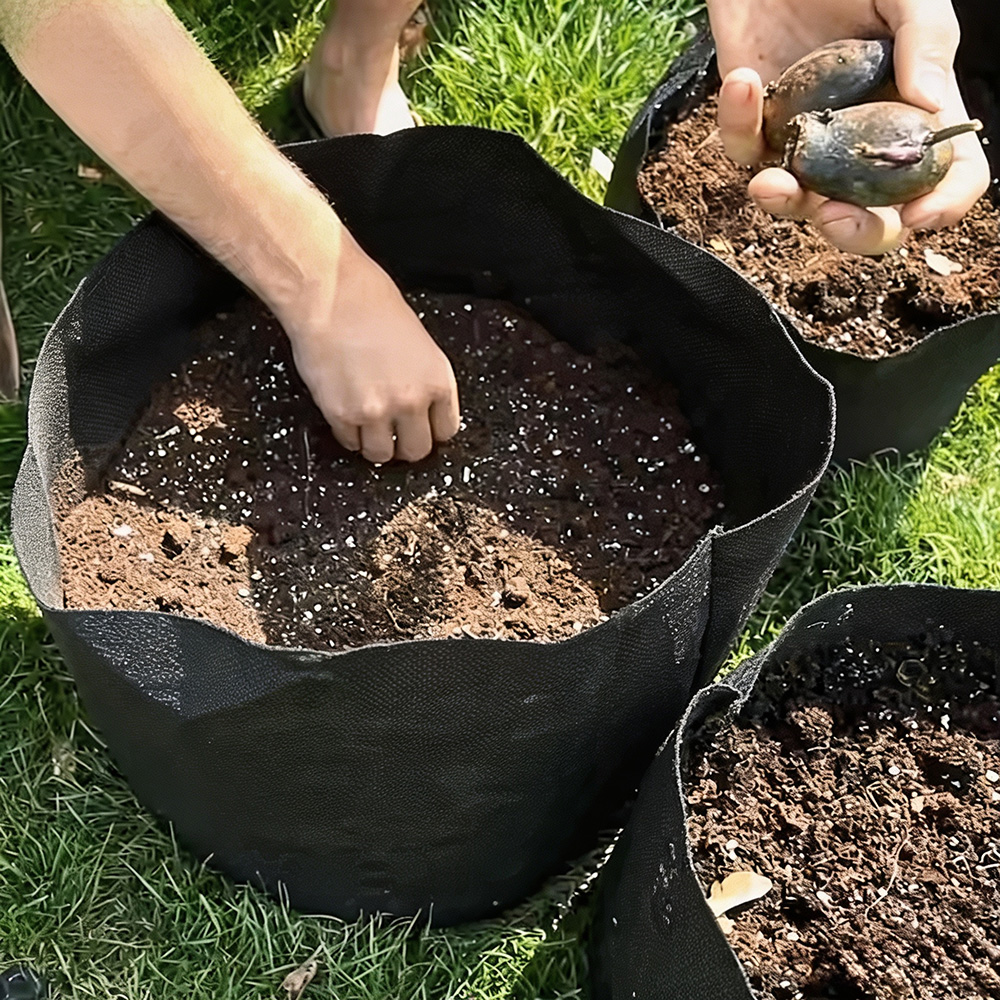
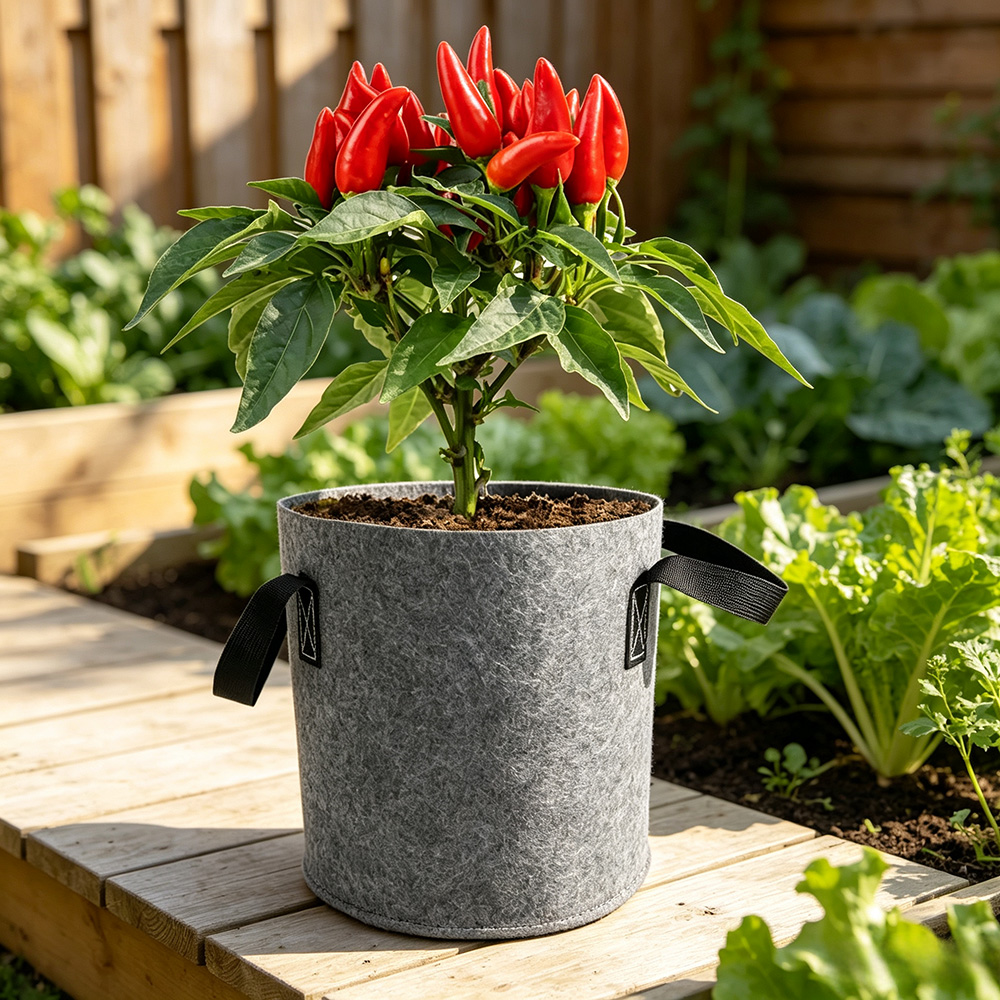
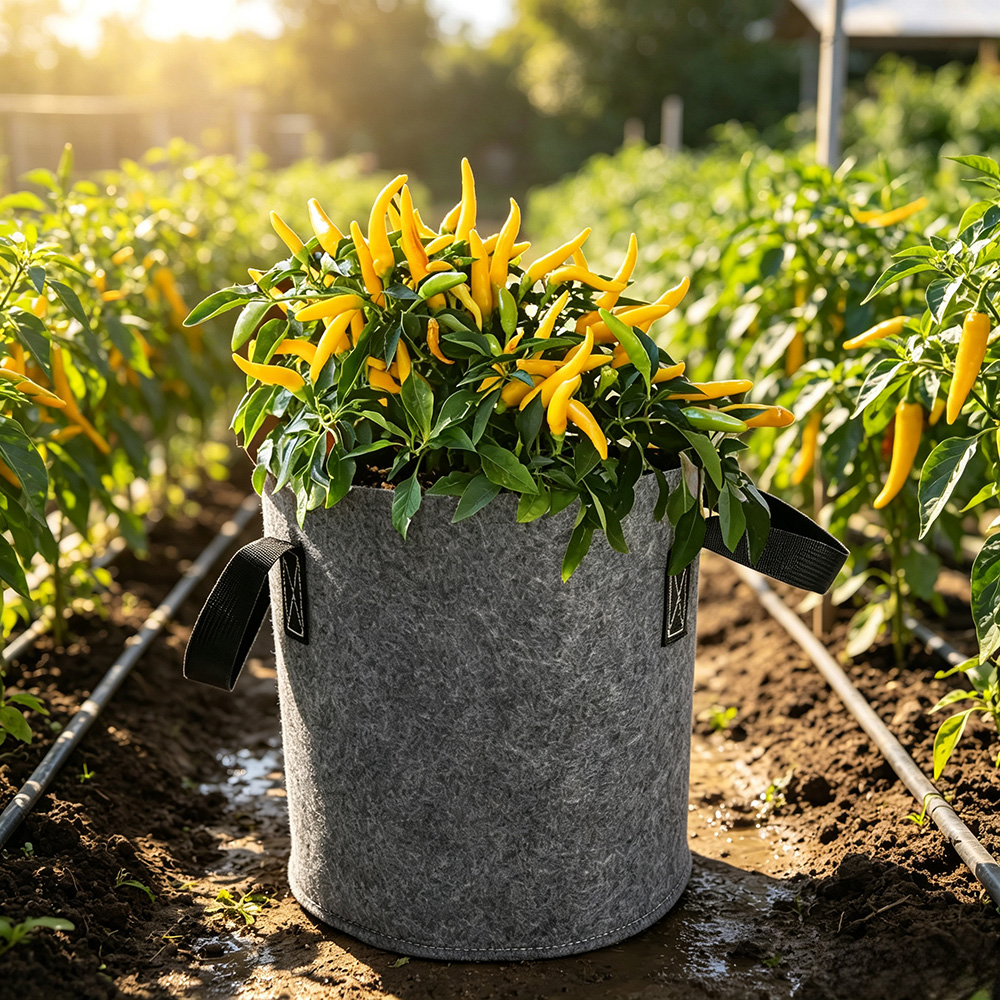
A non-woven planting bag engineered from 260–320g/m² polyester fabric with air-pruning wall design. Unlike standard containers that trap roots, our double-needle stitched grow bags promote healthy root development and prevent circling. Built with biodegradable materials for a 5-year outdoor service life. Ideal for tree nurseries, ornamental propagation, and commercial landscaping projects. Available in round/square shapes and custom colors. ISO 9001 and SGS certified for material safety and consistency.
Most first-time grow bag buyers fixate on size. They should be asking about fabric weight and seam construction instead. You can't see air-pruning—but it's the difference between a transplant that thrives and one that stays stunted for an entire season. Our non-woven planting bags start with 260g/m² fabric (up to 320g/m² for heavy root systems), double-needle stitched seams that don't burst under soil pressure, and a wall structure engineered to guide roots toward natural pruning. That's what makes them the standard for commercial nurseries across North America, Europe, and Australia.
1. 260–320g/m² Fabric Weight Options
What it is: Four density grades available—260g, 280g, 300g, and 320g per square meter—matched to different crop root development needs.
What it means in practice: The reason this specification matters is that lighter fabrics (<150g/m²) tear during handling and degrade within a single season. Our 260g base weight handles repeated lifting, transplanting, and seasonal reuse. Heavier grades support deep-rooted trees and long-cycle medicinal plants.
Why this standard matters: In commercial nursery operations, bag failure mid-season means lost plants and wasted labour. The extra grams per square meter translate directly to fewer failures and lower replacement costs.
2. Air-Pruning Wall Design
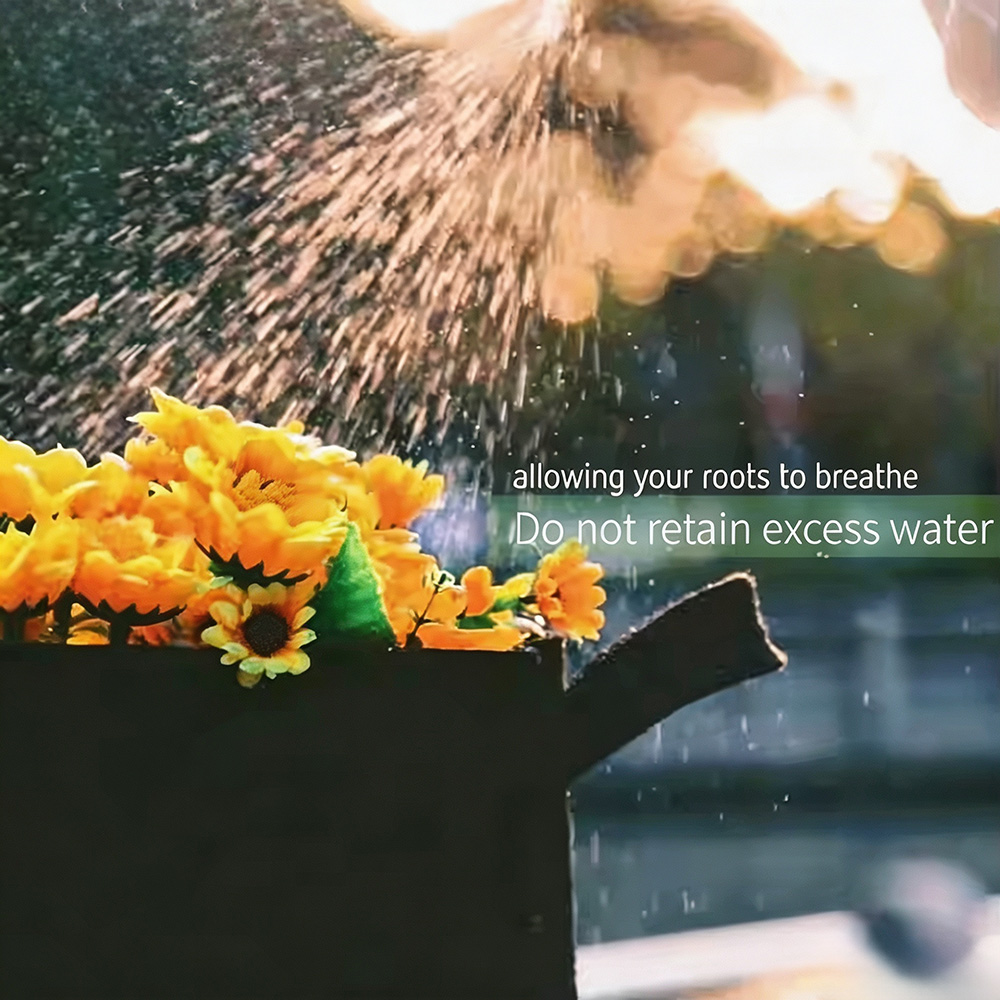
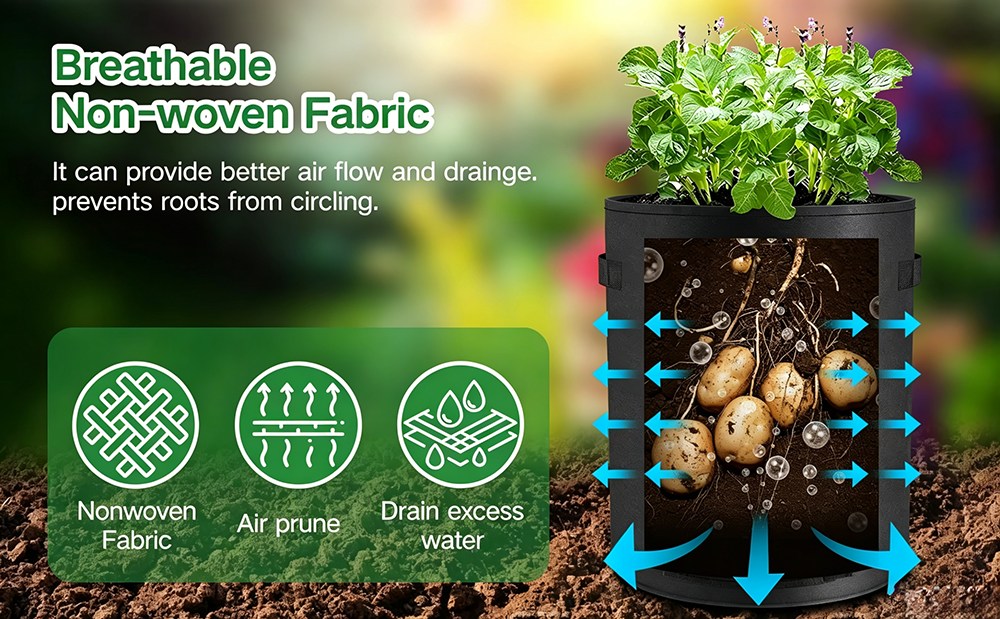
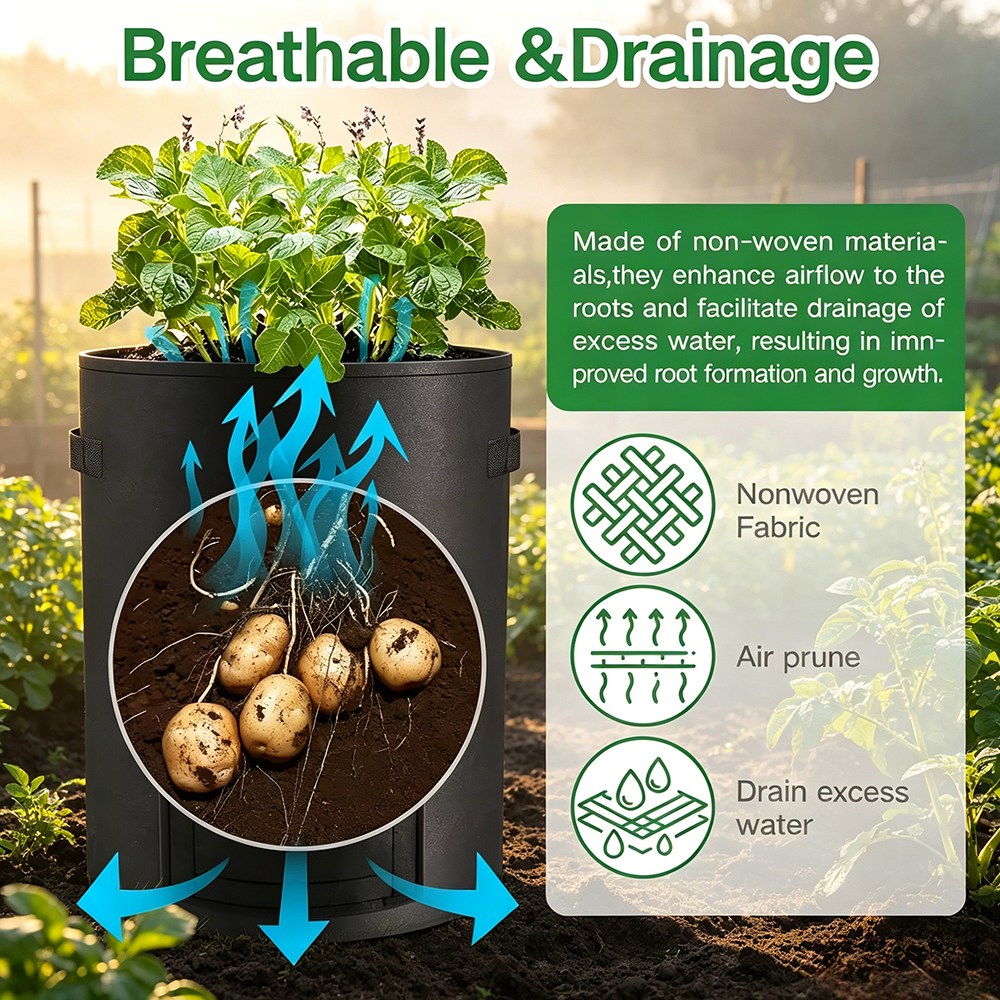
What it is: The non-woven fabric's porous structure stops root tips when they reach the bag wall, triggering lateral root development instead of circling.
What it means in practice: In real-world growing conditions across 32 countries, we've seen air-pruning containers produce root systems that are noticeably more branched and fibrous than standard smooth-wall pots. That translates to faster establishment after transplanting and less transplant shock.
Why this standard matters: Root circling—what growers call "root-bound"—is a silent yield killer. The plant looks fine in the bag, but the moment it goes into the ground, the spiralled roots never expand properly. Air-pruning solves this at the container level.
3. Double-Needle Stitched Seams
What it is: Both vertical and bottom seams are stitched with a double-needle lockstitch process, reinforced at stress points.
What it means in practice: Here's what that means in practice: a single-needle bag filled with 10kg of wet soil often bursts at the seam during lifting. Our double-needle construction holds firm even under heavy nursery handling.
Why this standard matters: The seam is always the weakest point on any fabric container. Double stitching isn't a luxury—it's the baseline for commercial-grade durability.
4. 5-Year Outdoor Service Life
What it is: Engineered from UV-stabilized polyester non-woven fabric with biodegradable properties, designed for multi-season outdoor exposure.
What it means in practice: What the cheap spec sheets don't tell you is that many "biodegradable" bags start breaking down after one season—right when the plant is ready for sale. Our material balances controlled degradation with structural integrity across five growing cycles.
Why this standard matters: Nurseries selling container-grown stock need bags that hold together until the customer takes the plant home. Premature bag failure ruins the root ball and the sale.
5. Full Customization Options
What it is: Round or square shapes, any colour (black/white/red/blue/green/grey/brown), and custom sizing available for volume orders.
What it means in practice: On sites with specific crop or branding requirements, this becomes the difference between a generic container and a tailored nursery solution. Colour coding helps organize different crop varieties in large propagation houses.
Why this standard matters: One size doesn't fit all. A 5-gallon round bag works for tomatoes; a deep square bag suits taproot vegetables. Having options means you spec the bag to the crop, not the other way around.
Technical Specifications
| Parameter | Specification |
|---|---|
| Material | Polyester non-woven fabric, environmentally friendly & biodegradable |
| Weight | 260 / 280 / 300 / 320 g/m² (customizable) |
| Shape | Round / Square (size adjustable) |
| Colour | Black / White / Red / Blue / Green / Grey / Brown + any custom colour |
| Service Life | 5 years outdoors |
| Applications | Indoor & outdoor planting; seedlings, saplings, vegetables, fruit trees, medicinal plants, landscaping |
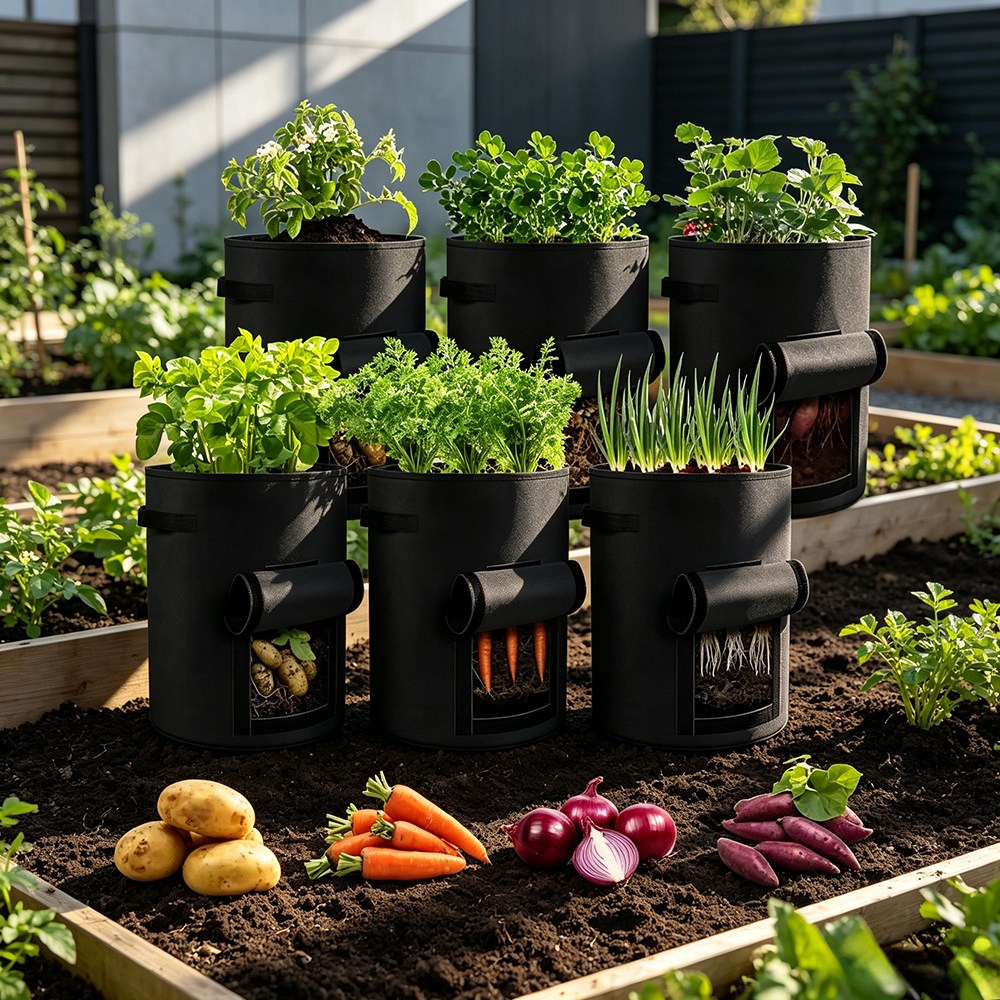
Commercial tree nurseries: 300–320g/m² square bags for oak, maple, and fruit tree saplings—deep root run encourages taproot development without circling.
Ornamental propagation: 260g/m² round bags for roses, hydrangeas, and perennials. Air-pruning produces compact, fibrous root systems that transplant cleanly.
Vegetable and herb production: 280g/m² grow bags for tomatoes, peppers, and basil in high-tunnel or greenhouse operations. Excellent drainage prevents waterlogging during irrigation cycles.
Vertical greening and landscaping: Custom-sized bags for green wall installations and rooftop gardens. Lightweight when empty, stable when filled, and UV-stable for exposed city environments.
Medicinal plant cultivation: 320g/m² heavy-duty bags for ginseng, lavender, and other long-cycle medicinal crops—structure holds firm across multiple seasons.
Let's talk about what the cheap quote doesn't include.
When a supplier quotes you a lower price per bag, here's what you're usually not seeing: single-needle seams that split during your busy spring potting season; fabric weights closer to 150g/m² that tear when you move a tray; "biodegradable" additives that kick in too early, leaving you with crumbling bags and root balls falling apart at sale time.
Here's what we do differently—and it's not complicated.
First: 100% polyester non-woven, not blended recycled material. We don't cut corners on the base material because the base material determines whether a bag lasts two seasons or five.
Second: Every bag is double-needle stitched. That's a production detail that adds cost but eliminates the single most common failure point in the field. We've seen this make or break projects when a nursery loses a full batch of 2,000 bags to seam failure.
Third: ISO 9001 and SGS certified across all production runs. That's not just paperwork—it's a documented quality system that ensures you get the same spec bag after bag, order after order.
Fourth: Customization without friction. Round, square, custom sizes, any colour. We ship FOB Shanghai with a standard lead time of 15–20 days for stock specs, 25–30 days for custom runs. We'll provide you with cutting and installation guides, and all standard sizes are available for fast replenishment orders.
Fifth—and this is where we sound like the technical advisors we are: Not every nursery needs the heaviest 320g/m² bag. If you're growing quick-turn annuals in a protected greenhouse, 260g is plenty. But if you're holding trees for two or three years in full outdoor sun, the 320g grade is your safer bet. Send us your crop list, your typical grow cycle, and your local climate data—we'll recommend the exact spec.
Q: What is the lifespan of your shade nets, ground covers, and fence screens?
A: Shade nets and ground covers typically last 3-5 years under normal outdoor conditions, while fence screens offer a lifespan of 5-7 years. Our HDPE knitted fabrics are UV-stabilized to resist degradation from prolonged sun exposure. Sichuan Zhifang Net Industry ensures that all products are engineered for long-term field performance, with air pruning pots and planting bags also providing 3-5 years of reliable service in nursery applications.
Q: Can I customize the size, color, or specifications for my order?
A: Yes, we offer full customization including dimensions, colors, shading rates, and fabric weights. You can specify custom sizes for shade nets, ground covers, and fence screens, or select specific volumes (4-15 gallons) for planting bags. Simply share your project requirements with our team at Sichuan Zhifang Net Industry, and we will design a tailored solution that meets your exact growing or construction needs.
Q: How do I choose the right product for my specific application?
A: The choice depends on your primary goal. Use shade nets for temperature control and crop protection; ground covers for weed suppression and moisture retention; air pruning pots for healthy root development; and fence screens for privacy and wind reduction. Our experts at Sichuan Zhifang Net Industry can recommend the optimal product based on your climate, crop type, and budget to ensure the best value.
Q: What is your warranty and quality guarantee policy?
A: We provide a 5-year quality guarantee against material defects for all products, including shade nets, ground covers, and fence screens. Our HDPE and non-woven fabrics are manufactured under strict ISO 9001 standards to ensure consistent quality. Sichuan Zhifang Net Industry offers technical support and replacement parts throughout the product lifespan.
Q: What is the lead time for bulk orders?
A: Peak season lead time is approximately 30-45 days, while off-season orders are typically fulfilled within 20-25 workdays. Custom orders may require additional time for production and shipping. We recommend placing orders in advance to secure your preferred specifications, and our logistics team at Sichuan Zhifang Net Industry will provide real-time updates throughout the shipping process.
Q: For a 5-acre commercial tree nursery, what bag size and weight do you recommend?
A: For tree saplings (oak, maple, fruit trees), we recommend 300g/m² square bags in depths of 25–40cm. The heavier fabric holds up to two to three years of field nursery handling, and the square shape packs tighter on shipping pallets than round bags. Send us your tree species and target grow-out period—we'll size the spec accordingly.
Q: How do I know the air-pruning design is actually working?
A: You'll see it at transplant time. Roots from our bags show multiple lateral branches and a dense, fibrous structure near the wall, rather than one or two thick spiralling roots. We've seen this consistently across rose cuttings, vegetable starts, and hardwood tree seedlings. If you're not sure, order samples and pull a few plants after eight weeks—the difference is visible.
Q: What's the lead time for a 20,000-piece custom colour order?
A: For custom colours and standard sizing, 20–25 days after colour sample approval. For custom dimensions as well, allow 25–30 days. We'll send you a production schedule with milestone photos upon order confirmation.