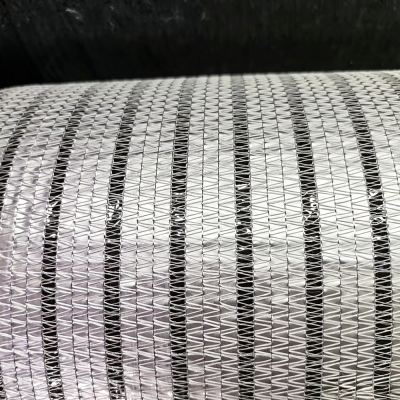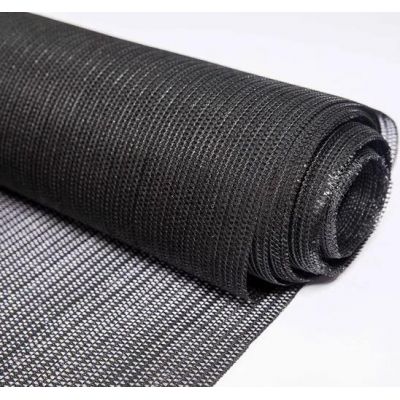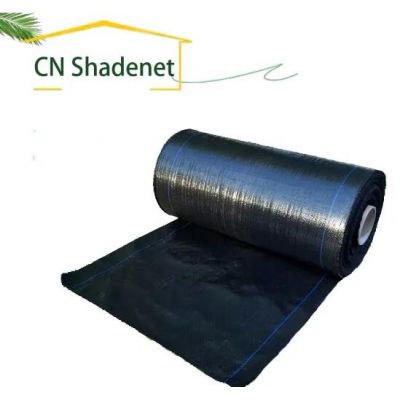


The same roll is laid in two very different places on most farms. Along an orchard row the strip has to survive being walked on, driven beside and caught by machinery, so the cloth is heavier and the width is set by the row. Under the container beds of a nursery it carries trays and pots rather than people or tyres, and what matters there is that water from overhead irrigation passes straight through instead of standing on the surface. Both jobs come off the same woven polypropylene roll, and the width and weight are chosen for whichever one you are doing. Rolls run from 0.8 m to 3 m wide and ship flat packed.
Most buyers of this cloth are running two things at once: an orchard block and a nursery or a greenhouse where pots are standing. The cloth is the same. What is not the same is the ground under it and what travels over it, and that is what decides the width and the weight you should be ordering.
Along an orchard row the strip being covered is long and narrow, and the load on it does not stop: boots, tractor wheels and the swing of machinery all come across it through the season. A cover there needs to resist being pulled and scuffed, so it is specified heavier, and the width is set by the row rather than by the roll. Under container beds in a nursery the situation is different. Nothing drives over it, the main load is the bottom of a pot, and the problem is water: overhead irrigation is running most days and any cover that traps it leaves the bed sitting wet, which is where root problems start. There the width is set by the bed spacing, and the requirement is that the weave passes water straight through.
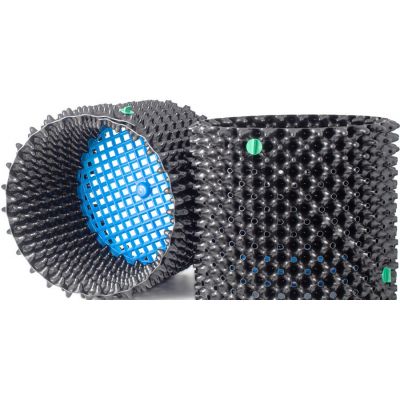
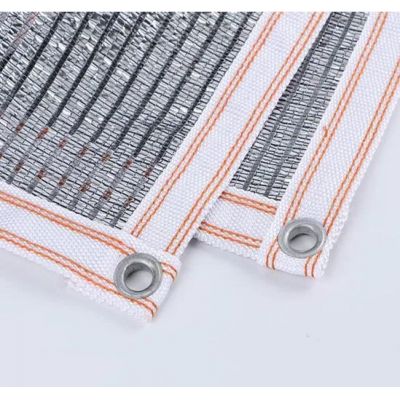
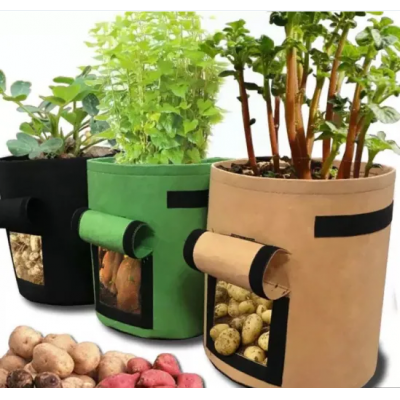
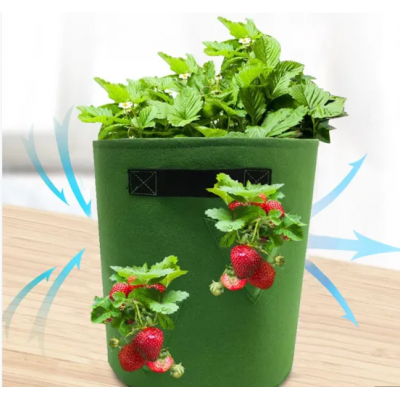
In an orchard the cloth is laid as a continuous strip down the tree line, with the trunks coming through slits cut on site. In a nursery it is laid across the bed and around the pot groups, and on a greenhouse floor it covers the walkways and the ground under the benches where weeds would otherwise come up between the plants. Because the weave is permeable, the same cloth is also laid under overhead irrigation without the water sheeting off into the aisle. Growers standing pots on the same ground often order a planting bag alongside it, and the shade net range covers the covers that go over the crop rather than on the ground.
| Model | WB-004 |
| Material | Woven polypropylene |
| Weight | 65 to 400 gsm |
| Width | 0.8 m to 3 m as standard rolls |
| Length | Cut to your requirement |
| Colour | Black, black with green, black and white, brown |
| Service life | 1 to 5 years depending on grade and use |
| Water | Permeable, water and air pass through |
The weight is set by the traffic, not by the weeds. Under container beds the cloth only has to hold the bottom of a pot and stay put, so the lighter end of the 65 to 400 gsm range does the job and is easier to handle when the beds are rearranged. On an orchard row where machinery passes, the heavier grades are the ones that last, because what destroys a cover there is scuffing and tearing at the edge rather than the sun. It is also worth knowing that any of these grades can be laid on the surface or buried, so a row that is being cultivated can have the cloth under the tillage layer instead of over it. Width is the other decision, and the standard roll runs 0.8 m to 3 m. Where the requirement is covering the crop above ground rather than the soil, a knitted monofilament net is the better fit.
Width, weight, length and colour are made to order, and shapes can be cut square or round where a bed or a tree pit needs it. Rolls are flat packed, which keeps the shipping volume down on a bulk order. Tell us whether the cloth is going on an orchard row or under container beds, and what crosses it, and we will confirm the grade. Buyers tracking what is going onto orchard and nursery ground can follow trade coverage such as HortiDaily and FreshPlaza for what growers are laying.
Which weight suits an orchard row?
Where machinery or foot traffic crosses the row, the heavier end of the 65 to 400 gsm range is the one that lasts, because the wear happens at the edge rather than in the middle of the panel. Tell us what crosses it and we will confirm the figure.
Can the cloth be buried instead of laid on the surface?
Yes. It can be laid on the surface or buried under the cultivation layer, and which one suits depends on whether the row is being worked. Tell us how the ground is managed and we will advise.
Does water reach the pots standing on it?
Yes. The weave is permeable, so overhead irrigation and rain pass through rather than standing on the surface, which is the main reason the cloth is used under container beds rather than a solid sheet.
Tell us whether this is for orchard rows or container beds, the width and weight you have in mind, and the total area, and we will confirm the roll sizes, the cut lengths and the packing that suit your order.
Mark Wu, Co-founder & Technical Director, Sichuan Zhifang Net Industry. 15 years manufacturing agricultural nettings for growers in 32 countries.