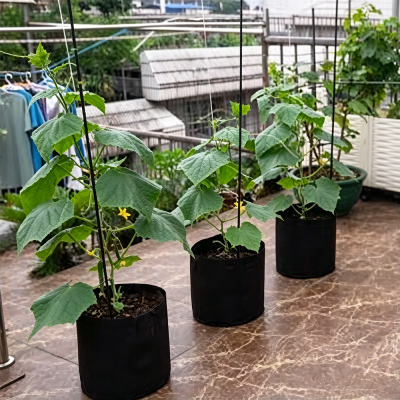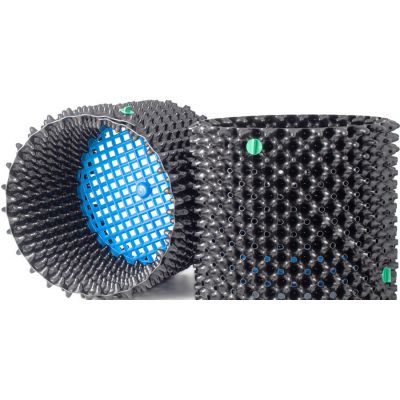


A propagation cell without air movement trains roots to circle, and a circling plug is the one thing that does not survive transplant. This pot puts air where a tray cannot: holes along each wall section dry the root tips as they arrive, so the seedling grows a dense, fibrous plug instead of a coiled one. The split panel opens without dragging the roots, which turns potting on from a recovery week into a straight transfer. The body is moulded from robust PE that stands up to constant misting and chemical washdown in a working propagation house. Diameters run 20 to 70 cm, black as standard, custom sizes on the same tooling.
For greenhouse operators, seedling loss at transplant is a constant drain on margins, and the cause is usually decided long before the move: a plug that has coiled in a smooth cell tears and stalls when it lifts. This pot is built as a tray alternative that fixes the cause instead of the symptom.

The difference between a tray cell and this pot is what happens when a root reaches the wall. In a smooth cell the tip is turned and keeps turning, so the plug ends up bound by a spiral that tears on transplant. Here the wall is perforated: the tip dries the moment it meets air, stops stretching, and the plant answers with a burst of lateral roots. The result is a plug that is dense rather than long, and dense is what survives the move to the field or the final container. The same logic runs through every size in the air pruning pot range, so a grower can match plug volume to species without changing systems.

Propagation houses are the first users: banks of these pots replace flat cell trays for crops that need more root volume before potting on, and the perforated wall keeps the medium draining through the misting cycle. Vegetable and herb growers use them for starts that go straight to the field, where a firm plug takes hold without a lost week. Tree, shrub and ornamental lines use the larger rounds for liner stock that spends its first season in the pot. Where a programme starts even earlier, a germination and seedling tray covers the germination stage before the seedlings move here.

| Use | Greenhouse propagation, seedling and liner stock |
| Material | PE, PVC |
| Diameter | 20-70 cm, customised accepted |
| Height | 20-70 cm |
| Thickness | 0.6 mm to 1.2 mm, customised accepted |
| Colour | Black, customised accepted |
| Base plate | 20-60 cm |
| Samples | Available |

Removing a plug is where a good root system is usually lost. The split panel opens around the root ball instead of dragging it out of a single cell, so the fibrous mass stays intact and the seedling never notices the move. Banks of pots stack for filling, and the wall sections wipe down between batches, with no bleach-soaked scrubbing to get the last roots out of a corner. Panels and base plates are replaced as single parts, and replacement stock ships flat in production batches straight from the panels held in store.

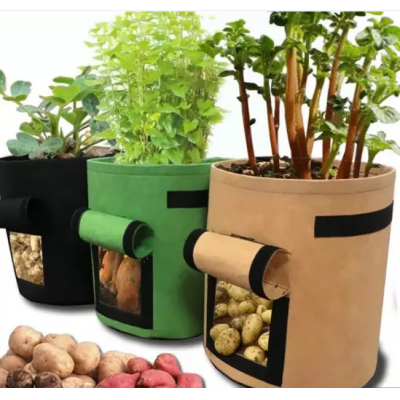
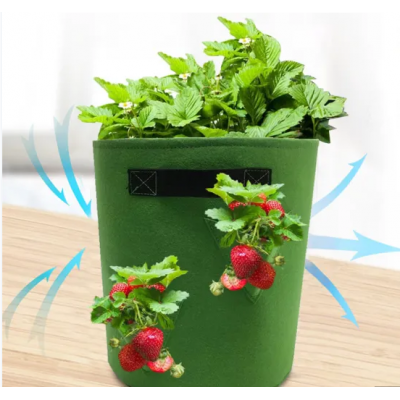
Diameters and heights run 20 to 70 cm, and base plates cover 20 to 60 cm, so a propagation programme can standardise on one fixing system. Panels ship flat and stack tight, which keeps freight down on full container loads, and each size is packed separately so orders can grow a stage at a time. Print and packaging run to your own label, and sample pots let you trial the plug against your own misting cycle. For growers who also sell display or retail stock, the planting bag range covers the same plants in a soft-wall format. Greenhouse practice and propagation research are covered in the field by HortiDaily and FreshPlaza.
How does the pot improve transplant survival?
The plug leaves the pot dense and self-supporting instead of soft and spiralled. A dense root mass holds the medium together through the move, so the seedling resumes growth instead of spending weeks rebuilding roots.
Will the PE stand up to constant misting and chemicals?
Yes. The body is made for the wet side of a nursery: it takes continuous misting, fertiliser and sanitising washdowns without going soft or chalky, so the same pots run batch after batch.
What sizes suit different crops?
The smaller rounds carry vegetable and herb starts that move out quickly, while the larger sizes hold tree and shrub liners for a full season. Because every size shares one fixing system, a house can run a mixed crop on the same spares.
Send the sizes and quantities your propagation programme runs, and we will come back with the packing plan and lead time.
Mark Wu, Co-founder & Technical Director, Sichuan Zhifang Net Industry. 15 years manufacturing agricultural nettings for growers in 32 countries.