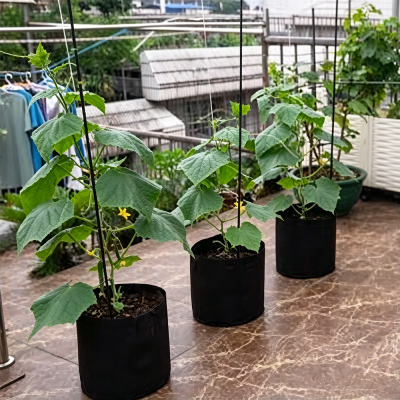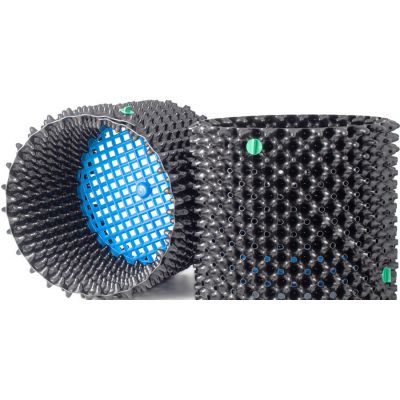


Root power is what turns a vegetable bed into a heavy cropper, and this planter is built to deliver it in flat pack form. Panels arrive stacked, assemble around the plants in minutes with lock screws, and come apart again after harvest for cleaning and flat storage between seasons. The protruding hole pattern guides root tips outward where they air prune, triggering the dense branching that supports heavy fruiting and resists dry spells. Dimensions run through 20 to 70 cm with custom branding for garden centres and market farms, and the same pots return season after season.
There is a version of container growing that starts with an empty pot and a transplant, and there is this one: the panels arrive flat, and the planter assembles around the plants that are already in place. For vegetables, that difference saves a whole step of the season.
The panels unfold around a growing plant and lock together with screws, so there is no lifting, no root disturbance and no transplant check. The bed goes in around the plants that are already settled, which is a different routine from potting up and moving stock. Once assembled, the protruding hole pattern guides root tips outward where they air prune, and the plant answers with the dense internal branching that supports heavy fruiting and stands up to a dry spell. The same wall runs across the air pruning pot range.


Flat panels take a fraction of the warehouse volume of assembled pots, which matters to any operation that holds stock between seasons: a container load carries many times the length of growing space, and a retail shelf displays the range without a shed behind it. After harvest, the panels unlock, clean and stack flat until the next season. The PE/PVC build is sturdy enough for that cycle of assembly, service and storage, year after year.


| Use | Vegetable beds, garden growing, market farms |
| Material | PE/PVC |
| Diameter | 20-70 cm, or customised |
| Height | 20-70 cm, or customised |
| Thickness | 0.6-1.2 mm, or customised |
| Base diameter | 20-60 cm |
| Colour | Black, or customised |
| Customisation | Accepted, branding available |
| Samples | Available |

Fruiting vegetables are where the root network proves itself: tomatoes, peppers and greens all carry heavier fruit and yield better from a deep, fibrous root mass, and all of them go through stress weeks where that root reserve is what keeps the crop on track. A planter that can be assembled around established plants also suits succession growing, where the next crop goes in beside the last. Where seedlings are raised first, a seedling propagation tray covers the early stage.

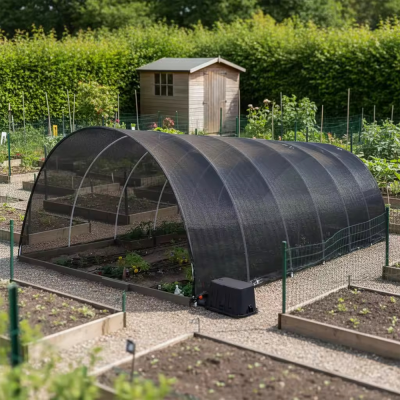
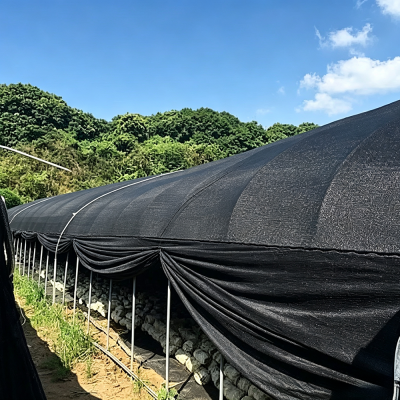
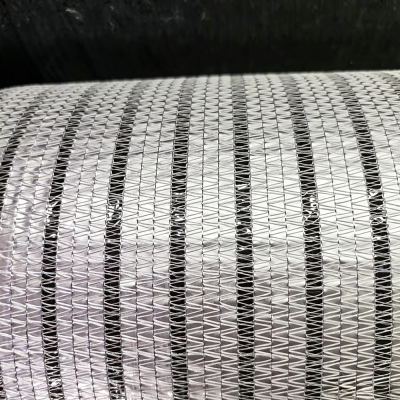
The range suits the two ends of the vegetable market: garden centres and online retailers presenting it to home growers, and small commercial market farms putting it to work under crop. Multiple dimensions fit both, custom branding carries a retailer identity onto the panels, and bulk orders ship flat with packaging set to the programme. For soft-wall containers in the same range, the planting bag alternative covers flexible growing. Trade coverage of growing practice runs at HortiDaily and FreshPlaza.
Do I need to transplant to use these planters?
No. Panels assemble around a plant that is already in place and lock with screws, so nothing is lifted or disturbed.
How much space do they save between seasons?
Flat panels stack at a fraction of assembled volume, so warehouse space and freight both carry far more growing capacity per load.
Can retailers brand the planter?
Yes. Custom branding and packaging are available with bulk orders across the 20 to 70 cm dimension ladder.

Tell us the crops, dimensions and volumes your programme runs and we will come back with the packing plan and lead time.
Mark Wu, Co-founder & Technical Director, Sichuan Zhifang Net Industry. 15 years manufacturing agricultural nettings for growers in 32 countries.