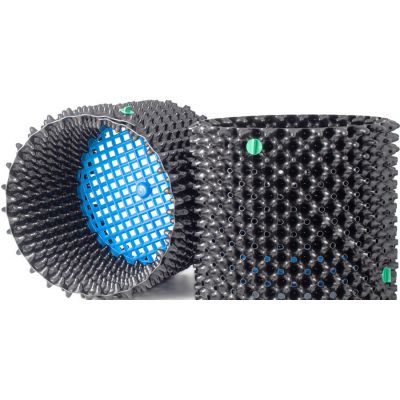


On a green roof, the container has one job that outranks everything else: keep roots on the planting side of the waterproofing. This planter is built as a root guard first. Tips that reach the perforated wall stop and branch inward, so nothing pushes through the sides toward the membrane, and the plant still builds the dense fibrous root system air pruning is known for. The UV stabilized HDPE takes the temperature swings and wind loads of an elevated site, and the split panels assemble around existing plantings without disturbing them.
On a green roof the container has one job that outranks the rest: keep roots on the planting side of the waterproofing. Get that wrong once and the repair bill lands on the building, not the garden.
Uncontained roots on a rooftop will find the membrane, and once they do, the damage is quiet and expensive. This planter works as a root guard first: tips that reach the perforated wall stop and branch inward instead of pushing through, so the planting stays contained while the plant builds a dense, healthy root system for shrubs and small trees. The split panels assemble around existing plants on site, which is what makes retrofitting a roof garden practical. The same wall runs across the air pruning pot range.

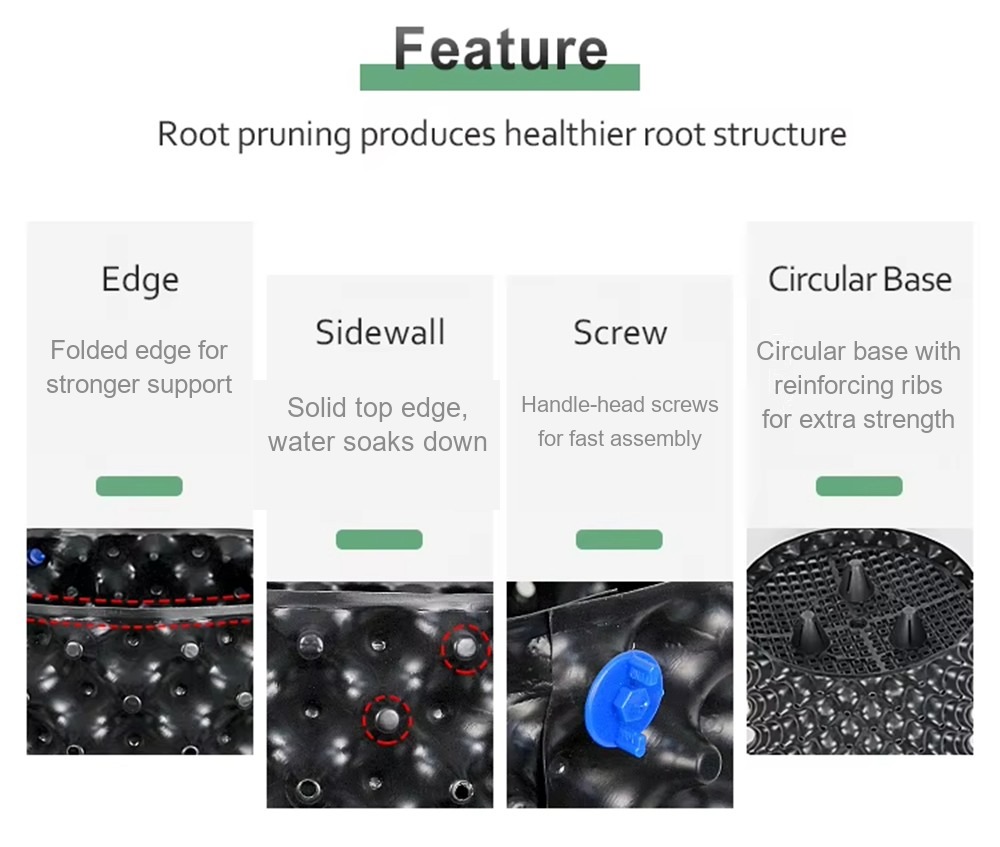
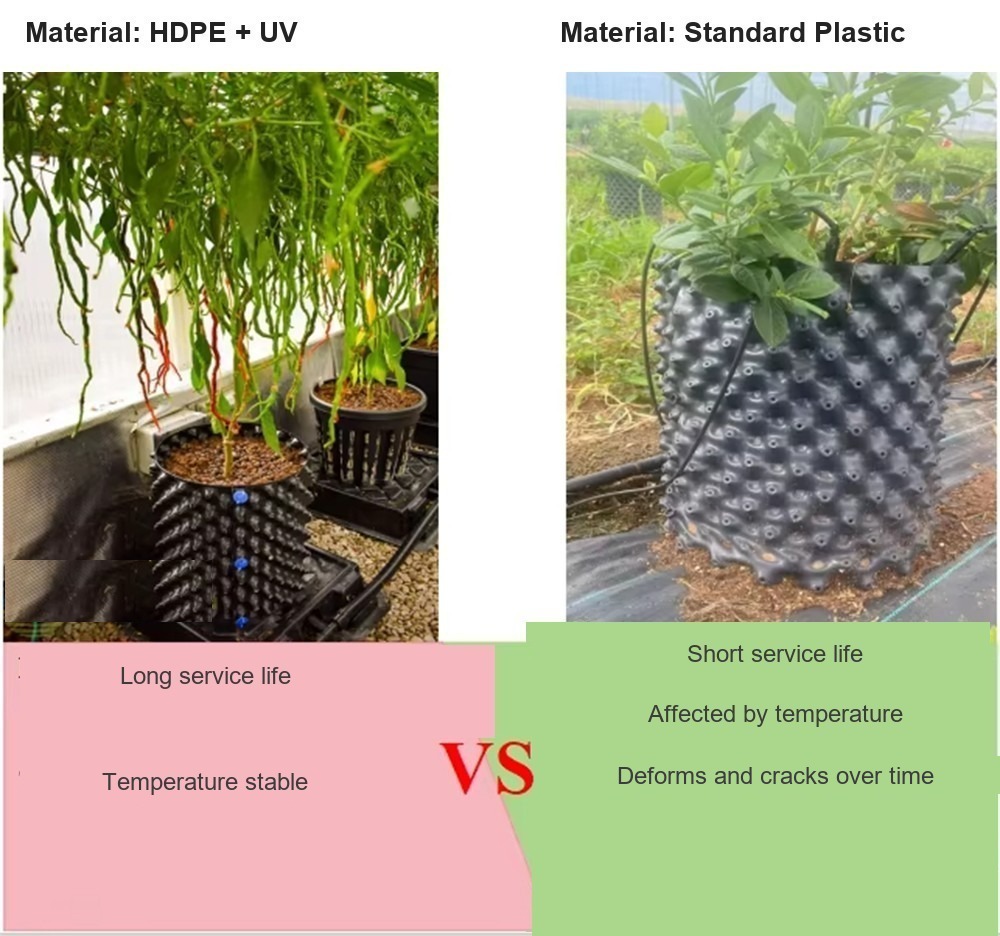
A roof is an extreme growing site in every direction: full sun on the panels, frost at night, wind loading that a ground-level garden never sees, and no soil mass to buffer any of it. The UV stabilized HDPE and its panel construction take those swings without deforming, and the base system keeps the container stable under the load. Because panels are replaceable part by part, a knock on an exposed site is a repair rather than a replacement.


| Use | Green roofs, roof gardens, building protection planting |
| Material | UV stabilized HDPE |
| Diameter | 20-70 cm, or customised |
| Height | 20-70 cm, or customised |
| Thickness | 0.6-1.2 mm, or customised |
| Base diameter | 20-60 cm |
| Load | Suitable for elevated sites with wind exposure |
| Samples | Available |

Municipal green roof programmes specify for decades of service: the planting has to establish, hold its shape and stay inside its containers through every season the building sees. Bulk supply covers custom sizing, anti-ageing formula adjustments for the local climate, and logo printing where the project carries a programme identity. Plants raised from seed first run through a seedling propagation tray before they move into these planters.

Roofs are load-limited, so every kilogram counts: the container is lightweight for its volume, and flat packed panels keep transport and storage weight down on the way to site. The build is reusable across planting cycles and recyclable at the end of service, which lines the material story up with the sustainability objectives modern urban architecture is measured on. For soft-wall containers in the same range, the planting bag alternative covers flexible growing. Trade coverage of growing practice runs at HortiDaily and FreshPlaza.
How does the planter protect the roof membrane?
It works as a root guard: tips stop at the perforated wall and branch inward, so roots never push through toward the waterproofing.
Will it hold up on an exposed roof?
The UV stabilized HDPE and panel construction take sun, frost and wind loading, and damaged panels are replaced part by part.
Can it be fitted around existing plantings?
Yes. The split panels assemble on site around plants already in place, which suits retrofits of working roof gardens.
Tell us the roof area, planting plan and volumes your project needs and we will come back with the packing plan and lead time.
Mark Wu, Co-founder & Technical Director, Sichuan Zhifang Net Industry. 15 years manufacturing agricultural nettings for growers in 32 countries.