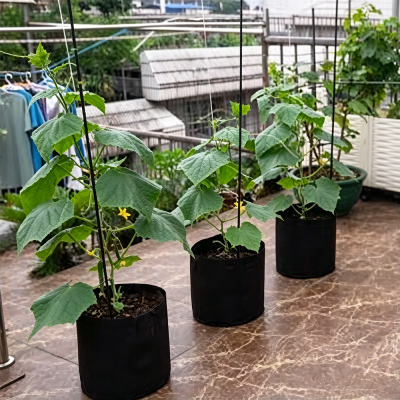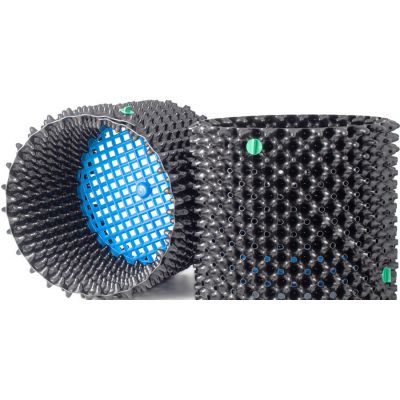


Training a root system is a different job from simply holding soil, and the 5 gallon size is where most nursery programmes do it: room for a seedling to build a fibrous root ball before the move to a field, a hedge line or a larger container. The slotted wall stops circling tips, so roots branch outward instead of knotting, and the pot lifts clean at transplant. Diameters run 10 to 80 cm with five wall thicknesses, and every unit can be supplied with or without a bottom. The PET and PVC body takes corrosion and repeated cycles without deforming.
The 5 gallon size sits at the middle of nursery work: large enough to train a root ball that holds together, small enough to move by hand. This container is built around that stage, with a wall that trains roots instead of trapping them and a specification sheet that adapts to the programme rather than the other way round.
Root training works on a simple principle: interrupt a root tip with air and the plant builds fibrous wood instead of a coiled knot. The 5 gallon round gives that process enough volume to matter, so seedlings leave the nursery with a root ball that survives lifting, transport and replanting. Work up from smaller rounds and down from larger units on the same wall system, and a programme holds one method from first pot to last. The full air pruning pot range covers every step of that ladder.

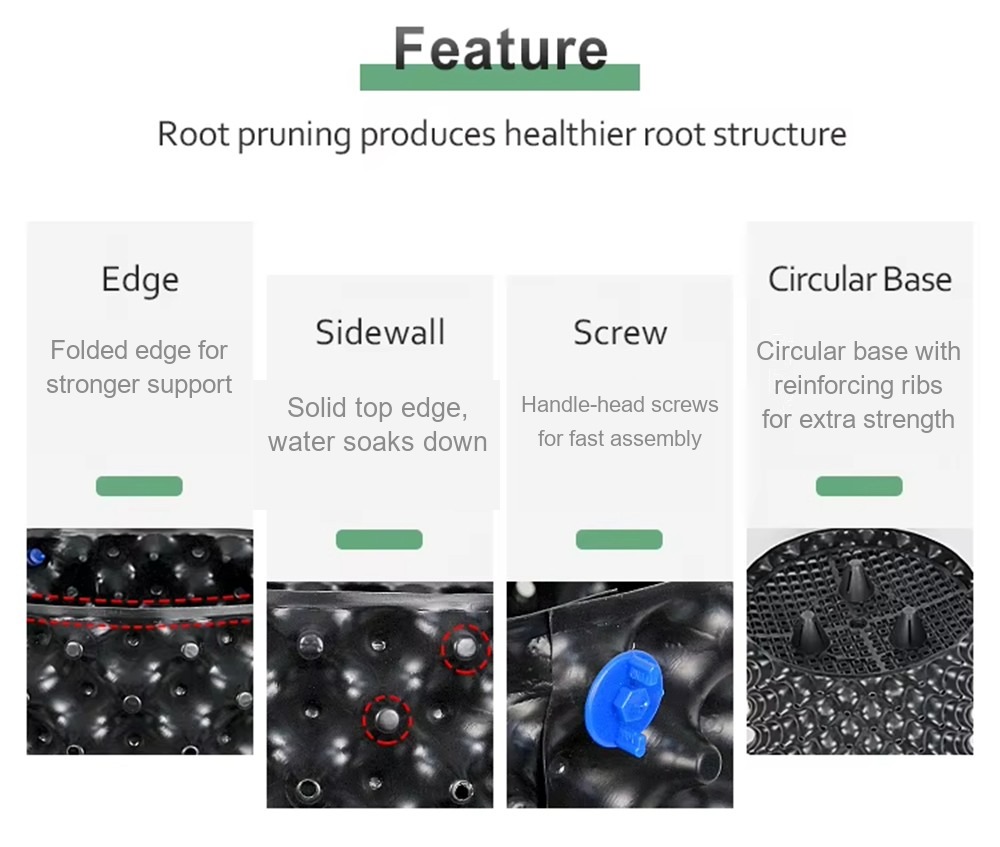
No two programmes load a container the same way, so the specification has room to move. Walls run from 0.6 to 1.0 mm in five steps, diameters from 10 to 80 cm and heights from 20 to 100 cm. Units can ship with a bottom for free-standing growing or without one for bench and bed systems that supply drainage from below. The PET and PVC body resists corrosion and holds its shape through cleaning between cycles, and the screw fixings take apart for flat storage when the season turns.


| Use | Nursery seedling training, roadside hedges, tree stock |
| Material | PET, PVC |
| Bottom diameter | 10-80 cm |
| Height | 20-100 cm |
| Thickness | 0.6-1.0 mm, five steps |
| Type | With or without bottom |
| Function | Increased roots, root control, faster growth |
| Samples | Available |

The 5 gallon training round earns its place wherever plants are raised to be moved: vegetable and flower seedlings heading for the field, hedge stock bound for roadside planting, and young trees being brought on before sale. Each of those jobs ends with a transplant, and each one goes better when the root ball arrives intact. Where stock is raised from seed first, a seedling propagation tray covers the opening weeks before the move into training rounds. Larger stock at the top of the ladder runs in the large tree container range.

Small quantities ship by express and larger volumes move by air or sea freight, with panels nested so a full programme packs efficiently. Repeat orders follow the same specification, and samples let a grower confirm the wall thickness and diameter against their own bench plan before committing. Trade coverage of growing practice runs at HortiDaily and FreshPlaza.
Why choose the 5 gallon size?
It is the working middle: enough root volume to train a fibrous ball that travels well, while staying light enough to lift and space by hand on a bench.
Can I order pots without bottoms?
Yes. Units are supplied with or without a bottom, so bench and bed systems that drain from below can run open bases while free-standing growing keeps the plate.
What wall thickness should I pick?
Five steps run from 0.6 to 1.0 mm. Lighter walls suit short seedling cycles, heavier walls carry stock that stays in the pot through a full season or more.
Send the diameters, heights and thicknesses your programme runs and we will come back with packing and lead times.
Mark Wu, Co-founder & Technical Director, Sichuan Zhifang Net Industry. 15 years manufacturing agricultural nettings for growers in 32 countries.