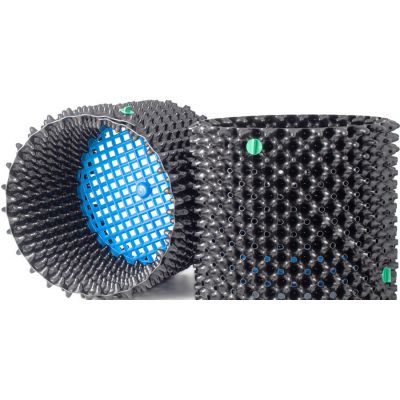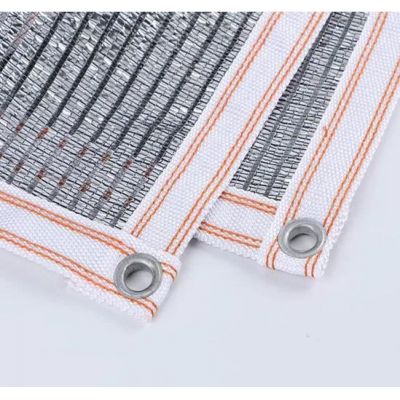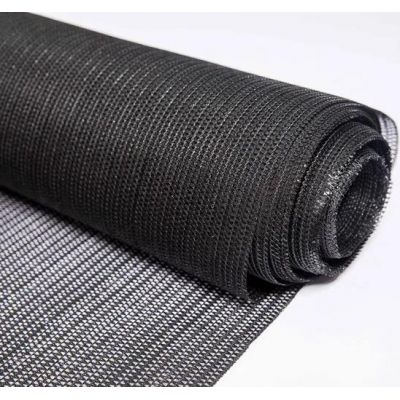


Some growing zones break ordinary containers within a season or two: desert sun that embrittles plastic, plateau frost that works at every joint, freeze-thaw cycles that open hairline cracks and then widen them. This planter is built for those zones, with HDPE formulated for maximum UV and freeze-thaw resistance. The roots still air prune the same way underneath, so hard-won stock comes out of the pot with a robust root ball instead of a cracked container and a lost season. Panel thickness and anti-ageing compound ratios are both customised to the site.
Some growing zones break ordinary containers within a season or two: desert sun that embrittles plastic, plateau frost that works at every joint, and freeze-thaw cycles that open hairline cracks and then widen them until a pot fails in the middle of a programme.
The first failures in a harsh zone are never dramatic: a rim that cracks when a pot is lifted, a panel that chalks and thins at the fold, a base that splits after a winter of melt and refreeze. Each one costs a season, and in replacement-heavy programmes those seasons compound. The roots inside have their own challenge, and the answer is the same as elsewhere: openings that stop spiralling and build a robust root ball, so hard-won stock leaves the nursery ready for the site it is headed to. The same wall runs across the air pruning pot range.


Beating a harsh climate is not only a question of wall thickness. The HDPE is formulated for maximum UV and freeze-thaw resistance, and because no two harsh environments are identical, the anti-ageing compound ratio itself can be adjusted to the site: a desert programme orders one formulation, a plateau reforestation contract another. Panel thicknesses follow the same logic, sized against the conditions rather than a catalogue default. The split panel design also lets crews inspect and transplant non-destructively, which matters most where replacement stock is hard to reach.


| Use | Desert, high altitude and freeze-thaw growing zones |
| Material | HDPE, max UV and freeze-thaw resistance |
| Diameter | 20-70 cm, or customised |
| Height | 20-70 cm, or customised |
| Thickness | 0.6-1.2 mm, customised to conditions |
| Compound | Anti-ageing ratio adjustable per site |
| Packing | Rugged, minimal-waste shipping |
| Samples | Available |

Three zones define the demand. Desert nurseries fight ultraviolet intensity and heat cycling; high-altitude programmes fight thin air, frost and short seasons; freeze-thaw regions fight the melt-and-refreeze rhythm that turns small defects into splits. All three need the same two things from a container: to survive the site and to deliver a root ball that transplants cleanly. Larger tree stock at the top of the range runs in the tree and nursery container range.

Reforestation and restoration projects often sit far from any supply line, so the container is built to travel: flat packed and nested for freight, with rugged, minimal-waste packaging that survives the last leg of a rough road. Reusable and recyclable materials support the long-term sustainability targets that fund many of these programmes in the first place. For soft-wall containers in the same range, the planting bag alternative covers flexible growing. Trade coverage of growing practice runs at HortiDaily and FreshPlaza.
What makes this container extreme-climate ready?
HDPE formulated for maximum UV and freeze-thaw resistance, with panel thickness and anti-ageing compound ratios adjusted to the site conditions.
Can the formulation be changed per project?
Yes. Because harsh environments differ, the compound ratio and wall thickness are both customised to the climate the programme runs in.
Does it reach remote sites intact?
Panels ship flat and nested in rugged, minimal-waste packaging designed for the last rough leg of delivery to remote planting projects.

Tell us the site conditions, species and volumes your programme runs and we will come back with the packing plan and lead time.
Mark Wu, Co-founder & Technical Director, Sichuan Zhifang Net Industry. 15 years manufacturing agricultural nettings for growers in 32 countries.