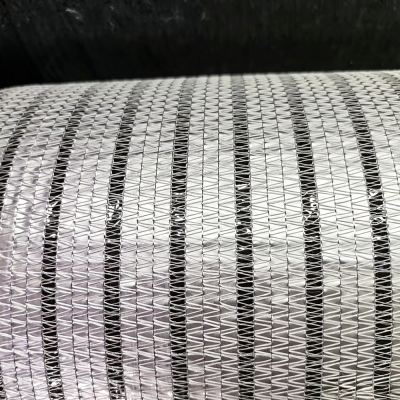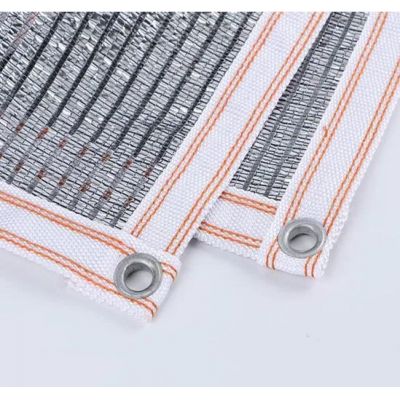


The question that comes with this screen is usually about the system rather than the fabric: whether it can be fitted to a house that already runs an open and close screen. It can, and the reason is that the reflective face does not change how the cloth is made. The foil strips are heat reflecting, so they turn the greater part of the incoming radiation back rather than letting it become heat under the screen, while the clear film strips keep the cloth permeable to air. The result is a screen that takes the peak off a summer roof and holds warmth in over winter without a second product.
The enquiry usually starts with the house rather than the roll: can this screen be fitted to a roof that already runs an open and close system. It can, and nothing about the reflective face changes how the cloth has to be made up. The screen is cut, edged and run on the same hardware as any other greenhouse screen.
A roof screen has to do two things that a fixed net does not. It has to run cleanly along a rail or wire and gather without snagging, and it has to hold its width under tension so it does not sag between supports. Both are set by how the screen is edged and how the eyelets or sleeves are spaced, and by the fabric weight rather than by anything about the foil.
Send the internal width of the house, the length of the run and the hardware you are fitting to, and the screen will be made up to match. Where a house runs more than one span, the same specification is repeated across them, so a single order keeps the tensioning and the gather consistent from one end of the roof to the other.
The reflective face works on the radiation rather than on the air temperature. Foil strips turn a large share of the incoming radiation back up and out before it becomes heat inside the house, which takes the peak load off whatever ventilation is running. Clear film strips sit between the foil so the cloth stays permeable and does not become a solid sheet.
In the cold months the same face works the other way and holds long-wave radiation inside rather than letting it escape through the roof. One screen therefore covers both ends of the year, which is why the same specification tends to be ordered for summer cooling and winter retention on the same house.
| Material | Aluminium foil strips with clear HDPE film |
| Construction | Woven foil and film strip screen |
| Function | Heat reflection, shade, and winter heat retention |
| Colour | Silver, other options to order |
| Size | Cut and edged to the span you specify |
| Applications | Greenhouse roof screen, side wall, agriculture |
| Model | ALS-002 |
| Packing | PE bag or woven bale, customised on request |
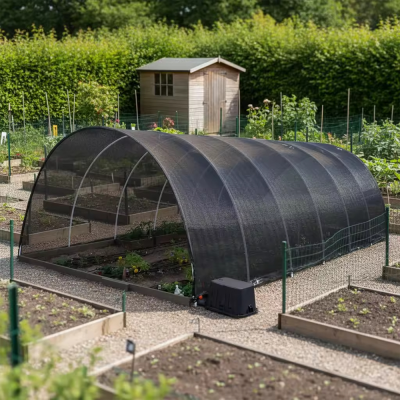
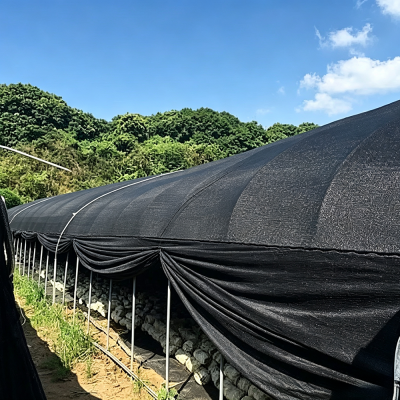
A roof screen takes the worst of the midday load off the crop and the structure, which matters most where the house is glazed and the roof has no other way to shed heat. The same cloth is often run on side walls, where the job is more about glare and wind than about peak temperature.
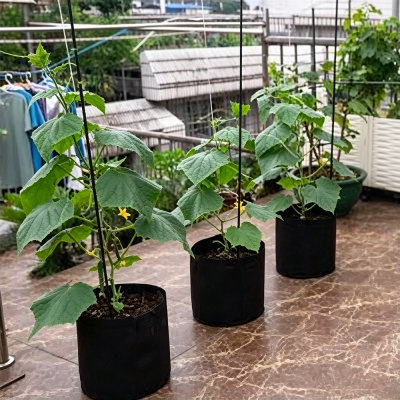
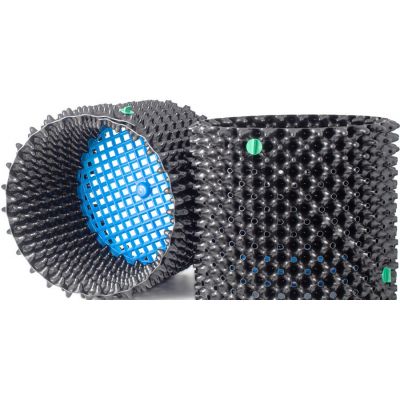
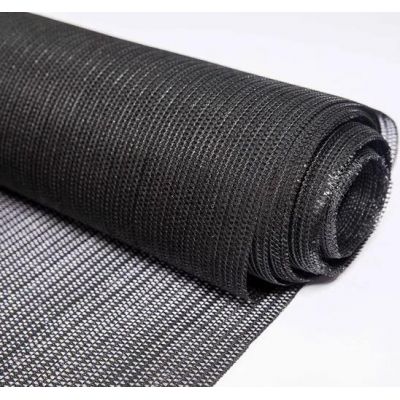
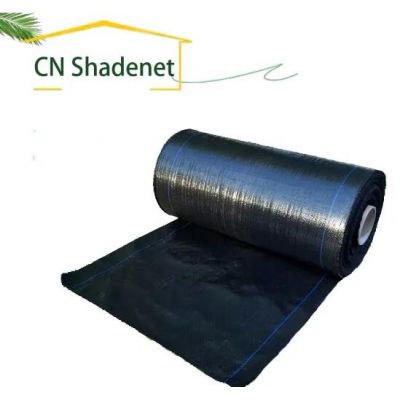
Where a house runs a reflective screen on the roof through the hot weeks, a second screen at a lower rate is often hung below it for the rest of the season. Growers running container crops under either screen pair it with a planting bag, and the wider shade net range covers knitted and tape types as well. The adjustable-rate version and the closed-weave thermal screen are usually stocked alongside it.
The failure point on a foil screen is the bond between the foil strip and the film it sits against, and it shows up first along the fold lines after a season of being run in and out. Our screens go through the same five in-house checks as the rest of the range, ageing and tensile included, before a piece is packed.
We have been making agricultural netting since 2011, in a plant of close to 10,000 square metres with more than 50 machines. Greenhouse practice is covered in the trade press, including the reporting at Greenhouse Grower trade magazine and the coverage at greenhouse industry news. Company background sits on our about page.
Will this screen run on my existing open and close system?
In most cases yes. Send the span, the run length and the hardware, and the screen will be made up with the edging and spacing the system needs.
Does one screen cover both summer and winter?
Yes. The reflective face cuts heat gain in summer and holds heat in over winter, so the same specification is usually ordered for both.
How heavy is a foil screen compared with a black net?
Heavier per square metre, because the foil is a strip woven into the cloth. Tell us the system rating and we will confirm the weight suits it.
Can it be cut to my span?
Yes. Screens are cut and edged to the span you send, and there is no need to plan the house around a stock roll.
Send the span, the run length and the system you are fitting to, and we will confirm the make-up that suits the job.
Mark Wu, Co-founder & Technical Director, Sichuan Zhifang Net Industry. 15 years manufacturing agricultural nettings for growers in 32 countries.
Running this screen on your house? Leave a review below and tell other growers how you fitted it.