

Light scattering aluminet is ordered when the problem is not heat alone but the quality of the light that reaches the crop. A reflective foil face bounces a share of the sun back out of the house, and the woven mesh breaks what is left into a softer, more even light, so leaves at the top of the canopy stop burning while the shade rate stays high. It suits covers where plants sit close to the roof, and it runs on the same hardware as any other screen in the range.
Light scattering is asked for when the problem is not heat alone but the quality of the light reaching the crop. A standard screen cuts the sun by a percentage and lets the rest through as it comes, which on a long span leaves bright bands burning the top of the canopy while the lower leaves sit in shade.
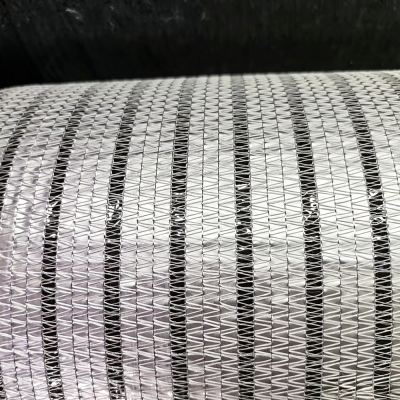
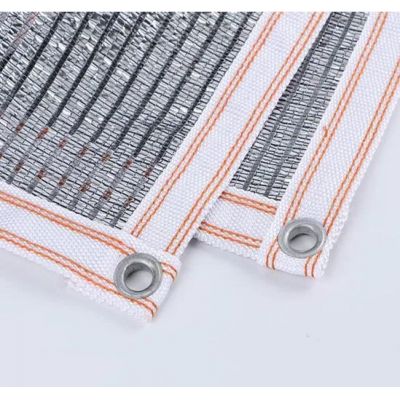
Plants under a reflective screen are working with light that has been broken up rather than blocked. A foil face sends part of the sun back out of the house, and the woven mesh spreads what is left, so the crop sees a softer, more even light instead of a hard strip. Growers running seedlings, herbs and leafy crops close to the roof are the ones who notice it first, because that is where a hard band does the most damage over a full day.
The effect on temperature follows. Less direct light landing on the leaf means less heat to remove, so the cloth is usually ordered when cooling load and leaf scorch are both on the list, not just the shade percentage.
The foil face and the weave do two different jobs. The aluminium side reflects a share of the radiation before it reaches the crop, which is where the energy saving comes from. The mesh then controls how the remaining light arrives, breaking it into smaller patches so the canopy is lit evenly from end to end rather than in stripes.
The construction is the same as the rest of the range, so it is cut, edged and run on the same hardware. An installer who has fitted the standard net will find nothing new on site, and the cloth can be tensioned across an interior frame or a roof screen without a change to the fittings.
| Material | Aluminium foil strip woven with HDPE monofilament |
| Construction | Woven foil and film strip net |
| Shade Rate | 95%, other rates to order |
| Energy Saving | Around 30% on cooling load |
| Light Behaviour | Scattered, even light with reduced direct glare |
| Colour | Silver, other options to order |
| Model | ASN-007 |
| Packing | PE bag or woven bale, customised on request |
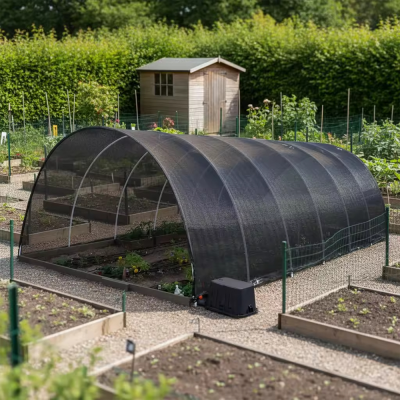
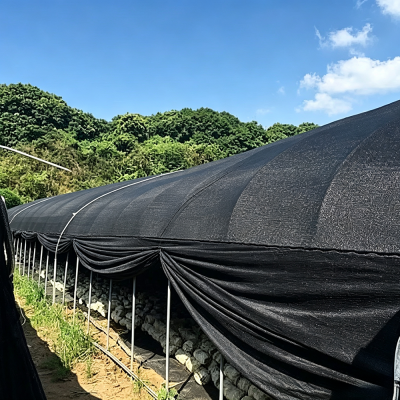
The cloth is usually run under cover rather than over an open field. That covers houses where the screen sits on an interior frame just above the crop, propagation and seedling tunnels where young plants are most easily burnt, and any cover where the roof is low enough that the canopy sits close to the light. It is also used on the sides of a house where glare rather than heat is the complaint.
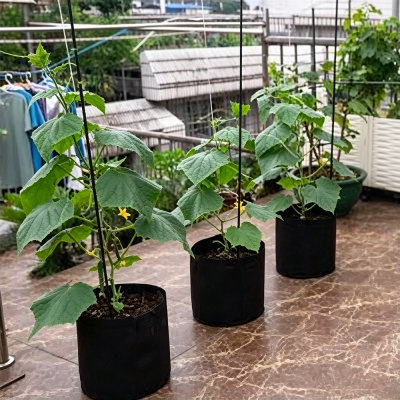
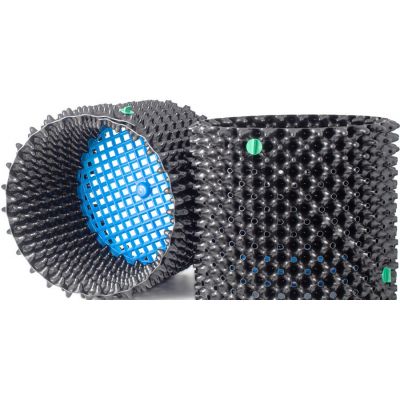
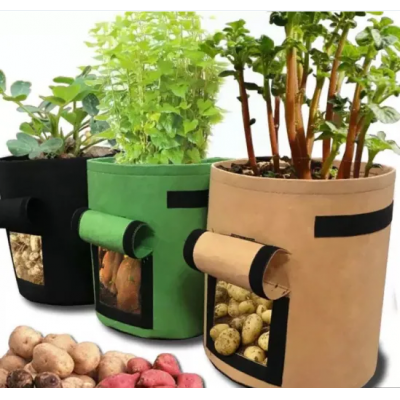
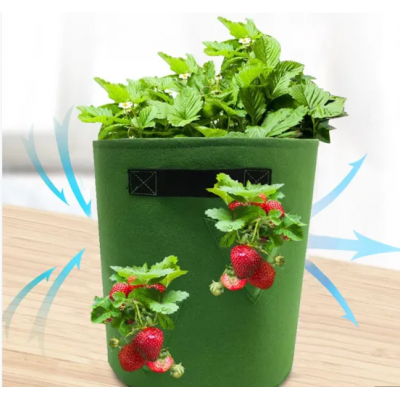
Growers pairing it with container crops run it above a planting bag, and the wider shade net range covers the knitted, tape and thermal types for growers who need a different balance. A grow bag is often ordered at the same time for nursery work.
Widths, lengths, shade rate and edging are made to order, so the first step is to confirm the span and the fittings on the frame. Rolls ship in PE bags or woven bales, and smaller trial lengths are available for growers who want to measure the light behaviour on one bay before covering a whole house. Growers tracking how screens behave across a season can follow trade coverage such as FloralDaily and FreshPlaza for what is being installed on commercial sites.
Does a scattering screen lower the shade rate?
No. The shade rate is set by the weave and the foil coverage, and this version is built to the same 95% figure as the standard range. What changes is how the remaining light arrives, not how much of it is kept out.
Can it be used over an open field instead of under cover?
It can, though it is usually ordered for interior use. Outdoors the aluminium face still reflects and still shades, but the scattering effect matters most where the crop sits close to the cloth.
Is it available in other shade rates?
Yes. The standard is 95% and other rates are made to order, with the same foil face and the same woven construction.
Tell us the span, the crop and the shade rate you are working to, and we will confirm the width and the edging that fit your frame.
Mark Wu, Co-founder & Technical Director, Sichuan Zhifang Net Industry. 15 years manufacturing agricultural nettings for growers in 32 countries.